


Last Updated: March 23, 2026
If you’ve ever stared at a simple task and felt like your thoughts are moving through thick fog—or caught yourself feeling guilty for not being able to “push through” faster—know this: you are not alone, and it is not your fault. As someone with a PhD in immunology, I’ve spent years studying how the immune system works, and I can tell you that brain fog is frequently a direct result of immune-driven inflammation, especially when it appears alongside autoimmune conditions, chronic stress, or post-viral states. This is not imagination or laziness; it is a measurable neuroimmune response.
Brain fog describes a cluster of cognitive symptoms: difficulty concentrating, trouble finding words, short-term memory lapses, feeling mentally slow or disconnected. When inflammation is the driver, these symptoms often feel more stubborn and tied to physical fatigue than the temporary cloudiness most people experience after poor sleep.
Understanding the immunology behind it can bring real relief—no blame, no pressure to fix everything overnight, just clear science and practical next steps.

Table of Contents
At a Glance
What is brain fog? A common set of experiences: trouble focusing, slowed thinking, word-finding difficulties, recent forgetfulness, and mental exhaustion—even after rest. It feels like thoughts are moving through thick fog or underwater.
What causes it in this context? Immune-driven inflammation—especially from autoimmune conditions, chronic stress, or post-viral states—sends cytokines and activates brain immune cells (microglia), disrupting clear thinking. It’s biology trying to protect you, not a personal failing.
Is it permanent? No. Many people notice meaningful improvement when underlying inflammation is gently addressed through medical care, rest, movement, and self-kindness.
What helps?
- Work with your doctor on the root cause
- Prioritize restful sleep
- Gentle movement
- Nourish with anti-inflammatory foods
- Support stress regulation
Small, sustainable steps—no perfection required.
Key takeaway Brain fog from inflammation is understandable and manageable. You’re already taking a powerful step by understanding it. One kind breath at a time.
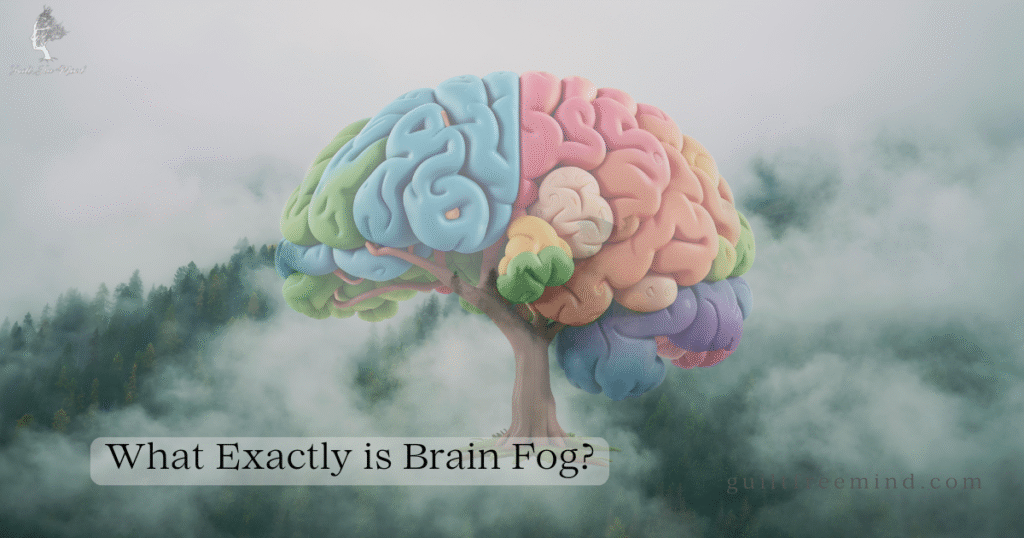
What Exactly Is Brain Fog?
Brain fog is not a formal medical diagnosis, but a widely recognized set of experiences that many people describe in vivid, relatable ways. These symptoms often feel frustrating and invisible to others, yet they stem from real changes in how the brain processes information—particularly when inflammation plays a role, as seen in autoimmune conditions like lupus, rheumatoid arthritis, and Sjögren’s syndrome. Inflammation can subtly disrupt neural signaling long before any structural brain changes show up on scans, making everyday mental tasks feel exhausting or out of reach.
Here’s a deeper look at each point, drawn from common patient experiences and research on inflammatory and autoimmune contexts:
Difficulty sustaining attention
This often shows up as an inability to stay focused on a task, conversation, or even a simple reading passage for more than a few minutes. You might start strong, but soon find your mind wandering, requiring repeated re-reading of the same line or losing track during meetings. In inflammatory states, this ties to neuroinflammation, slowing neural conduction—microglia (the brain’s immune cells) become overactive, pulling resources away from supporting clear focus and instead fueling a low-grade “fire” that tires the brain quickly. People often say it feels like trying to concentrate through a heavy mental filter, leading to rapid mental fatigue even with low-effort activities.
Slowed thinking and processing speed
Thoughts feel delayed, like they’re moving in slow motion. Decision-making takes longer, simple math or planning feels effortful, and responses in conversations lag. Research shows this directly links to inflammation: cytokines and activated microglia interfere with efficient neuron-to-neuron communication, essentially reducing the brain’s processing bandwidth. In autoimmune flares or chronic inflammation, this can manifest as “mental sluggishness”—a measurable slowdown in cognitive speed, as demonstrated in studies inducing acute inflammation. Patients describe it as “my brain is buffering” or “everything takes twice as long to compute,” which adds to feelings of frustration and low productivity.
Word-finding problems
This is the classic “tip-of-the-tongue” experience amplified—knowing exactly what you want to say but struggling to retrieve the right word or phrase. Conversations become halting, with pauses, substitutions (“that thingy… you know”), or rushed, incomplete sentences. In autoimmune-related brain fog, this differs from typical language disorders (like in stroke or Alzheimer’s) because it often spares core comprehension and grammar while targeting broader cognitive speed and retrieval. Inflammation may disrupt hippocampal and prefrontal networks involved in word recall without directly damaging language centers. Many describe it as embarrassing or isolating, especially in social or work settings where quick verbal fluency matters.
Forgetfulness for recent events
Short-term memory glitches are common: forgetting why you walked into a room, misplacing items moments after setting them down, or struggling to recall details from a recent conversation or movie plot. In autoimmune contexts, this can make following stories (e.g., weekly TV episodes) hard—you might need to re-watch earlier parts just to catch up. Inflammation contributes by impairing memory consolidation—cytokines and compromised blood-brain barrier integrity allow inflammatory molecules to interfere with hippocampal function, where recent memories form. It’s not total amnesia but unreliable access to very recent information, often paired with the sense that “my short-term memory is shot.”
Mental exhaustion even after rest
This is perhaps the most draining aspect: feeling wiped out mentally despite sleeping or taking breaks. The brain tires quickly during any cognitive effort (reading, driving, working), leading to a heavy, foggy fatigue that doesn’t lift with physical rest. In inflammatory and autoimmune settings, this stems from sustained microglia activation and cytokine effects creating a persistent low-level energy drain on neural circuits. The brain’s immune response diverts resources toward “defense mode,” leaving less for normal cognition. People often say it feels like “running on empty batteries” or “brain exhaustion after minimal use,” which compounds guilt when others don’t see the “work” of just thinking clearly (Cleveland Clinic, 2024).
These symptoms interconnect—slowed processing makes attention harder to sustain, which worsens memory and word retrieval, all while building mental exhaustion. In autoimmune diseases, they can flare with disease activity (even subtly) and improve when inflammation is addressed, offering real hope without pressure to “snap out of it.” You’re not imagining this; your immune system is involved, and understanding it is a gentle, validating step forward.
The Immunology: How Inflammation Actually Reaches the Brain
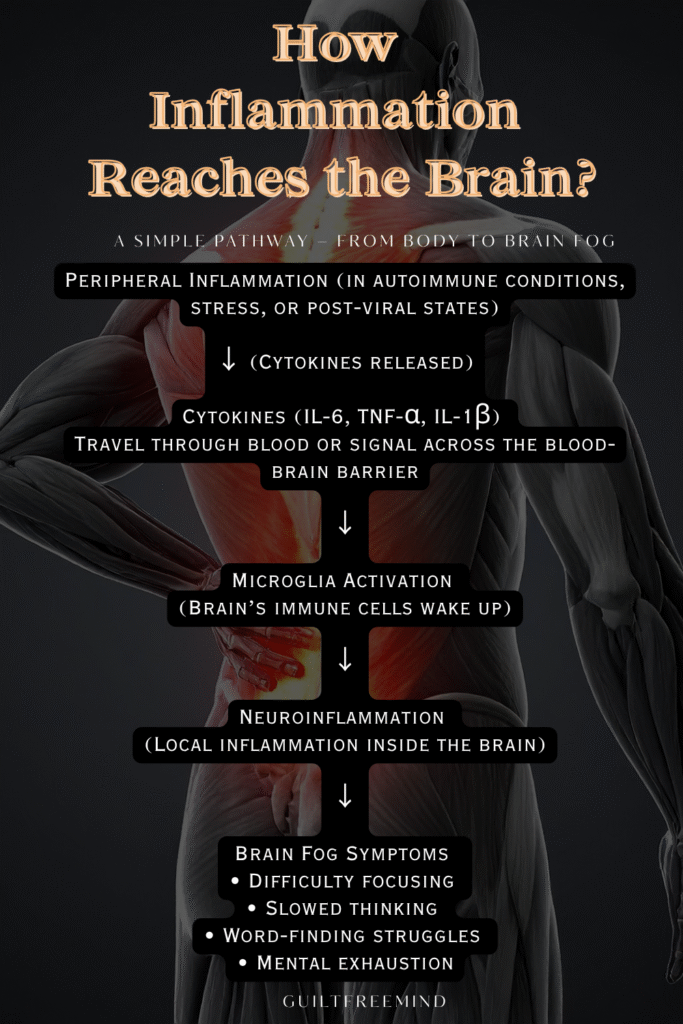
This is where my background in immunology helps explain what’s really happening—without needing a PhD to follow along. Think of your immune system like a well-meaning security team: when it senses danger (infection, stress, autoimmunity), it sends out alarm signals (cytokines) to protect you. In most cases, that’s helpful. But sometimes the alarms keep ringing even after the “threat” is handled, and those signals reach the brain, creating the fog.
Cytokines cross or signal across the blood-brain barrier
Pro-inflammatory cytokines—especially IL-6, TNF-α, and IL-1β—are like loud emergency sirens released during inflammation. Normally, the blood-brain barrier acts as a tight security gate, but chronic inflammation can make it leakier in spots. Normally, these cytokines have no business being in the brain. However, during inflammation, cytokines either slip through or shout instructions to the brain’s lining cells, triggering local inflammation. It’s not that the whole brain is “on fire,” but enough disruption happens to make thinking feel muffled.
Microglia activation
Microglia are the brain’s resident immune guards—always on watch. When peripheral cytokines arrive, microglia “wake up” aggressively, releasing their own inflammatory molecules and changing how neurons talk to each other. It’s like having overzealous security guards blocking hallways inside the brain: messages get delayed, connections weaken, and focus/memory suffer. In chronic states (autoimmune flares, long COVID), microglia can stay activated for weeks or months, which explains why brain fog lingers even when you feel “better” in other ways.
Mast cell involvement
Mast cells act like quick-response sprinklers—they release histamine, cytokines, and other mediators fast. In some people (especially with mast cell activation issues or autoimmunity), these sprinklers go off too easily or stay on too long, increasing brain inflammation and permeability. Too much histamine can even push the brain into a protective “shutdown” mode, making everything feel foggy and slow.
Other routes of communication
The vagus nerve is like a direct hotline between gut/immune system and brain—carrying inflammatory signals upward. Areas of the brain without a strong barrier (circumventricular organs) also let cytokines in more easily. In autoimmune conditions, this communication stays open longer than it should, keeping the fog in place.
The beautiful part? Once we calm the peripheral inflammation (through treatment, rest, gentle lifestyle choices), these pathways usually quiet down too. Your brain is resilient—it doesn’t stay stuck.
Pin this article for later:
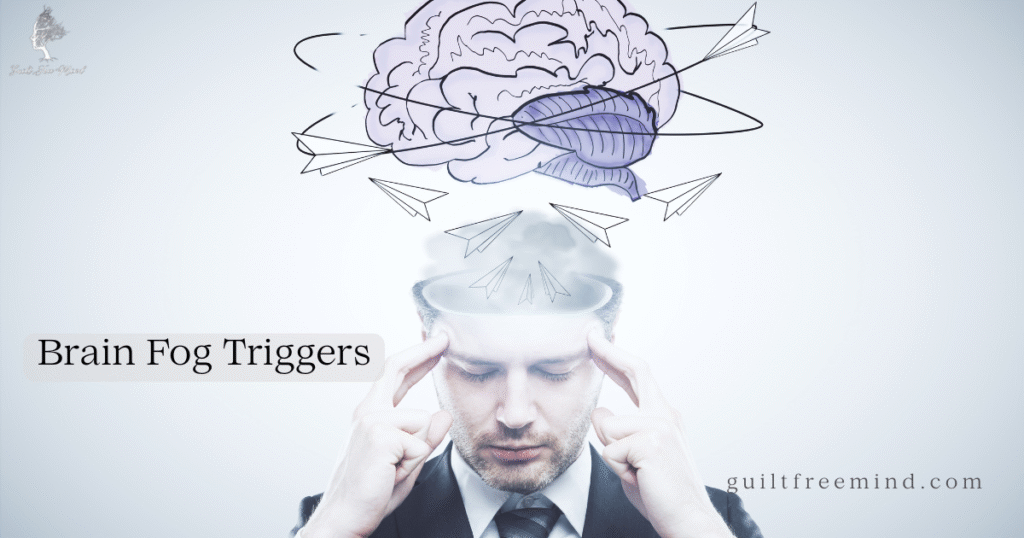
Triggers:
Brain fog linked to inflammation is especially prominent in:
- Systemic lupus erythematosus (SLE)
- Rheumatoid arthritis (RA)
- Sjögren’s syndrome
- Autoimmune thyroiditis (e.g., Hashimoto’s)
- Inflammatory bowel disease (Crohn’s, ulcerative colitis)
- Antiphospholipid syndrome
- Celiac disease
- Post-viral syndromes (including long COVID)
- Mast cell disorders and related conditions like fibromyalgia or chronic fatigue syndrome
In these conditions, ongoing immune activation sustains elevated cytokine levels, keeping neuroinflammation simmering. Functional perspectives also highlight gut–brain axis contributions: dysbiosis and leaky gut can perpetuate systemic inflammation that reaches the brain. Brain inflammation can slow neuron conduction, leading to fatigue during concentration, reading, or decision-making (Global Autoimmune Institute).
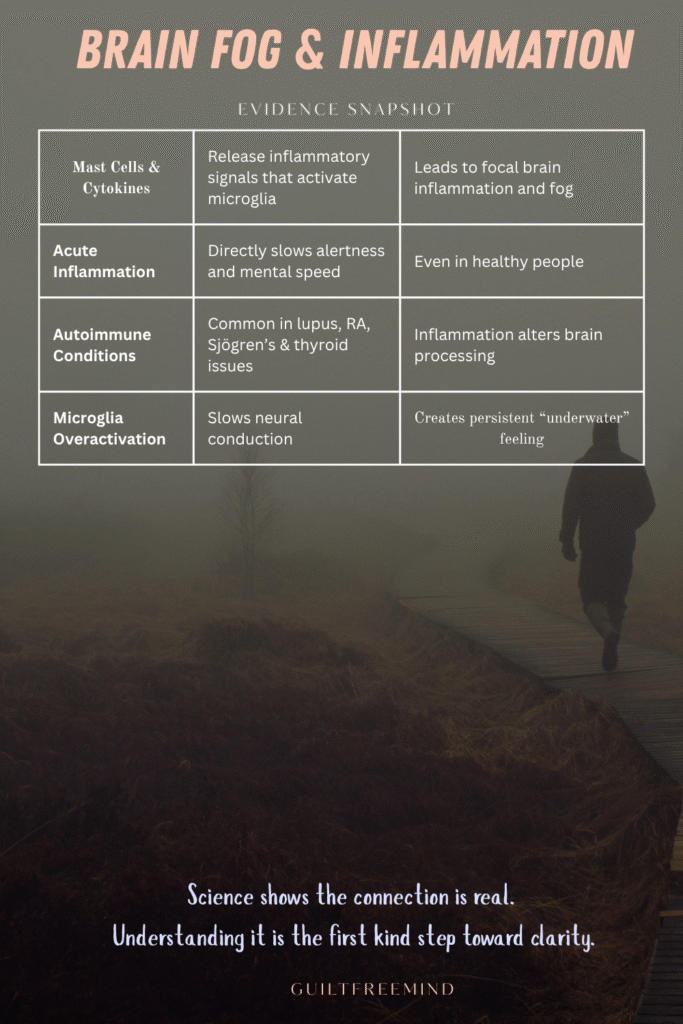
Evidence Snapshot
| Source / Study | Core Finding | Key Implication for Brain Fog |
|---|---|---|
| Theoharides et al. (2015) | Mast cells release cytokines/histamine causing microglia activation and focal neuroinflammation; brain fog prevalent in mastocytosis (>90% daily) | Direct immune mechanism via mast cells and cytokines |
| University of Birmingham (2019) | Acute inflammation impairs alertness and mental speed | Proof that inflammation → cognitive slowing |
| Autoimmune Institute (Asamoah) | Inflammation alters brain processing in autoimmune diseases; compromised BBB allows inflammatory molecules entry | Validates symptom in lupus, RA, Sjögren’s, etc. |
| Cleveland Clinic | Brain fog as cloudy thinking; neuroinflammation from immune response blocks information processing | Everyday, relatable description |
| Red River Health & Wellness | Microglia-driven brain inflammation slows neural conduction; linked to autoimmune, trauma, post-meal fog | Explains persistent fog in Hashimoto’s and autoimmunity |
| Cleveland Clinic, 2022 | Brain fog as manifestation of inflammation/chronic stress; cytokine storms in COVID-19 affect brain | Ties to autoimmune, long COVID, stress responses |
What Can Help? Practical Steps Without Pressure
You do not need to overhaul your life in one weekend—or ever feel like you’re “failing” if progress feels slow. Small, consistent actions that gently target inflammation often bring the biggest, most sustainable shifts over time. These aren’t rigid rules; they’re kind invitations to support your body’s natural resilience. As an immunologist, I see how calming peripheral inflammation can quiet the signals reaching the brain, helping microglia settle and cytokine levels ease—often leading to clearer thinking without force.
Here’s an expanded, gentle guide to each step, with why it helps (tied to the immunology we’ve discussed) and realistic ways to start—no perfection required:
Work with your doctor on the root cause
Treating the underlying autoimmune or inflammatory condition is usually the most powerful lever for reducing brain fog. Medications like DMARDs, biologics, or targeted therapies can lower systemic cytokine levels (e.g., IL-6, TNF-α), which directly decreases the inflammatory signals crossing into the brain and activating microglia. Monitoring flares early prevents prolonged neuroinflammation.
How to start gently:
Schedule a check-in with your rheumatologist or specialist to review your current plan. If you’re not yet diagnosed or managed, tracking symptoms (e.g., in a simple phone note: “fog level today + any joint pain?”) gives them useful data. You’re already doing the hard part by seeking understanding—professional support builds on that foundation.
Prioritize sleep
Poor or fragmented sleep amplifies inflammation: it shifts pro-inflammatory cytokines upward, disrupts the brain’s nightly “clean-up” process, and keeps microglia in a heightened state. Consistent, restorative sleep helps downregulate these cytokines, promotes anti-inflammatory pathways, and supports memory consolidation—directly countering the mental exhaustion and fog.
How to start gently:
Aim for a consistent bedtime/wake time (even if it’s just 15–30 minutes more regular than before). Create a low-pressure wind-down: dim lights, avoid screens 30–60 minutes before bed, or try a short breathing practice. If sleep feels elusive, celebrate any improvement—like falling asleep 10 minutes faster—as a win. Quality matters more than quantity; feeling rested is the real goal.
Pin this article for later:
Move gently
Low-intensity activity reduces systemic inflammation without adding stress to joints or the body. Even 20 minutes of moderate movement can trigger anti-inflammatory responses: muscles release myokines that lower pro-inflammatory signals, boost regulatory T cells (which calm autoimmunity), and improve circulation to deliver nutrients while clearing waste. In autoimmune contexts, gentle exercise helps without triggering flares, often easing fatigue and fog over time.
How to start gently:
Choose what feels kind—short walks in nature, seated yoga or stretching, gentle swimming, or tai chi. Start with 10–15 minutes a few times a week; no need to push to exhaustion. Listen to your body: if a day feels heavy, rest is the anti-inflammatory choice too. Many people notice subtle clarity improvements after consistent gentle movement—think “less hazy” rather than “super sharp.”

Eat in an anti-inflammatory direction
Food choices influence cytokine production and gut-brain signaling. Focusing on anti-inflammatory foods provides antioxidants and omega-3s that help dampen inflammation, support the blood-brain barrier, and reduce oxidative stress on neurons. Colorful plants, healthy fats, and spices like turmeric/ginger show promise in lowering inflammatory markers linked to brain fog.
How to start gently:
Add one or two nourishing items per day—berries in breakfast, a handful of walnuts, turmeric tea, or leafy greens—without cutting out favorites harshly. Think “add more color and gentleness” rather than “eliminate everything.” Hydration helps too: steady water intake supports circulation and brain function. Whatever feels sustainable wins; small swaps add up without guilt.
Support stress regulation
Chronic stress keeps the inflammatory loop going: it raises cortisol and cytokines, sustains microglia activation, and worsens fog. Gentle practices lower stress hormones, promote anti-inflammatory shifts (e.g., via vagus nerve calming), and give the brain space to recover. Creative outlets like journaling or art add joy without feeling like “work.”
How to start gently:
Try 5–10 minutes of deep breathing (e.g., 4-7-8 pattern: inhale 4, hold 7, exhale 8), a short mindfulness pause, or doodling/journaling how the fog feels today. If meditation feels too formal, just notice your breath during a walk. Creative expression (drawing, music, writing) can be especially freeing for mind-body release—no skill needed.
Gentle Ways to Support Your Clarity When Brain Fog Feels Present
Time needed: 30 days
Brain fog from inflammation can make even simple things feel heavy, and that’s okay—it’s your body signaling for care, not a sign you’re doing something wrong. There’s no perfect checklist or overnight fix here. Below are a few kind, optional steps that many people find helpful over time. Pick what feels doable today, skip what doesn’t, and remember: small, consistent gentleness often brings the biggest shifts. You’re already showing up for yourself just by reading this—no rush, no guilt.
- Work with your doctor on the root cause
Treating the underlying autoimmune or inflammatory condition (with guidance from your healthcare provider) often has the strongest effect on reducing brain fog over time.
- Prioritize restful sleep
Consistent, quality rest helps calm inflammatory signals. Even small improvements in sleep patterns can make a difference
- Move in a way that feels kind
Gentle, low-intensity movement like walking, stretching, or yoga can help reduce systemic inflammation without adding stress to the body.
- Nourish in an anti-inflammatory direction
Add colorful plants, omega-3-rich foods, or gentle spices (like turmeric or ginger) in ways that feel easy and sustainable — no strict rules.
- Offer kindness to stress and the nervous system
Short breathing practices, creative outlets, or simple pauses can help regulate stress hormones and give your mind space to settle.
Track what feels helpful for you—no judgment if some days are harder than others
Use a simple notebook or app: note fog level (1–10), what you tried (sleep, walk, etc.), and how you felt. Patterns emerge gently over weeks. Celebrate tiny wins—”I slept 30 minutes more and felt a bit clearer”—they compound. If something doesn’t help, that’s information too; adjust kindly.
These steps aren’t a cure-all, but they target the immunology we discussed: lowering peripheral inflammation quiets the brain’s alarm system. Many people notice gradual lifts in clarity as cytokines ease and microglia calm. You’re not broken; your immune system is adaptable, and you’re already supporting it by exploring this. One small, kind choice at a time—that’s enough.
When to Seek Professional Help?
Brain fog on its own is frustrating and common, especially when tied to inflammation or autoimmune activity, but it doesn’t always mean something urgent is happening. That said, your body sometimes sends stronger signals that deserve prompt attention—listening to them is an act of kindness toward yourself, not overreacting.
Here are the key situations where reaching out to a healthcare professional sooner rather than later makes sense. These red flags help distinguish “this is the usual fog I’m learning to manage” from “this might need extra support right now.”

Sudden severe worsening
If your brain fog escalates dramatically over hours or a few days—going from “manageable haze” to “I can barely string thoughts together,” or if it becomes so intense that you can’t safely drive, work, or care for yourself—don’t wait. Sudden changes can sometimes signal a flare, medication side effect, infection, or other shift that needs quick evaluation.
What this might feel like:
You wake up and the fog is 3–4 levels worse than yesterday with no obvious trigger (poor sleep, stress spike). Trust that shift and contact your doctor or go to urgent care if it feels unsafe to wait.
New neurological symptoms
Any fresh neurological changes alongside the fog are important to check. These include:
- Numbness, tingling, or weakness in limbs/face
- Vision changes (blurring, double vision, loss of vision in one eye, flashing lights)
- Balance problems, dizziness, or trouble walking steadily
- Severe headaches (especially if new, thunderclap-like, or with neck stiffness)
Seizures or episodes of confusion that feel different from your usual fog These can point to increased central nervous system involvement (e.g., in lupus or other autoimmune conditions affecting the brain/nerves) and often need imaging, bloodwork, or specialist input quickly.
Significant mood shifts or depression
If brain fog arrives with (or worsens alongside) noticeable changes in mood—profound sadness, hopelessness, irritability, loss of interest in things you usually enjoy, or thoughts of self-harm—this combination deserves care right away. Inflammation doesn’t just affect thinking; cytokines can influence mood-regulating pathways in the brain, creating a “depression-like” state that’s often more biological than purely psychological in autoimmune contexts. Treating the inflammation frequently helps both the fog and the mood lift together. But mood symptoms that feel heavy or persistent need support—whether from your primary doctor, psychiatrist, or rheumatologist who understands the immune-mood link.
Who to See and What to Expect
- Your primary doctor or current specialist (rheumatologist, endocrinologist, etc.) — Start here if you already have a relationship. They know your history and can decide if tests (e.g., inflammatory markers like CRP/ESR, ANA panel, complement levels, thyroid function, vitamin D/B12, or even brain imaging) are needed.
- Rheumatologist — Ideal if autoimmune disease is suspected/confirmed; they specialize in systemic inflammation and its neurological effects.
- Neurologist — Especially helpful if neurological red flags are present or if brain fog persists despite good control of peripheral symptoms.
- Functional medicine practitioner (if aligned with your preferences) — Can take a broader look at gut health, nutrient status, and chronic inflammation triggers, often complementing conventional care.
Bring notes if possible: recent fog patterns, any new symptoms, what you’ve tried (sleep, diet, etc.), and how it impacts daily life. This isn’t about “proving” anything—it’s giving them the clearest picture so they can help you fastest.
A Gentle Reminder
If you are suffering from brain fog due to inflammation, you must seek help. Seeking help isn’t a sign of weakness or that you’ve “failed” at self-care. It’s the opposite: it’s you advocating for your whole self—body, brain, and immune system—because you deserve to feel clearer and safer. Many people with autoimmune-related brain fog find that once the right tests and adjustments are made, the fog lightens noticeably.
If any of these red flags feel present right now, reach out today—no need to wait for the “perfect” moment or perfect words. You’re allowed to ask for support whenever you need it.

Exploring Other Guilt Free Mind Categories
Whether you’re noticing the mental haze that arrives with fatigue, learning to recognize when inflammation is quietly dimming your clarity, or looking for ways to meet foggy days without self-judgment, these resources from Guilt Free Mind support you—one honest breath at a time.
Find daily practices that respect the body’s inflammatory signals—gentle movement that doesn’t trigger flares, rest that actually restores rather than just numbs, and simple sensory anchors that help the nervous system feel safe even when thinking feels heavy.
🧠 Understanding Personality Disorders
See how anxiety that lives in the body can sometimes overlap with deeper emotional patterns or personality traits shaped long ago. These pieces offer compassionate insight without turning your experience into a diagnosis to fear or a flaw to fix — because what shows up is often just old wiring doing its best to protect you, not evidence that you are broken or wrong.
🎨 Creative Healing and Therapy
Use drawing, free-writing, voice notes, or somatic mapping to externalize what the fog feels like. Giving shape to the haze—whether it’s thick cotton, slow-moving syrup, or static—lets you witness it with distance and kindness instead of fighting it.
💡 Mindful Productivity and Focus
Protect your limited cognitive bandwidth on foggy days. Learn micro-strategies—short work sprints, visual timers, permission to do less—that work with an inflamed nervous system rather than demanding it perform like it’s inflammation-free.
💪 Emotional Recovery and Resilience
Build quiet anchors that hold steady even when memory feels unreliable or concentration drifts. These articles help you stay connected to your worth on days the brain won’t cooperate, so resilience grows from self-trust instead of forcing clarity.
😌 Stress, Anxiety, and Depression Toolkit
This is where today’s article lives—alongside companions that address the physical side of mental fog. Find body-first explanations, practical next steps, and reminders that understanding the immune piece is already a powerful act of care.
Final Thoughts
Brain fog driven by inflammation is your immune system signaling that it needs support—not a sign that you’re failing or not trying hard enough. The immune system is highly adaptable, and many people find that targeted care brings meaningful clarity back. You are already taking a powerful step by understanding what’s happening. That awareness alone is a gentle, courageous act of self-kindness.
There’s no timeline you have to meet, no perfect version of “healed” you need to chase. Some days the fog lifts a little; other days it lingers—and both are part of the process. What matters is that you’re showing up for yourself with curiosity instead of criticism. Your brain and body are resilient, and small, consistent acts of care—whether medical support, rest, gentle movement, nourishing food, or simply breathing through the haze—can gradually quiet the inflammatory signals and restore clearer thinking.
If this resonates with you, here are a few kind next steps to keep the momentum going without pressure:
- Explore more about the mind–immune connection in our related article: When Anxiety Feels Physical: Decoding Anxiety Immune Signals — it dives deeper into how immune signals show up as physical and emotional symptoms.
- Watch gentle, science-backed videos on the Guilt Free Mind YouTube channel for more insights on calming the immune–mind loop (new videos drop regularly with short, hopeful explanations).
- Subscribe to Guilt Free Mind (free, no spam) so new articles and videos land gently in your inbox whenever you’re ready.
You’ve got this—one kind step at a time. No rush, no guilt, just steady support for the beautiful, complex system that is you.
Frequently Asked Questions
No. Many people see substantial improvement when inflammation is better managed. It often fluctuates rather than being fixed.
Yes—cytokines, microglia activation, and mast cell mediators disrupt normal brain signaling, leading to measurable cognitive slowing.
Lupus, rheumatoid arthritis, Sjögren’s syndrome, Hashimoto’s thyroiditis, celiac disease, and others with high systemic inflammation.
If it occurs alongside fatigue, joint pain, rashes, or other autoimmune/post-viral symptoms, it’s reasonable to explore the inflammatory connection with a doctor.
Yes, in most cases—addressing the underlying inflammation, improving sleep, and reducing stress often lead to clearer thinking over weeks to months.
About the Author
Dr. Shruti Bhattacharya is the founder and heart of Guilt Free Mind, where she combines a Ph.D. in Immunology with advanced psychology training to deliver science-backed mental health strategies. Her mission is to empower readers to overcome stress, anxiety, and emotional challenges with practical, evidence-based tools. Dr. Bhattacharya’s unique blend of expertise and empathy shapes her approach to wellness:
- Academic & Scientific Rigor – Holding a Ph.D. in Immunology and a Bachelor’s degree in Microbiology, Dr. Bhattacharya brings a deep understanding of the biological foundations of mental health, including the gut-brain connection. Her completion of psychology courses, such as The Psychology of Emotions: An Introduction to Embodied Cognition, from University of Cambridge enhances her ability to bridge science and emotional well-being.
- Dedicated Mental Health Advocacy – With over 15 years of experience, Dr. Bhattacharya has supported hundreds of individuals through online platforms and personal guidance, helping them navigate mental health challenges with actionable strategies. Her work has empowered readers to adopt holistic practices, from mindfulness to nutrition, for lasting resilience.
- Empathetic Connection to Readers – Known for her compassionate and relatable voice, Dr. Bhattacharya is a trusted guide in mental health, turning complex research into accessible advice. Her personal journey as a trauma survivor fuels her commitment to helping others find calm and confidence.
- Lifelong Commitment to Wellness – Dr. Bhattacharya lives the principles she shares, integrating science-based habits like balanced nutrition and stress management into her daily life. Her personal exploration of mental health strategies inspires Guilt Free Mind’s practical, reader-focused content.
🏆 Guilt Free Mind was named one of the Top 100 Mental Health Blogs on Feedspot in 2025.

Follow me on:
Disclaimer
This article is for informational and educational purposes only and is not a substitute for professional medical advice, diagnosis, or treatment. It reflects general scientific knowledge and the author’s expertise in immunology but is not personalized medical guidance.
Do not use this content to start, stop, or change any medications, supplements, diets, or treatments without consulting a qualified healthcare professional. If you have persistent brain fog, sudden symptom changes, new neurological signs (e.g., numbness, vision issues), or significant mood changes, seek prompt medical attention from your doctor or specialist.
The author, Dr. Shruti Bhattacharya, and Guilt Free Mind are not responsible for any decisions made based on this article. Always consult your healthcare provider for advice tailored to your health.
Your well-being matters—seeking understanding is already a gentle, kind step.
References
- Asamoah, T. Understanding brain fog in autoimmune disease. Autoimmune Institute.
- Cleveland Clinic. (2024). Brain fog: What it is, causes, symptoms & treatment.
- Cleveland Clinic. (2022). Strategies for busting up brain fog.
- Red River Health and Wellness Center. New research shows inflammation causes brain fog.
- Theoharides, T. C., Stewart, J. M., Hatziagelaki, E., & Kolaitis, G. (2015). Brain “fog,” inflammation and obesity: Key aspects of neuropsychiatric disorders improved by luteolin. Frontiers in Neuroscience, 9, 225.
- University of Birmingham. (2019). Link between inflammation and mental sluggishness shown in new study.
