


This article is for information only and isn’t a substitute for advice from your doctor or mental health professional.
Table of Contents
Quick Answer
Quick answer: A dopamine detox is a planned break from habits that are hard to stop, like scrolling, gaming, snacking or online shopping. Despite the name, it doesn’t flush out or lower dopamine: dopamine is a chemical messenger your brain needs every day, and no study has tested a “dopamine detox” itself. What research does show is that cutting back on social media for one to four weeks improved mood or well-being for some people, while other digital detox studies found little or no benefit. Treat it as a habit reset, not a brain cleanse.
If you have ever picked up your phone to check one message and looked up forty minutes later, the idea of a dopamine detox probably sounds appealing. The trend promises to “reset” your brain so that ordinary life feels rewarding again. Some of that promise is marketing, and some of it is common sense.
In this guide, I explain what a dopamine detox really is, what dopamine actually does, what research says about taking breaks from screens and other habits, the side effects to expect, and a gentle plan you can start this week.
What Is a Dopamine Detox?
The term took off around 2019, when California clinician Cameron Sepah described “dopamine fasting”: regularly stepping away from the cues that trigger habits you find hard to control, such as notifications, so that you can sit with boredom and choose what to do next instead of reacting. The idea borrows from cognitive behavioral therapy (CBT), especially a technique called stimulus control, which means changing your surroundings so the cues for a habit show up less often. As Harvard Health has pointed out, Sepah himself said the dopamine label was mostly a catchy name.
Online, the idea grew into something far more extreme: days with no phone, no music, no conversation and sometimes no food, on the theory that starving the brain of pleasure “resets” dopamine. That version isn’t supported by science, and it isn’t what the original technique asked for.
So here is a more useful definition: a dopamine detox is a time-limited break from one or two habits that have started to run your day, combined with a plan for what you will do instead.
What Is Dopamine (and What It Isn’t)?
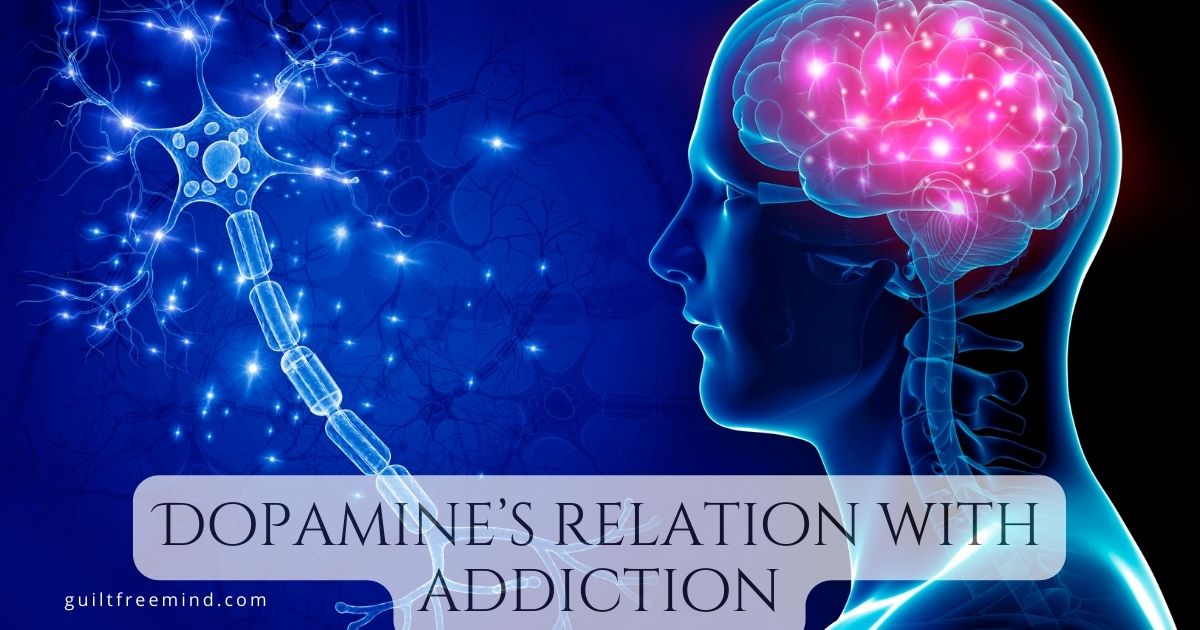
Dopamine is a chemical messenger (neurotransmitter) made by small groups of nerve cells deep in the brain, including the ventral tegmental area and the substantia nigra. It helps control movement (the loss of dopamine-making cells is what causes the movement problems of Parkinson’s disease) and plays a big part in motivation, learning and attention.
Dopamine is often called the “pleasure chemical”, but that isn’t quite right. Research on reward suggests it has more to do with wanting and learning than with enjoyment itself:
- Learning what pays off. In classic experiments, dopamine cells fired when a reward arrived unexpectedly, shifted to firing at the cue once the reward could be predicted, and dipped when an expected reward didn’t arrive. This “prediction error” signal helps the brain learn what is worth repeating (Schultz, Dayan & Montague, 1997).
- Wanting, not liking. Berridge and Robinson’s work suggests dopamine makes rewards, and the cues linked to them, feel attention-grabbing and worth chasing, while the pleasure of the reward itself depends on other brain systems (Berridge & Robinson, 1998).
Can You Get “Too Much Dopamine” From Your Phone?
Not in the way the trend suggests. Dopamine rises when you expect or get a reward and then settles back down. It doesn’t build up like a toxin that needs flushing out, and avoiding your phone doesn’t “refill” it (Harvard Health). Apps, games and snacks are hard to put down not because they “overload” dopamine, but because they are built around easy, unpredictable rewards and cues that keep pulling your attention back.
Addictive drugs are different. They act directly on the brain’s reward system, triggering large, rapid dopamine surges, and repeated use changes circuits involved in reward, stress and self-control. That is why addiction needs proper treatment rather than a weekend detox (Volkow, Koob & McLellan, 2016).
Why Are Phones, Games and Snacks So Hard to Put Down?
Some rewards are quick, always available and a little unpredictable, which is exactly the mix the brain’s learning system responds to. A few common ones:
Social Media
Likes, comments and new posts arrive at random, so checking always feels like it might be worth it. In one brain-imaging study, teenagers were more likely to “like” photos that already had many likes, and seeing photos with many likes was linked to more activity in brain areas involved in reward (Sherman et al., 2016). If endless scrolling is your main habit, my guides to doomscrolling and brain rot go deeper.
Video Games
Games are designed around goals, levels and rewards. Most people who play do so without harm, but the World Health Organization recognizes gaming disorder when someone loses control over gaming, gives it priority over other interests and daily life, and keeps going despite clear harm, usually over at least 12 months.
Sugary and Highly Processed Foods
Food is a natural reward, and snacks that are sweet, salty or fatty are easy to overeat when they are always within reach. Changing what is in the cupboard usually works better than relying on willpower.
Alcohol, Nicotine and Other Drugs
These need more than a habit break. If you are worried about your drinking or drug use, talk to a doctor: stopping heavy drinking or some medicines suddenly can be dangerous without medical support. In the US, the SAMHSA National Helpline (1-800-662-4357) is free, confidential and open 24/7.
Signs Your Habits Might Need a Reset
There is no test for “dopamine overload”. Instead, look at what a habit is doing to your days. A break may help if you notice that:
- you reach for your phone, or another habit, automatically, without deciding to;
- “five minutes” regularly turns into an hour or more;
- your sleep suffers because of late-night scrolling, gaming or snacking;
- slower activities, like reading, a conversation or a work task, feel unbearably dull by comparison;
- you feel restless or irritable when you can’t get to the habit;
- you have tried to cut back before and it hasn’t stuck;
- it is crowding out people, work or things you used to enjoy.
If the last few points describe you strongly, or the habit involves alcohol, drugs, gambling or spending money you don’t have, a self-guided detox may not be enough. See When to Get Help below.
Does a Dopamine Detox Work? What the Research Says
No study has tested a “dopamine detox” as it is described online, and none has shown that a detox changes dopamine levels or receptors. What has been studied is the practical core of the idea: taking a break from social media or your smartphone.
- Limiting social media for three weeks. 143 US college students either limited Facebook, Instagram and Snapchat to 10 minutes per app per day or carried on as usual. The limited group reported less loneliness and depression than the control group. Both groups felt less anxious and less afraid of missing out, which the researchers linked to simply keeping track of their use (Hunt et al., 2018).
- A one-week break. In a randomized trial with 154 adults, people who stopped using Facebook, Instagram, Twitter and TikTok for a week reported better well-being and lower depression and anxiety scores than people who used them as usual (Lambert et al., 2022).
- Four weeks off Facebook. In a large US experiment, people who deactivated Facebook for four weeks spent more time on offline activities, including socializing with family and friends, and reported higher well-being (Allcott et al., 2020).
- The bigger picture is mixed. A systematic review of 21 digital detox studies found results that varied widely: some showed benefits, others found no effect, and some even found negative effects on well-being (Radtke et al., 2022).
Put together, a break from screens can help some people feel better, especially when it is targeted (one or two apps rather than everything) and paired with something you value. It is not a cure-all, and the benefit seems to depend on what you do with the time instead.
Benefits and Limits of a Dopamine Detox
What It Can Do
- give you back time and attention for things you care about;
- help your sleep if screens and snacks leave the bedroom;
- show you how automatic a habit has become, which is often the most useful part;
- make room for slower pleasures, like a walk, a book or a long conversation.
What It Can’t Do
- flush out, lower or “reset” dopamine, or repair dopamine receptors;
- treat addiction, ADHD, depression or anxiety on its own;
- make every day feel exciting. Some boredom is normal, and learning to sit with it is part of the point.
Side Effects and Risks
The first days of a break are often uncomfortable. Boredom, restlessness, irritability, the urge to check “just once” and fear of missing out are all common. Expect them, plan for them, and don’t take them as a sign that you are failing.
Watch out for these risks:
- Going to extremes. Cutting out food, exercise, music or social contact isn’t part of the original idea and can leave you hungry, lonely and miserable (Harvard Health).
- The rebound binge. All-or-nothing rules can end in a bigger binge when the detox is over. Gradual, specific limits are easier to keep.
- Missing a bigger problem. Trouble focusing, low motivation or losing interest in things can be signs of ADHD, depression or burnout. A detox shouldn’t replace getting checked.
- Stopping medicines. Never stop prescribed medication, including ADHD medicines or antidepressants, as part of a “detox” without talking to your doctor.
How to Do a Dopamine Detox: A Gentle 6-Step Plan
Here is a realistic version built on what research and CBT actually support: small, specific changes to your surroundings and routine.
1. Pick One or Two Habits
For a few days, write down where your time and attention really go: screen-time reports, gaming hours, late-night snacking, binge-watching, shopping apps. Then choose the one or two habits that cost you the most.
Every time I do a Twitch livestream, someone asks whether I play games. I gave up gaming a long time ago; I simply don’t have that kind of free time. But games aren’t the only culprit, so when you make your list, include TV series, movies, short videos and anything else that gives you quick, easy rewards.
2. Set a Specific, Realistic Goal
Vague goals like “use my phone less” rarely stick. Choose something you can measure, for example:
- no phone for the first hour after waking and the last hour before bed;
- social media limited to about 30 minutes a day, close to the limit used in the Hunt study;
- one screen-free evening, or one screen-free morning, each week;
- no gaming on weeknights until work or study is done.
3. Change Your Surroundings, Not Just Your Willpower
This is the stimulus-control part of the original idea: make the habit harder and the alternative easier.
- turn off non-essential notifications and move tempting apps off your home screen;
- use your phone’s built-in screen-time limits or app timers;
- charge your phone outside the bedroom and use an ordinary alarm clock;
- keep the snacks you overeat out of the house and easy options like fruit or nuts within reach;
- log out of shopping and social apps, so there is a pause before you open them.

4. Plan What You Will Do Instead

An empty gap tends to fill itself with the old habit. Decide in advance what goes in its place: a short walk, a call to a friend, a few pages of a book, a hobby, journaling or a few minutes of slow breathing. Choose things that feel good but don’t come with an endless feed.
5. Tell Someone

Share your goal with a friend, partner or family member, or take the break together. If you live with others, agree on shared rules, such as phones away during meals.
6. Check In and Adjust
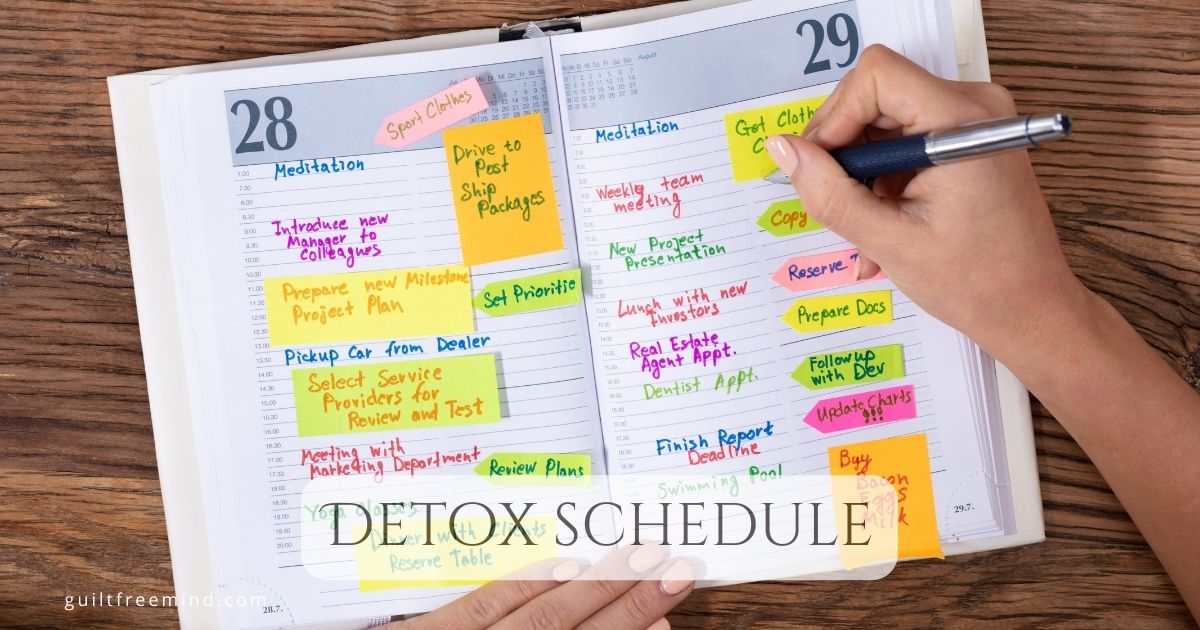
At the end of each day or week, ask yourself: What was hard? What helped? What did I do with the time I won back? If a rule feels impossible, make it smaller rather than giving up. If it felt easy, stretch it a little. Being flexible is part of the plan, not a failure.
How Long Should a Dopamine Detox Last?
There is no research-based “right” length. The studies above used breaks of one to four weeks, and some people prefer daily screen-free windows to a longer break. A sensible start is one day or one weekend for an all-in break, or two to four weeks for a targeted limit, such as 30 minutes of social media a day. What matters most is what you keep doing afterwards.
After the Detox: Keeping a Healthy Balance

When the break ends, bring things back slowly and on purpose. Notice which habits you actually missed and which you didn’t. Keep the changes that helped, such as notifications off, the phone out of the bedroom or a screen-free evening, and drop the ones that didn’t.

Build slower rewards into ordinary days: movement, daylight, time with people, creative work and enough sleep. They won’t compete with an endless feed for excitement, and they don’t need to. If you slip back into old patterns, that isn’t failure; it is information. Life keeps changing, and your habits can change with it.
Prefer to watch? Here is my video from the Guilt Free Mind YouTube channel:
Keep Reading on Guilt Free Mind
- Doomscrolling: protect your mental peace
- Brain rot: navigating digital overload
- Productivity loss: how to get back on track
- Do productivity apps really work?
- How social media affects body image
- How to stop comparing your body on social media
- How to start journaling
- Deep breathing for anxiety
- Attention deficit hyperactivity disorder (ADHD)
When to Get Help
A dopamine detox is a self-help experiment, not treatment. Talk to a doctor or mental health professional if:
- you can’t cut back on a habit even though it is harming your work, studies, money, sleep or relationships;
- the habit involves alcohol, drugs or gambling;
- trouble focusing, low mood or low motivation lasts for weeks, whatever your screen time;
- you feel hopeless or have thoughts of harming yourself.
If you are struggling or having thoughts of harming yourself, please reach out now: in the US, call or text 988; in India, call Tele-MANAS on 14416 (or 112 in an emergency); in the UK and Ireland, call Samaritans on 116 123. For help with alcohol or drug use in the US, call the SAMHSA National Helpline on 1-800-662-4357 (free, confidential, 24/7).
Final Thoughts
Dopamine isn’t the enemy, and you don’t need to starve your brain of pleasure. What the dopamine detox trend gets right is simpler: notice the habits that have started running your days, step back from one or two of them on purpose, and fill the space with things you value. Start small, be kind to yourself when it feels hard, and keep what works.
If you found this helpful, tell me in the comments which habit you are taking a break from. For more, subscribe to the Guilt Free Mind blog and the Guilt Free Mind YouTube channel.
See you in my next blog post,
Dr. Shruti
Frequently Asked Questions
A dopamine detox is a planned, time-limited break from habits that are hard to stop, such as scrolling, gaming or snacking. Despite the name, it doesn’t remove or lower dopamine. It is really a way of changing habits and the cues that trigger them.
There are no studies of dopamine detox itself. Trials of social media breaks lasting one to four weeks found better mood or well-being for some people, but a review of 21 digital detox studies found mixed results. A targeted break, with a plan for what you will do instead, is the most realistic approach.
The idea of flushing out or resetting dopamine is a myth: dopamine is a chemical messenger your brain needs, and avoiding pleasure doesn’t lower it. The useful part is real, though. Stepping back from habits that have become automatic can help you take back your time and attention.
In the first days, many people feel bored, restless, irritable or worried about missing out. Extreme versions that cut out food, exercise or social contact can be harmful. Never stop prescribed medication as part of a detox without your doctor’s advice.
There is no set length. Research on social media breaks has used one to four weeks. Start with a day or a weekend, or try a targeted limit for two to four weeks, then keep the changes that helped.
It isn’t a treatment for either. Cutting back on screens may help your sleep and free up attention, but if you have ongoing trouble concentrating, low mood or low motivation, talk to a doctor or mental health professional.
About the Author
Dr. Shruti Bhattacharya is the founder and heart of Guilt Free Mind, where she combines a Ph.D. in Immunology with training in psychology to deliver science-backed mental health strategies. Her mission is to empower readers to overcome stress, anxiety, and emotional challenges with practical, evidence-based tools. Dr. Bhattacharya’s unique blend of expertise and empathy shapes her approach to wellness:
- Academic & Scientific Rigor – Holding a Ph.D. in Immunology and a Bachelor’s degree in Microbiology, Dr. Bhattacharya brings a deep understanding of the biological foundations of mental health, including the gut-brain connection. Her completion of psychology courses, such as The Psychology of Emotions: An Introduction to Embodied Cognition, enhances her ability to bridge science and emotional well-being.
- Dedicated Mental Health Advocacy – With over 15 years of experience, Dr. Bhattacharya has supported hundreds of individuals through online platforms and personal guidance, helping them navigate mental health challenges with actionable strategies. Her work has empowered readers to adopt holistic practices, from mindfulness to nutrition, for lasting resilience.
- Empathetic Connection to Readers – Known for her compassionate and relatable voice, Dr. Bhattacharya is a trusted guide in mental health, turning complex research into accessible advice. Her personal journey as a trauma survivor fuels her commitment to helping others find calm and confidence.
- Lifelong Commitment to Wellness – Dr. Bhattacharya lives the principles she shares, integrating science-based habits like balanced nutrition and stress management into her daily life. Her personal exploration of mental health strategies inspires Guilt Free Mind’s practical, reader-focused content.
🏆 Guilt Free Mind was named one of the Top 100 Mental Health Blogs on Feedspot.

Disclaimer: This content is for informational purposes only and is not a substitute for professional medical advice.
References
- Allcott, H., Braghieri, L., Eichmeyer, S., & Gentzkow, M. (2020). The welfare effects of social media. American Economic Review, 110(3), 629–676. https://doi.org/10.1257/aer.20190658
- Berridge, K. C., & Robinson, T. E. (1998). What is the role of dopamine in reward: Hedonic impact, reward learning, or incentive salience? Brain Research Reviews, 28(3), 309–369. https://doi.org/10.1016/S0165-0173(98)00019-8
- Grinspoon, P. (2020, February 26). Dopamine fasting: Misunderstanding science spawns a maladaptive fad. Harvard Health Publishing. health.harvard.edu
- Hunt, M. G., Marx, R., Lipson, C., & Young, J. (2018). No more FOMO: Limiting social media decreases loneliness and depression. Journal of Social and Clinical Psychology, 37(10), 751–768. https://doi.org/10.1521/jscp.2018.37.10.751
- Lambert, J., Barnstable, G., Minter, E., Cooper, J., & McEwan, D. (2022). Taking a one-week break from social media improves well-being, depression, and anxiety: A randomized controlled trial. Cyberpsychology, Behavior, and Social Networking, 25(5), 287–293. https://doi.org/10.1089/cyber.2021.0324
- Radtke, T., Apel, T., Schenkel, K., Keller, J., & von Lindern, E. (2022). Digital detox: An effective solution in the smartphone era? A systematic literature review. Mobile Media & Communication, 10(2), 190–215. https://doi.org/10.1177/20501579211028647
- Schultz, W., Dayan, P., & Montague, P. R. (1997). A neural substrate of prediction and reward. Science, 275(5306), 1593–1599. https://doi.org/10.1126/science.275.5306.1593
- Sherman, L. E., Payton, A. A., Hernandez, L. M., Greenfield, P. M., & Dapretto, M. (2016). The power of the like in adolescence: Effects of peer influence on neural and behavioral responses to social media. Psychological Science, 27(7), 1027–1035. https://doi.org/10.1177/0956797616645673
- Volkow, N. D., Koob, G. F., & McLellan, A. T. (2016). Neurobiologic advances from the brain disease model of addiction. New England Journal of Medicine, 374(4), 363–371. https://doi.org/10.1056/NEJMra1511480
- World Health Organization. (2020, October 22). Addictive behaviours: Gaming disorder. who.int
