
Last Updated: June 8th, 2026
You wake up one morning and realize the person you built a life with — the one who once made you feel chosen — has left you questioning your own reality. The constant criticism disguised as “feedback,” the charm that turned cold, the way your needs disappeared. If you’ve ever been married to a narcissist, this ache feels familiar. You’re not alone, and there’s no shame in how long it took to see it clearly.
As a mental health blogger Ph.D. in Immunology, Master’s in psychology, personal experience as a trauma survivor, and specialized training in narcissistic abuse recovery, I’ve guided thousands of readers through healing after narcissistic marriage. Many come to Guilt Free Mind feeling broken, wondering if they’ll ever trust their own judgment again. The good news? Healing is not only possible — it’s transformative when done with compassion and the right tools.
Table of Contents
At a Glance: Healing After Being Married to a Narcissist
This comprehensive guide explores how to heal when you were married to a narcissist — without shame or guilt. It covers the cycle of narcissistic abuse, signs of a covert narcissist husband, practical steps for safe leaving (including when children are involved), the 4 key stages of healing, trauma bond recovery, boundary setting, and powerful self-healing tools.
You’ll find real-life stories, expert insights, free printables (Red Flags Checklist & Journal Prompts), a healing progress tracker, and a gentle self-assessment quiz to help you understand where you are in your recovery journey.
Quick Tip: Healing is not linear. Be patient and gentle with yourself — progress matters more than speed.

Married to a Narcissist: Red Flags Checklist
Download the free Narcissistic Marriage Red Flags Checklist to quickly assess your situation and begin healing after narcissistic marriage.
What It Really Means to Be Married to a Narcissist?
Being married to a narcissist typically involves a painful and confusing cycle of idealization, devaluation, and discard that slowly erodes your self-worth and sense of reality. In the beginning, you may feel intensely loved and chosen through love-bombing — grand gestures, constant attention, and future promises (Helpguide). Over time, this shifts into subtle (or not-so-subtle) devaluation, where criticism, silent treatment, and emotional withdrawal become the norm. The final discard phase often leaves you feeling discarded, confused, and questioning your own value.
Signs of a covert narcissist husband
Identifying the signs is particularly tricky because they hide behind a calm, caring, or even victim-like exterior. These often include subtle manipulation, passive-aggressive comments, quiet gaslighting that makes you doubt your memory or perceptions, withholding emotional support, and playing the martyr while making you feel like the problem (Anne Wright). Unlike overt narcissists who are loud and grandiose, covert ones drain you quietly, leaving you exhausted without always understanding why.
US Statistic
Lifetime prevalence of Narcissistic Personality Disorder in the US is approximately 6.2%, with higher rates among men (7.7%). Many more people exhibit strong narcissistic traits that significantly damage marriages, even if they don’t meet the full clinical diagnosis.
Real-life scenario
One of my readers, a dedicated teacher in her 40s, shared how her covert narcissist husband would praise her dedication to her students in front of family and friends, but privately dismiss her feelings as “overreactions” or “being too sensitive” whenever she expressed a need. Over the years, she gradually shrank herself — stopping hobbies, avoiding friends, and walking on eggshells to keep the peace — a pattern many readers recognize all too well.
In collectivist societies, strong cultural pressures to maintain family harmony, uphold social reputation, and prioritize marriage at all costs can make leaving a narcissist with children even more complex. These expectations often delay recognition of the abuse, increase feelings of guilt and shame, and make seeking help feel like a betrayal of family values.
Narcissistic Marriage vs Healthy Marriage
| Aspect | Narcissistic Marriage | Healthy Marriage |
|---|---|---|
| Behaviors | Gaslighting, love-bombing then devaluation, guilt-tripping, lack of empathy | Mutual respect, open communication, shared decision-making |
| Feelings | Chronic anxiety, self-doubt, walking on eggshells | Security, emotional safety, mutual support |
| Outcomes | Erosion of self-worth, isolation, trauma bonding | Growth, trust, long-term fulfillment |
This table highlights why healing after narcissistic marriage requires deliberate steps.
The Trauma Bond
Healing after narcissistic marriage is often one of the hardest emotional recoveries because of the powerful trauma bond that forms during the relationship. This bond is a neurological response where your brain becomes addicted to the cycle of highs and lows — the intense love-bombing followed by devaluation. Even after leaving, you may find yourself missing the “good times,” romanticizing the early days, and minimizing the harm that was done. This is not a sign of weakness — it’s a normal survival response to prolonged emotional manipulation.
Many readers describe feeling stuck between two realities: knowing the relationship was damaging, yet still craving the version of the person who once made them feel special. This cognitive dissonance creates deep confusion, self-doubt, and prolonged grief.
“It’s such a difficult balance—when you bring your authentic self to the narcissistic person, they often shame and rage at you, and yet it is central to your healing that you cultivate your true self and share it with others.”
Dr. Ramani Durvasula (Melissa Fulgieri)
The Aftermath
A survey of narcissistic abuse survivors found that 78% reported severe anxiety and 65% showed symptoms consistent with complex PTSD (C-PTSD). These symptoms can include hypervigilance, emotional flashbacks, difficulty trusting others, and a persistent feeling of worthlessness — all of which make healing after narcissistic marriage feel overwhelming at times.
According to the American Psychological Association guidelines on complex trauma, long-term interpersonal abuse like narcissistic marriage often leads to complex PTSD symptoms that require specialized, trauma-informed support rather than standard therapy approaches. This is why generic advice often falls short — recovery needs compassion, patience, and the right tools.
4 Key Stages of Healing After Narcissistic Abuse (Timeline Infographic)
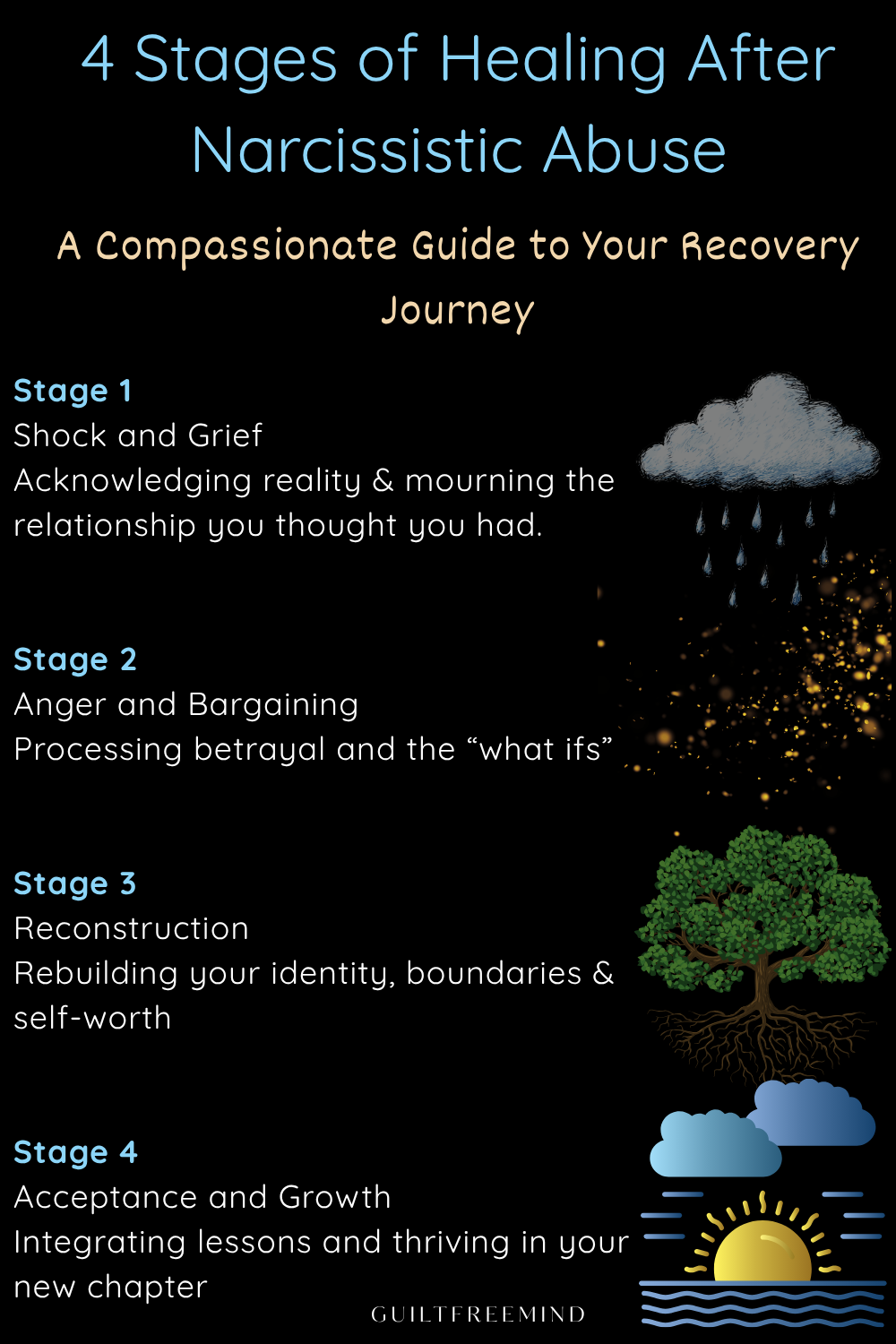
Healing after narcissistic marriage is a journey, not a straight line. While everyone’s timeline is unique, most people move through these four key stages. Understanding them can help you feel less lost and more compassionate toward yourself.
Here’s a clear breakdown of each stage:
- Shock and Grief — Acknowledging the reality of what you experienced and mourning the relationship you thought you had. This stage often brings disbelief, sadness, and emotional numbness.
- Anger and Bargaining — Processing the betrayal and wrestling with “what ifs” and “if onlys.” Anger is a natural and healthy part of healing — it shows you’re beginning to reclaim your power.
- Reconstruction — Rebuilding your identity, self-worth, and boundaries. This is where you slowly rediscover who you are outside of the narcissistic marriage and start creating a life that feels safe and authentic.
- Acceptance and Growth — Integrating the lessons from your experience and stepping into a stronger, wiser version of yourself. Many people report feeling more empowered, intuitive, and at peace during this stage (Verywell Mind).
Remember: You may move back and forth between stages — that’s completely normal. There is no “correct” timeline. Progress, not perfection, is what matters.
Signs You’re Healing: Trusting your intuition, lighter decisions, and returning joy.
Healing Progress Tracker Section
Track your journey weekly:
- Rate your self-trust level (1-10)
- Note one boundary you set this week
- Journal one small win
- Rate your energy and hope levels
Use the Narcissistic Abuse Recovery Journal Prompts printable for structured tracking.
Take This Gentle Quiz: Am I Healing After Narcissistic Marriage?
Now that you understand the healing stages and red flags, you might be wondering — where am I in my own healing journey?
This compassionate 10-question quiz will give you a clear, guilt-free picture of your current stage. It only takes a few minutes and can help you understand what to focus on next.


Practical Strategies: How to Heal When You Were Married to a Narcissist
Healing after narcissistic marriage requires intentional, consistent action (The Guardian). Below are four powerful strategies that have helped many of my readers reclaim their peace and rebuild their lives. Each step includes practical tools you can start using today (Betrayal Trauma Recovery).
Strategy 1: Prioritize Safety and Implement No Contact (or Structured Low Contact)
Your first and most important step is creating physical and emotional safety. This means going no contact whenever possible — blocking phone numbers, emails, and social media. When complete no contact isn’t possible (especially when leaving a narcissist with children), switch to low contact and use parallel parenting methods.
Use apps like OurFamilyWizard for all communication, document every interaction, and work with a lawyer experienced in high-conflict divorces. Safety planning is non-negotiable. Many readers report that establishing this boundary was the single most liberating moment in their healing after narcissistic marriage.
Strategy 2: Practice Conscious Grieving
Give yourself full permission to mourn the relationship you thought you had. The trauma bond makes this stage painful, but suppressing grief only prolongs it.
Art therapy is one of the most effective tools here because it bypasses overthinking and helps process emotions directly. Try expressive painting, collage work, or dream journaling. Start with my detailed guide: Role of Painting in Art Therapy. Many readers find that creating art about their experience helps them release suppressed anger and sadness without judgment.
Strategy 3: Rebuild Your Identity and Self-Worth
After years of being diminished, rediscovering who you are outside the marriage is crucial. Start small:
- Practice daily grounding and mindfulness exercises.
- Use CBT worksheets to challenge negative beliefs about yourself.
- Reconnect with hobbies, friends, and activities you gave up.
All these tools are available in the [Stress, Anxiety, and Depression Toolkit and as free printables on Guilt Free Mind. Rebuilding identity takes time, but every small step strengthens your sense of self.
Strategy 4: Set Strong Boundaries and Seek Professional Support
Learn to protect your energy fiercely. Practice clear, calm boundary scripts such as: “I will only discuss matters related to the children.” Trauma-informed therapy (especially approaches that address C-PTSD) makes a tremendous difference.
Consider working with a therapist who understands narcissistic abuse. In the meantime, use the resources here on Guilt Free Mind to support your healing between sessions.
Real-life scenario: A software engineer who was married to a covert narcissist for 11 years shared that after implementing strict no-contact boundaries and starting art therapy, she finally began sleeping through the night again. Within eight months, she regained her career momentum, received a promotion, and started enjoying life again — something she believed was impossible while in the marriage.
Watch my video on Boundary Setting After Narcissistic Relationships for practical examples and scripts.
How to Leave a Narcissist: Specific Situations
Leaving a narcissist is one of the most courageous steps you can take in your healing after narcissistic marriage. The process can feel overwhelming, but careful planning makes it safer and more manageable. Below are practical, step-by-step approaches for common situations (Thriveworks).
How to Leave a Narcissist When You Live Together
Planning in advance is essential for your safety. Start quietly while still living together:
- Secure important documents (passport, birth certificate, financial records, marriage certificate).
- Open a separate bank account and gather evidence of finances and any abusive behavior.
- Line up temporary safe housing with a trusted friend or family member.
- Inform a few safe people about your plan and create an emergency exit strategy.
When you’re ready to leave, do it calmly and preferably when the narcissist is not home. Change locks if possible and block all contact immediately after. Have a safety bag ready with essentials. Remember: your safety and peace come first — there is no shame in planning your exit carefully.
How to Leave a Narcissist with Children
This situation requires extra care and legal protection. Focus on leaving a narcissist with children by prioritizing their emotional and physical safety.
- Consult a family lawyer experienced in high-conflict divorces and narcissistic abuse before making any moves.
- Document everything — interactions, incidents, and parenting behaviors.
- Request parallel parenting arrangements rather than cooperative co-parenting, as narcissists often use children as tools for control.
- Use court-approved communication apps and minimize direct contact.
- Consider therapy for your children to help them process the changes without guilt.
Many readers have successfully rebuilt stable lives for themselves and their children by focusing on facts, documentation, and strong legal boundaries.
What to Say When Leaving a Narcissist
Keep communication short, firm, and non-negotiable. Examples:
- “This marriage is no longer healthy for me. I am choosing separation and will handle logistics through lawyers.”
- “I need space to focus on my well-being and will no longer engage in personal discussions.”
Avoid JADE (Justify, Argue, Defend, Explain). The less you engage, the better.
5 Things to Never Do After Breaking Up with a Narcissist
- Respond to hoovering attempts (sudden charm, promises, or fake crises).
- Share details of your healing journey with mutual friends or family who may report back.
- Rush into a new romantic relationship before completing your own healing.
- Blame yourself for the entire dynamic or feel guilty for leaving.
- Ignore red flags in future relationships — trust your strengthened intuition.
Share Your Story
Your experience matters. If you feel comfortable, share your story anonymously in the comments below. Reading others’ journeys often helps readers feel less alone in their healing after narcissistic marriage.
How to Heal When You Were Married to a Narcissist (Without Shame)
A complete step-by-step guide with practical strategies, safety planning, healing stages, and compassionate tools to help you heal after narcissistic marriage without guilt or shame.
- Recognize the Reality and Validate Your Experience
Acknowledge that you were married to a narcissist. Use the Narcissistic Marriage Red Flags Checklist to identify signs of covert narcissist husband and understand the cycle of idealization, devaluation, and discard.
- Ensure Your Safety and Leave Strategically
Create a safety plan. Learn how to leave a narcissist when you live together and how to leave a narcissist with children using parallel parenting, legal guidance, and minimal contact.
- Break the Trauma Bond Through Conscious Grieving
Allow yourself to grieve the relationship. Use art therapy techniques such as painting and journaling to process emotions without shame.
- Rebuild Your Identity and Self-Worth
Use CBT worksheets, mindfulness practices, and identity-rebuilding exercises from the Stress, Anxiety, and Depression Toolkit to rediscover who you are.
- Set Strong Boundaries and Seek Support
Practice firm boundary scripts and work with trauma-informed professionals while using free tools like the Healing Progress Tracker.
- Follow the 4 Key Stages of Healing
Move through Shock & Grief, Anger & Bargaining, Reconstruction, and Acceptance & Growth at your own pace. Track your progress weekly.
- Protect Your Healing Journey Long-Term
Avoid the 5 common mistakes after leaving a narcissist, continue using creative healing tools, and celebrate small wins while staying connected to supportive resources.

Explore More on Guilt Free Mind
If you found this guide helpful, you may also like exploring these six main categories on Guilt Free Mind. Each section contains practical, compassionate resources designed to support your healing journey:
Practical tools, checklists, and daily habits to nurture your mind and body. Includes self-care guides, relaxation scripts, and printable trackers to help you rebuild balance after difficult experiences.
Understanding Personality Disorders
In-depth, guilt-free explanations of narcissism, psychopathy, borderline personality traits, and more. Features quizzes, self-reflection trackers, and guides like “Am I Dealing with a Psychopath?” and psychopathy fact sheets.
Art therapy, color psychology, dream journaling, and painting as tools for emotional release. Popular articles include Role of Painting in Art Therapy, Significance of Colors in Art Therapy, and Dream Journaling in Art Therapy.
Mindful Productivity and Focus
Gentle strategies to rebuild focus, manage time, and create routines that support your mental health instead of draining it. Includes worksheets for mindful goal-setting and overcoming procrastination rooted in trauma.
Emotional Recovery and Resilience
Core healing resources for trauma, grief, boundary setting, and rebuilding self-worth. This is where you’ll find deep support for healing after narcissistic marriage, inner child work, and long-term emotional freedom.
Stress, Anxiety, and Depression Toolkit
Evidence-based and gentle tools including CBT worksheets, mindfulness practices, anxiety management techniques, and printables specifically created for overwhelming emotions and daily mental health support.
Ready to Reclaim Your Peace?
You’ve already taken a powerful step today by reading this far. That alone shows your incredible strength and desire to heal.
Your next gentle actions:
- Download the free Narcissistic Marriage Red Flags Checklist and Narcissistic Abuse Recovery Journal Prompts
- Take the gentle quiz: “Am I Healing After Narcissistic Marriage?”
- Start using the Healing Progress Tracker this week
Healing after narcissistic marriage doesn’t happen overnight, but every small step brings you closer to the peaceful, authentic life you deserve — without shame, without guilt, and without carrying their weight anymore.
I’m here with you on this journey.
👉 Subscribe to Guilt Free Mind for weekly compassionate guidance and new healing tools.
👉 Watch my latest videos on Guilt Free Mind YouTube — especially the Boundary Setting series.
You are not alone. You are worthy of healing and are already on your way.
Frequently Asked Questions
See the dedicated section above. The key is protecting your energy and avoiding re-engagement.
Increased self-trust, reduced anxiety around decisions, ability to enjoy solitude, and healthier boundaries.
Prioritize legal advice, document everything, focus on parallel parenting, and seek co-parenting therapy if safe.
Short, non-negotiable statements focused on your needs. Avoid debate.
Create a safety plan, secure finances/documents, have support ready, and execute calmly.
Shock/grief, anger/bargaining, reconstruction, acceptance/growth.
Freedom to redefine life on your terms. Many report profound personal growth.
Ensure your new connection isn’t a rebound. Full healing first prevents carrying old wounds.
About the Author
Dr. Shruti Bhattacharya is the founder and heart of Guilt Free Mind. With a Master’s in Counselling Psychology and Ph.D. in Immunology, she combines scientific understanding of the body’s stress and inflammatory responses with compassionate mental health tools. Her mission is to help readers build emotional freedom without guilt or shame.
Dr. Bhattacharya’s unique blend of expertise and empathy shapes every piece of content:
- Academic & Scientific Rigor — Holding a Ph.D. in Immunology and a Bachelor’s degree in Microbiology, she brings deep insight into how chronic shame and body-related stress trigger low-grade inflammation and disrupt the gut-brain axis. This biological understanding informs her strong advocacy for body neutrality — recognizing that reducing the mental fight with your body can lower unnecessary stress responses and support both mental and physical well-being.
- Dedicated Mental Health Advocacy — With over 15 years of experience supporting hundreds of individuals through online platforms and personal guidance, Dr. Bhattacharya helps readers navigate body image struggles, anxiety, and emotional challenges with practical, evidence-based strategies.
- Empathetic Connection to Readers — Known for her warm and relatable voice, she turns complex research into accessible advice. Her personal journey as a trauma survivor fuels her commitment to creating safe spaces where readers can drop the pressure to love or hate their bodies and simply exist with more peace.
- Lifelong Commitment to Wellness — Dr. Bhattacharya lives the principles she shares, integrating science-based habits like mindfulness, balanced nutrition, and body-neutral self-care into her daily life. Her work on Guilt Free Mind continues to inspire readers to find calm and confidence through gentle, guilt-free approaches.
🏆 Guilt Free Mind was named one of the Top 100 Mental Health Blogs on Feedspot in 2025.

Follow me on:
Disclaimer:
This article is for informational and educational purposes only. It is not a substitute for professional mental health advice, diagnosis, or treatment. Please consult a qualified mental health professional for personalized support.
References
- Melissa Fulgieri. How to Heal from a Narcissistic Relationship. https://www.melissafulgieri.com/blog/how-to-heal-from-a-narcissistic-relationship
- The Guardian. Narcissism can’t always be fixed but you can heal after being hurt by it. https://www.theguardian.com/commentisfree/2025/may/26/narcissism-cant-always-be-fixed-but-you-can-heal-after-being-hurt-by-it
- BTR.org. Narcissistic Husband. https://www.btr.org/narcissistic-husband/
- HelpGuide.org. Narcissistic Abuse. https://www.helpguide.org/relationships/domestic-abuse/narcissistic-abuse
- Verywell Mind. Stages of Healing After Narcissistic Abuse. https://www.verywellmind.com/stages-of-healing-after-narcissistic-abuse-5207997
- Annie Wright. Married to a Covert Narcissist. https://anniewright.com/married-to-a-covert-narcissist-when-the-nice-guy-is-destroying-you/
- Thriveworks. Healing from Narcissistic Abuse. https://thriveworks.com/help-with/narcissism/healing-from-narcissistic-abuse
