


This article is for information only and isn’t a substitute for advice from your doctor or mental health professional.
Table of Contents
Quick Answer
Anxiety disorders are mental health conditions in which fear or worry is far stronger than the situation calls for, keeps coming back, and gets in the way of everyday life. They are the most common mental health conditions: in a large US survey, about 18% of adults had an anxiety disorder in the past year, and nearly 29% had one at some point in their lives (Kessler, Chiu et al., 2005; Kessler, Berglund et al., 2005). The good news is that they are treatable. Cognitive behavioral therapy (CBT) and certain medicines have the strongest evidence (Bandelow et al., 2017).
Anxiety is part of everyday life. You may feel anxious, worried or stressed before a big work project or a presentation, and that is completely normal. But when the worry doesn’t switch off, or the fear is much bigger than the situation in front of you, it may be more than everyday nerves.
Do you want to understand anxiety disorders more deeply, for yourself or for someone you love? In this guide, I walk you through what anxiety disorders are, the main types, the symptoms, what causes them, how they are diagnosed and the treatments that research supports, plus everyday steps that help.
What Are Anxiety Disorders?
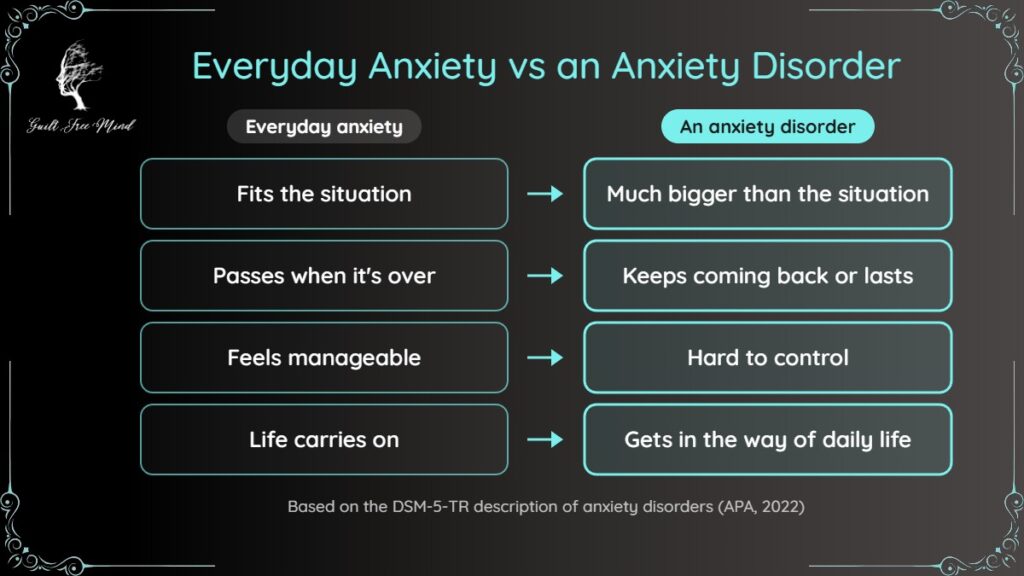
Some anxiety is healthy. It sharpens your focus before an exam and keeps you alert when something really is risky. Anxiety becomes a disorder when it is out of proportion to the situation, hard to control, lasts well beyond the moment, and starts to limit your life (American Psychiatric Association [APA], 2022).
You may be dealing with an anxiety disorder if:
- Your anxiety gets in the way of work, study, relationships or daily tasks.
- You react much more strongly than the situation seems to call for.
- The worry or fear feels out of your control, even when you know it is excessive.
- You start avoiding places, people or situations because of how anxious they make you feel.
It is also common to have more than one anxiety disorder at the same time, or to have anxiety alongside depression (Kessler, Chiu et al., 2005). If you’d like a closer look at the warning signs, read my guide to the signs of an anxiety disorder.
How Common Are Anxiety Disorders?
Anxiety disorders are the most common group of mental health conditions worldwide, and large population surveys suggest that up to about one in three people are affected at some point in their lives (Bandelow & Michaelis, 2015). In the US National Comorbidity Survey Replication, about 18.1% of adults had an anxiety disorder in the past 12 months and 28.8% had one at some point. Anxiety disorders also tend to start early: half of people with one had their first symptoms by about age 11 (Kessler, Berglund et al., 2005).
Even so, anxiety disorders are often missed and undertreated (Bandelow & Michaelis, 2015). If any of this sounds familiar, you are far from alone.
Are Women More Affected Than Men?
Yes. In a study of about 20,000 US adults, women were roughly 1.7 times as likely as men to have an anxiety disorder in their lifetime. Women had higher rates of every anxiety disorder studied except social anxiety disorder, where rates were similar, and anxiety disorders took a greater toll on their daily lives. Women with an anxiety disorder were also more likely to have depression (McLean et al., 2011).
Symptoms of Anxiety Disorders
Anxiety shows up in the body, in the mind and in what we do. Not everyone has every symptom, and the pattern depends on the type of anxiety disorder. Anxiety can feel very physical, so it’s worth reading about how anxiety affects the body too.
Physical Symptoms
- A racing or pounding heart (palpitations)
- Shortness of breath or a tight chest
- Dry mouth
- Cold or sweaty hands
- Numbness or tingling in the hands or feet
- Muscle tension, aches or trembling
- Nausea or an upset stomach
- Feeling tired, or having trouble sleeping
Mental and Emotional Symptoms
- Constant worry that is hard to switch off
- Feelings of fear, dread or uneasiness
- Sudden waves of panic
- Feeling on edge or easily irritated
- Racing thoughts, or thoughts that feel out of control
- Trouble concentrating, or your mind going blank
Behavioral Symptoms
- Being unable to stay calm or sit still
- Pacing or fidgeting
- Avoiding situations, places or people that trigger anxiety
- Seeking reassurance again and again
- Putting things off because they feel overwhelming
Some symptoms that people often link with anxiety, such as flashbacks after a traumatic event or rituals like repeated hand-washing, belong to two closely related conditions: post-traumatic stress disorder (PTSD) and obsessive-compulsive disorder (OCD). In the current diagnostic manual these are classed separately from anxiety disorders (APA, 2022), but they are treated in similar ways and deserve the same care.
Types of Anxiety Disorders
The Diagnostic and Statistical Manual of Mental Disorders (DSM-5-TR) groups the following conditions as anxiety disorders (APA, 2022). Here is a short overview; for more detail on each, see my guide to the types of anxiety disorders.
1. Generalized Anxiety Disorder (GAD)
GAD is persistent, hard-to-control worry about many everyday things, such as work, health, money or family, on most days. People with GAD often blow worries out of proportion and feel that almost anything can set them off. Physical symptoms like tension, tiredness and poor sleep are common. Read more in my guide to generalized anxiety disorder.
2. Panic Disorder
Panic disorder involves repeated, unexpected panic attacks: sudden surges of intense fear with symptoms like a pounding heart, breathlessness, dizziness or a feeling of losing control. Between attacks, people often worry about the next one and change their lives to avoid it. Learn the symptoms of a panic attack and the difference between anxiety and panic attacks.
3. Agoraphobia
Agoraphobia is fear of being in situations where escape might be hard, or help might not be available, if panic or other frightening symptoms strike. Crowds, public transport, open spaces, shops or being away from home alone can all feel unsafe, so people start avoiding them.
4. Social Anxiety Disorder
Social anxiety disorder (also called social phobia) is an intense fear of being judged, embarrassed or rejected in social or performance situations. It goes far beyond ordinary shyness. Read my full guide to social anxiety disorder.
5. Specific Phobia
A specific phobia is an intense fear of a particular object, animal or situation, such as heights, flying, needles, spiders or even ghosts. The fear is out of proportion to the real danger, and people go to great lengths to avoid what they fear. One unusual example is phasmophobia, the fear of ghosts.
6. Separation Anxiety Disorder
Separation anxiety disorder is excessive fear or distress about being apart from the people someone is attached to, often a parent. It is best known in children, but it can also affect teenagers and adults (APA, 2022).
7. Selective Mutism
Selective mutism usually begins in early childhood. A child who speaks comfortably at home is consistently unable to speak in certain settings, such as at school. It is not shyness or stubbornness; the child wants to speak but feels frozen by anxiety.
8. Substance- or Medication-Induced Anxiety Disorder
Here, anxiety or panic is directly caused by a substance: alcohol, caffeine, recreational drugs or a medicine, either while using it or while withdrawing from it. If your anxiety started around the time you began or stopped a medicine, tell your doctor.
9. Anxiety Disorder Due to Another Medical Condition
Sometimes anxiety is a direct effect of a physical health problem, such as an overactive thyroid, a heart rhythm problem or a lung condition. Treating the underlying condition often eases the anxiety.
10. Other Specified and Unspecified Anxiety Disorders
These categories are used when someone has significant anxiety that causes real distress or problems, but the symptoms don’t fully match any of the disorders above.
Anxiety Disorders in Children
Children meet something new almost every day, so a little anxiety is normal. Many kids are afraid of thunderstorms, the dark or a new classroom, and they worry about whether their classmates like them or about an upcoming test. Mild worry like this usually passes as they grow and gain confidence.
When you look at anxiety in children, the key thing to watch for is getting stuck. A worry becomes a concern when it doesn’t pass, when it is much bigger than the situation, and when it stops a child from doing things they would otherwise enjoy. This is not only for parents. As a teacher of young learners, I believe teachers should look out for it too, because children are not always able to put their feelings into words.
Signs a Child May Need Support
- A fear or worry that stops them from enjoying everyday life
- Difficulty getting through daily routines, school work or household tasks
- Frequent stomach aches or headaches with no clear physical cause
- Avoiding school, friends or activities they used to enjoy
- Continuing to worry even after you have calmly explained the situation
- Being puzzled and stuck, with neither the child nor the parents able to work out what is wrong
Temperament can play a part. Some children are naturally very cautious and withdrawn with new people and places, which researchers call behavioral inhibition. In a meta-analysis of seven studies, children with behavioral inhibition had more than seven times the odds of later developing social anxiety disorder (Clauss & Blackford, 2012). That does not mean a shy child will develop an anxiety disorder, but shyness that keeps a child from joining in is worth gentle attention.
Help works for children, too. In a Cochrane review of CBT for children and teenagers with anxiety disorders, about half of those who had CBT no longer met criteria for their main anxiety disorder after treatment, compared with about 18% of those on a waiting list (James et al., 2020). Some child therapists also use play-based approaches such as sandplay therapy, which can help children who find it hard to talk about their feelings.
What Causes Anxiety Disorders?
There is no single cause. Anxiety disorders usually grow from a mix of genes, temperament, life experiences, ongoing stress and physical health. For a deeper look, read my full guide to the causes of anxiety.
Genes and Family History
Anxiety disorders run in families. In a review of family and twin studies, close relatives of people with panic disorder, GAD, phobias or OCD had about four to six times the odds of having the same condition. Twin studies suggested that genes account for roughly 43% of the differences between people in their risk of panic disorder and 32% for GAD, with each person’s own life experiences making up much of the rest (Hettema et al., 2001). Genes raise the risk; they don’t decide your future.
Temperament and Personality
People who were very shy or cautious as children, or who tend to see themselves negatively, are more likely to develop anxiety, especially social anxiety (Clauss & Blackford, 2012). Low self-esteem can keep the fear of being judged going.
Trauma and Childhood Adversity
Difficult early experiences raise the risk. A large meta-analysis found that people who had experienced any form of child maltreatment had about 1.7 times the odds of an anxiety disorder later in life, with links for sexual abuse, physical abuse and neglect (Gardner et al., 2019). Painful losses, such as losing a parent in childhood, can also leave a lasting mark.
Stress That Builds Up
Long-term pressure from work, money worries, caring for someone, relationship problems or a serious illness can wear down your ability to cope. When stress never lets up, the body’s alarm system can stay switched on.
Other Mental Health Conditions
Anxiety disorders often occur together with other conditions. In the US survey, almost half of the adults who had a mental disorder in the past year had two or more (Kessler, Chiu et al., 2005), and depression is a frequent companion of anxiety (McLean et al., 2011). Read about the signs of depression if low mood is part of your picture.
Alcohol, Drugs and Caffeine
Alcohol and recreational drugs can trigger anxiety, and withdrawal from alcohol, drugs or some medicines, such as benzodiazepines, can cause it too. Caffeine matters more than many people realize. In studies of people with panic disorder, a high dose of caffeine (about 400 to 750 mg, the amount in roughly five cups of coffee) triggered a panic attack in about half of them, compared with about 2% of healthy volunteers (Klevebrant & Frick, 2022).
Medical Conditions
Anxiety can be linked with, or sometimes caused by, physical health problems, including:
- Heart disease and heart rhythm problems
- Thyroid problems, such as an overactive thyroid (hyperthyroidism)
- Diabetes
- Asthma and chronic obstructive pulmonary disease (COPD)
- Chronic pain
- Irritable bowel syndrome
- Side effects of some medicines
It’s worth asking your doctor about a physical cause if your anxiety started suddenly, out of the blue, without any obvious stress or life change; if you never had anxiety before, including as a child; or if no one in your family has anxiety problems. These clues don’t prove a medical cause, but they are good reasons for a check-up.
Complications of Anxiety Disorders
People sometimes dismiss anxiety as needless worrying, but an untreated anxiety disorder can affect almost every part of life. Possible complications include:
- Depression
- Sleep problems and insomnia
- Alcohol or drug misuse
- Headaches and chronic pain
- Digestive and bowel problems
- Social isolation and loneliness
- Problems at work or school
- A lower quality of life
- Thoughts of suicide
Sleep and anxiety are closely tied. A review of long-term studies found that insomnia and anxiety feed each other in both directions: poor sleep can raise anxiety, and anxiety can make sleep worse (Alvaro et al., 2013).
How Are Anxiety Disorders Diagnosed?
If you think you may have an anxiety disorder, a good first step is your doctor. They may examine you and order tests to rule out physical causes, such as a thyroid problem, and they may refer you to a psychologist or psychiatrist.
A mental health professional will usually talk with you about:
- The symptoms you have, how strong they are and how long they have lasted
- How the symptoms affect your work, relationships and daily life
- What makes them better or worse, including caffeine, alcohol, drugs or medicines
- Your own and your family’s mental health history
They will also observe how you are feeling and coping, and compare your symptoms with the criteria in the DSM-5-TR, the diagnostic manual published by the American Psychiatric Association (APA, 2022). Online quizzes can help you reflect, but they can’t diagnose you.
Treatment of Anxiety Disorders
Like other health conditions, anxiety disorders can be treated. Treatment may not make anxiety disappear completely, but it can reduce symptoms a great deal and help you get your life back. The main options are psychological therapy, medicine, or both. Among the talking therapies, CBT has the strongest evidence, and among medicines, SSRIs and SNRIs are the first choice (Bandelow et al., 2017).
Cognitive Behavioral Therapy (CBT)
CBT is the most widely studied therapy for anxiety disorders. It helps you notice the thoughts and behaviors that keep anxiety going, test anxious predictions and gradually face what you fear. In a meta-analysis of 41 placebo-controlled trials with 2,843 patients, CBT clearly outperformed placebo, and people who had CBT had about three times the odds of responding to treatment (Carpenter et al., 2018). Read how it works step by step in my guide to cognitive behavioral therapy for anxiety, or start with my guide to CBT.
Exposure Therapy
Exposure is a core part of CBT for phobias, panic and social anxiety. With a therapist’s support, you face the situations, places or sensations you fear in small, planned steps, so your brain can learn that they are safer than they feel. Over time, the fear usually fades.
EMDR Therapy
Eye movement desensitization and reprocessing (EMDR) is a structured therapy in eight phases, best known as a treatment for PTSD. Read my guide to EMDR therapy for anxiety to learn how it works and what the research shows.
Medicines
- SSRIs and SNRIs (types of antidepressants) are the first-line medicines for anxiety disorders (Bandelow et al., 2017). Once symptoms improve, it is usually advised to continue them for 6 to 12 months (Bandelow et al., 2017).
- Benzodiazepines work quickly, but they are not recommended for routine use because of side effects and the risk of dependence (Bandelow et al., 2017).
- Beta-blockers, such as propranolol, are sometimes prescribed to calm physical symptoms like a racing heart, for example before a performance. They are not among the first-line treatments for anxiety disorders (Bandelow et al., 2017).
- Other options, such as pregabalin or buspirone, may be used when first-line medicines don’t help or aren’t suitable (Bandelow et al., 2017).
Your doctor or psychiatrist will work out the right medicine and dose for you. Never change or stop a medicine on your own. Stopping suddenly can cause unpleasant withdrawal effects and bring symptoms back, so always taper off with your prescriber’s guidance.
Art Therapy
Many people find creative work calming, and art therapy can be a gentle way to express feelings that are hard to put into words. The research is still thin, though. A systematic review found only three small trials, with some evidence that art therapy eased exam anxiety in students, and the authors concluded that no strong conclusions can be drawn yet (Abbing et al., 2018). It works best alongside, not instead of, treatments with stronger evidence.
Everyday Ways to Manage Anxiety
Alongside professional treatment, these everyday steps can help you manage symptoms and feel more in control.
1. Learn About Your Anxiety
The more you understand your anxiety, the better you can handle it. Knowing your triggers and how your body reacts makes the symptoms less frightening when they appear.
2. Stick With Your Treatment
Keep going with therapy sessions and practice between them, and take any medicine as prescribed. Progress is rarely a straight line, so a hard week doesn’t mean treatment isn’t working.
3. Move Your Body
Whether it’s jogging, cycling, yoga or a brisk walk, regular exercise helps. In a meta-analysis of six trials in adults with anxiety or stress-related disorders, exercise reduced anxiety symptoms more than the comparison conditions (Stubbs et al., 2017).
4. Go Easy on Caffeine
Coffee, tea, energy drinks, cola and even hot chocolate contain caffeine, which can trigger anxiety and panic, especially in people with panic disorder (Klevebrant & Frick, 2022). Try cutting back slowly to avoid withdrawal headaches.
5. Avoid Alcohol and Recreational Drugs
They may seem to take the edge off in the moment, but alcohol and drugs tend to make anxiety worse over time and can make treatment less effective.
6. Protect Your Sleep
Because sleep and anxiety affect each other (Alvaro et al., 2013), a steady sleep routine is one of the kindest things you can do for an anxious mind. Here are some ways to improve your sleep quality.
7. Try Slow Breathing
Slow breathing with a longer out-breath can calm your body when anxiety rises. Try the simple techniques in my guide to deep breathing for anxiety.
8. Write It Down
Journaling helps you spot your triggers, untangle racing thoughts and track your progress. Noting a few things you are grateful for each day can also help you notice what is going right. If you’re not sure where to start, try these daily journaling prompts.
9. Challenge Anxious Thoughts
Anxiety often predicts the worst. When a frightening thought comes up, ask yourself: what is the evidence, what would I tell a friend, and what is the most likely outcome? This takes practice and won’t happen overnight, so be patient and kind with yourself.
10. Stay Connected and Ask for Support
Spend time with people you love and trust, whether in person, on the phone or online. Talking about how you feel can ease the load. If anxiety is making it hard to cope with daily life, you deserve support from a professional, too.
Can Anxiety Disorders Be Prevented?
There is no sure way to prevent anxiety disorders, and no way to predict exactly who will develop one. But you can lower the risk of anxiety taking over your life:
- Get help early. As with most health conditions, the sooner anxiety is treated, the easier it usually is to manage.
- Stay active. Regular movement supports both your mood and your stress levels.
- Avoid alcohol and drugs. They can trigger or worsen anxiety, and withdrawal can too.
- Look after the basics. Sleep, regular meals, time outdoors and time with people you care about all build resilience.
When to See a Mental Health Professional
Mild anxiety can often be eased with breathing exercises, talking things through with friends or family, and the self-help steps above. Reach out to a doctor or mental health professional if:
- You are stuck in constant worry that interferes with your work, relationships or social life
- Your fear or anxiety is very upsetting and hard to bring under control on your own
- You feel low or depressed most of the time
- You are using alcohol or drugs to cope
- You have other mental health concerns along with anxiety
- You think your anxiety may be connected to a physical health problem
- You have thoughts of harming yourself or ending your life. Please seek help right away. Don’t wait.
If you feel unsafe or are thinking about ending your life, please get help now: in the US, call or text 988 (Suicide & Crisis Lifeline); in India, call Tele-MANAS on 14416, or 112 in an emergency; in the UK and Ireland, call Samaritans on 116 123.
Keep Reading on Guilt Free Mind
- Causes of anxiety: genes, life events and thinking habits
- Types of anxiety disorders
- Generalized anxiety disorder
- Social anxiety disorder: symptoms, causes and treatment
- Anxiety vs panic attacks: what’s the difference?
- When anxiety feels physical
- Cognitive behavioral therapy for anxiety
- Deep breathing for anxiety
Final Thoughts
Anxiety is not a phase, and it won’t go away just because you will it to. Anxiety disorders are real health conditions, and the sooner you address them, the sooner you can start to feel better. With this information, I hope you can recognize when you or someone you love is struggling with anxiety. If you are, please don’t hesitate to reach out for help. Support works, and you deserve it.
Have you faced anxiety or an anxiety disorder? How do you feel it affects mental health? Please share your experiences and thoughts in the comments below. If you found this article helpful, subscribe to the Guilt Free Mind newsletter so you never miss a new post.
See you in my next blog post,
Dr. Shruti
Frequently Asked Questions
The main anxiety disorders are generalized anxiety disorder, panic disorder, agoraphobia, social anxiety disorder, specific phobias, separation anxiety disorder and selective mutism. Anxiety can also be caused by a substance or medicine, or by another medical condition.
Everyday anxiety fits the situation and passes. An anxiety disorder is anxiety that is much stronger than the situation calls for, hard to control, keeps coming back or lasts, and gets in the way of your work, relationships or daily life. Only a doctor or mental health professional can diagnose an anxiety disorder.
Anxiety disorders are very treatable. Cognitive behavioral therapy and first-line medicines such as SSRIs and SNRIs help many people feel much better and get back to the things they care about. Anxiety can return during stressful times, but the skills learned in therapy make it easier to manage.
Anxiety usually builds gradually and is linked to worry about something, while a panic attack is a sudden surge of intense fear that peaks within minutes, with symptoms like a pounding heart, breathlessness and dizziness. Read more in anxiety vs panic attacks.
Yes. In a large US study, women were about 1.7 times as likely as men to have an anxiety disorder in their lifetime, and anxiety disorders affected their daily lives more. Social anxiety disorder was the exception, with similar rates in women and men.
About the Author
Dr. Shruti Bhattacharya is the founder and heart of Guilt Free Mind, where she combines a Ph.D. in Immunology with training in psychology to deliver science-backed mental health strategies. Her mission is to empower readers to overcome stress, anxiety, and emotional challenges with practical, evidence-based tools. Dr. Bhattacharya’s unique blend of expertise and empathy shapes her approach to wellness:
- Academic & Scientific Rigor – Holding a Ph.D. in Immunology and a Bachelor’s degree in Microbiology, Dr. Bhattacharya brings a deep understanding of the biological foundations of mental health, including the gut-brain connection. Her completion of psychology courses, such as The Psychology of Emotions: An Introduction to Embodied Cognition, enhances her ability to bridge science and emotional well-being.
- Dedicated Mental Health Advocacy – With over 15 years of experience, Dr. Bhattacharya has supported hundreds of individuals through online platforms and personal guidance, helping them navigate mental health challenges with actionable strategies. Her work has empowered readers to adopt holistic practices, from mindfulness to nutrition, for lasting resilience.
- Empathetic Connection to Readers – Known for her compassionate and relatable voice, Dr. Bhattacharya is a trusted guide in mental health, turning complex research into accessible advice. Her personal journey as a trauma survivor fuels her commitment to helping others find calm and confidence.
- Lifelong Commitment to Wellness – Dr. Bhattacharya lives the principles she shares, integrating science-based habits like balanced nutrition and stress management into her daily life. Her personal exploration of mental health strategies inspires Guilt Free Mind’s practical, reader-focused content.
🏆 Guilt Free Mind was named one of the Top 100 Mental Health Blogs on Feedspot.

Disclaimer: This content is for informational purposes only and is not a substitute for professional medical advice.
References
- Abbing, A., Ponstein, A., van Hooren, S., de Sonneville, L., Swaab, H., & Baars, E. (2018). The effectiveness of art therapy for anxiety in adults: A systematic review of randomised and non-randomised controlled trials. PLOS ONE, 13(12), e0208716. https://doi.org/10.1371/journal.pone.0208716
- Alvaro, P. K., Roberts, R. M., & Harris, J. K. (2013). A systematic review assessing bidirectionality between sleep disturbances, anxiety, and depression. Sleep, 36(7), 1059–1068. https://doi.org/10.5665/sleep.2810
- American Psychiatric Association. (2022). Diagnostic and statistical manual of mental disorders (5th ed., text rev.; DSM-5-TR). American Psychiatric Association Publishing. https://doi.org/10.1176/appi.books.9780890425787
- Bandelow, B., & Michaelis, S. (2015). Epidemiology of anxiety disorders in the 21st century. Dialogues in Clinical Neuroscience, 17(3), 327–335. https://doi.org/10.31887/DCNS.2015.17.3/bbandelow
- Bandelow, B., Michaelis, S., & Wedekind, D. (2017). Treatment of anxiety disorders. Dialogues in Clinical Neuroscience, 19(2), 93–107. https://doi.org/10.31887/DCNS.2017.19.2/bbandelow
- Carpenter, J. K., Andrews, L. A., Witcraft, S. M., Powers, M. B., Smits, J. A. J., & Hofmann, S. G. (2018). Cognitive behavioral therapy for anxiety and related disorders: A meta-analysis of randomized placebo-controlled trials. Depression and Anxiety, 35(6), 502–514. https://doi.org/10.1002/da.22728
- Clauss, J. A., & Blackford, J. U. (2012). Behavioral inhibition and risk for developing social anxiety disorder: A meta-analytic study. Journal of the American Academy of Child & Adolescent Psychiatry, 51(10), 1066–1075.e1. https://doi.org/10.1016/j.jaac.2012.08.002
- Gardner, M. J., Thomas, H. J., & Erskine, H. E. (2019). The association between five forms of child maltreatment and depressive and anxiety disorders: A systematic review and meta-analysis. Child Abuse & Neglect, 96, 104082. https://doi.org/10.1016/j.chiabu.2019.104082
- Hettema, J. M., Neale, M. C., & Kendler, K. S. (2001). A review and meta-analysis of the genetic epidemiology of anxiety disorders. American Journal of Psychiatry, 158(10), 1568–1578. https://doi.org/10.1176/appi.ajp.158.10.1568
- James, A. C., Reardon, T., Soler, A., James, G., & Creswell, C. (2020). Cognitive behavioural therapy for anxiety disorders in children and adolescents. Cochrane Database of Systematic Reviews, 2020(11), CD013162. https://doi.org/10.1002/14651858.CD013162.pub2
- Kessler, R. C., Berglund, P., Demler, O., Jin, R., Merikangas, K. R., & Walters, E. E. (2005). Lifetime prevalence and age-of-onset distributions of DSM-IV disorders in the National Comorbidity Survey Replication. Archives of General Psychiatry, 62(6), 593–602. https://doi.org/10.1001/archpsyc.62.6.593
- Kessler, R. C., Chiu, W. T., Demler, O., & Walters, E. E. (2005). Prevalence, severity, and comorbidity of 12-month DSM-IV disorders in the National Comorbidity Survey Replication. Archives of General Psychiatry, 62(6), 617–627. https://doi.org/10.1001/archpsyc.62.6.617
- Klevebrant, L., & Frick, A. (2022). Effects of caffeine on anxiety and panic attacks in patients with panic disorder: A systematic review and meta-analysis. General Hospital Psychiatry, 74, 22–31. https://doi.org/10.1016/j.genhosppsych.2021.11.005
- McLean, C. P., Asnaani, A., Litz, B. T., & Hofmann, S. G. (2011). Gender differences in anxiety disorders: Prevalence, course of illness, comorbidity and burden of illness. Journal of Psychiatric Research, 45(8), 1027–1035. https://doi.org/10.1016/j.jpsychires.2011.03.006
- Stubbs, B., Vancampfort, D., Rosenbaum, S., Firth, J., Cosco, T., Veronese, N., Salum, G. A., & Schuch, F. B. (2017). An examination of the anxiolytic effects of exercise for people with anxiety and stress-related disorders: A meta-analysis. Psychiatry Research, 249, 102–108. https://doi.org/10.1016/j.psychres.2016.12.020

4 Comments
I have to thank you for the efforts youve put in penning this site. Im hoping to view the same high-grade blog posts by you later on as well. In fact, your creative writing abilities has encouraged me to get my very own website now 😉
Reading your article helped me a lot and I agree with you. But I still have some doubts, can you clarify for me? I’ll keep an eye out for your answers.
Thank you for your sharing. I am worried that I lack creative ideas. It is your article that makes me full of hope. Thank you. But, I have a question, can you help me?
Thanks for sharing. I read many of your blog posts, cool, your blog is very good.