


In my previous blog post, I discussed what EMDR therapy is and how it works. In this article, I will discuss how EMDR therapy for anxiety can help patients suffering from anxiety disorders.
If you want to know more about therapeutic techniques to help with anxiety, traumas, toxic relationships or any other psychological issues, subscribe to the Guilt Free Mind. This way, I can notify you about the release of new blog posts. If you like videos, subscribe to the YouTube channel, Shruti’s Art Studio. Do not forget to ring the notification bell.
Table of Contents
🌀 EMDR for Anxiety: At a Glance
| Aspect | Key Points |
|---|---|
| What EMDR is | A structured therapy that uses bilateral stimulation (side-to-side eye movements, taps or tones) while you briefly focus on a distressing memory. It was developed for PTSD and is also being studied for anxiety, panic and phobias. |
| Core idea | Based on the Adaptive Information Processing (AIP) model: distressing or anxiety-linked memories that were never fully processed are reprocessed, so they feel less intense and fit into healthier beliefs. |
| Typical session flow | Eight phases: history-taking, preparation, assessment of a target memory, desensitisation with bilateral stimulation, installation of a positive belief, body scan, closure and reevaluation. |
| Anxiety outcomes | A 2026 review of randomised trials found a moderate reduction in anxiety symptoms overall, but only a small advantage over other active therapies; most of the evidence comes from PTSD (Antuña-Camblor et al., 2026). |
| Benefits | • Less detailed retelling of the memory than in many talk therapies • Structured and time-limited • Can ease negative beliefs and physical distress linked to a memory |
| Suitability | May suit people whose anxiety is linked to specific memories or triggers. For anxiety that is not rooted in past experiences, CBT has broader evidence. |
| Clinical backing | Recommended for PTSD in WHO (2013), NICE (UK) and US VA/DoD guidelines, and conditionally recommended by the American Psychological Association. Research in other anxiety disorders is growing but mostly small and of low quality. |
| Next steps | Talk to a licensed mental health professional trained in EMDR to see whether it fits you; some offer online sessions. |
What is EMDR therapy?
EMDR (eye movement desensitization and reprocessing) therapy was developed to help people recover from past traumas. Someone may have lived through one traumatic event or several. Problems arise when situations in the present bring those experiences back, so the person feels as if they are reliving the past. EMDR aims to help the brain reprocess these memories so that they lose much of their emotional charge.
EMDR does not erase what happened. The aim is that when the memory comes to mind, it feels like something that belongs to the past rather than something happening now. That shift can make it easier to move on.
Anxiety disorders are common: an estimated 19.1% of US adults had one in the past year (NIMH). EMDR is one of several therapies used for anxiety, and its evidence is strongest for post-traumatic stress disorder (PTSD).
Anxiety is rarely just discomfort. It often points to places where a need is unmet, a limit has been crossed, or the body has not yet registered that it is safe. EMDR is one of the therapies built around that idea.
Evidence and Research on EMDR for Anxiety
EMDR has its strongest research support as a treatment for PTSD; the evidence for other anxiety disorders is more limited. The American Psychological Association (APA) conditionally recommends EMDR for PTSD, which often overlaps with anxiety disorders, citing its efficacy in reducing symptoms (APA guidelines). The World Health Organization (WHO) endorses EMDR for adults, children, and adolescents with PTSD in its guidelines, noting its effectiveness for trauma-related anxiety (WHO 2013).
Key findings from studies
The strongest evidence for EMDR is in post-traumatic stress disorder. A controlled study in a health-maintenance organisation setting found EMDR reduced PTSD symptoms more than standard care, with gains holding at three- and six-month follow-up (Marcus et al., 1997; 2004). For panic disorder, a small pilot study of 19 people found that EMDR and cognitive behavioural therapy (CBT) both led to significant improvement after 12 sessions, with no significant difference between them except fewer panic attacks in the EMDR group (Faretta, 2013).
What the Research Actually Shows
In a randomised study of 80 traumatised adults, three 90-minute EMDR sessions produced decreases in presenting complaints and anxiety and increases in positive cognition, with gains maintained at 90-day follow-up; a delayed-treatment group showed no change until they too received EMDR (Wilson et al., 1995). In adult survivors of childhood sexual abuse, EMDR produced better immediate results than routine individual therapy, with improvements sustained at three months (Edmond et al., 1999).
The adaptive information processing model behind EMDR treats anxiety disorders as problems of unprocessed memory rather than of faulty thinking alone, which is why the therapy targets the memory itself.
It is worth being clear about the size of that effect. A 2026 umbrella review pooling eleven meta-analyses of randomised trials found EMDR was associated with a moderate reduction in anxiety symptoms overall (g = −0.63), but its advantage over other active psychological treatments was small (g = −0.36). Effects looked much larger when EMDR was compared against waiting lists rather than against real alternatives, most of the evidence came from PTSD samples, and the quality of the underlying meta-analyses was mostly low (Antuña-Camblor et al., 2026). EMDR is a reasonable option, not a magic one.
How can EMDR help patients with anxiety disorders?
Anxiety has many causes, including genes, ongoing stress and life experiences. When anxiety is tied to painful past experiences, such as emotional abuse, situations that resemble the past can set it off. EMDR aims to change how those memories are stored, so that when they resurface they are less likely to trigger anxiety attacks.
How does EMDR therapy work to reduce anxiety?
For EMDR therapy, the psychotherapist will ask the patient to pick a specific incident from the past. Alternatively, the therapist may pick up the incident after a discussion with the patient. The psychologist asks the patient to notice the images, emotions, and sensations they feel when they think about their past.
The therapist then helps you process the memory so that the feelings attached to it soften. For example, a memory that once brought up fear or shame may come to feel like something you survived and learned from.
As the memory becomes less distressing, anxiety often eases. The past may still come to mind, but it no longer pulls you back into the old fear.

Benefits of EMDR therapy for anxiety.
When anxiety is linked to painful experiences, it can be very hard to describe them out loud. One benefit of EMDR is that you do not have to describe the memory in great detail: the therapist works with the images, feelings and body sensations you notice. This can help people who find it hard to put their experiences into words.
The therapist guides the process gently and at a pace you can manage, with the aim of leaving you calmer and less burdened by the memory.
The World Health Organization (2013) recommends EMDR for PTSD, and the American Psychological Association gives it a conditional recommendation for PTSD.
EMDR vs. CBT for Anxiety: Comparison
When choosing a therapy for anxiety, understanding how EMDR stacks up against other popular options like CBT or exposure therapy can help you decide what’s best. EMDR is particularly suited for trauma-driven anxiety, focusing on rapid reprocessing without deep verbal exploration, while CBT emphasizes thought patterns and exposure therapy builds tolerance through direct confrontation. The table below is a general guide: session numbers vary from person to person, and the right choice depends on your symptoms and your therapist’s assessment.
EMDR vs. CBT vs. Exposure Therapy
| Aspect | EMDR | CBT | Exposure therapy |
|---|---|---|---|
| Focus | Memory reprocessing with bilateral stimulation | Changing unhelpful thoughts and behaviours | Gradual, repeated facing of feared situations |
| Typical length | Varies; often 3–12 sessions | Often 12–20 sessions | Often 8–15 sessions |
| Best for | Trauma-related anxiety (e.g., PTSD) | Most anxiety disorders, including generalised anxiety, panic, social anxiety and OCD | Phobias, panic, OCD (as exposure and response prevention) |
| Evidence | Strongest for PTSD; moderate effect on anxiety overall, small advantage over other active therapies (Antuña-Camblor et al., 2026) | Well established; a first-line treatment for most anxiety disorders | Well established for phobias and panic; often part of CBT |
| Talk required | Minimal; no detailed retelling | More; you discuss thoughts and practise skills | Moderate; you face feared situations step by step |
| Possible downsides | Temporary distress, vivid dreams | Homework; temporary discomfort when facing fears | Anxiety rises during exposure before it settles |
Many people also compare EMDR with medication. Medication can ease symptoms relatively quickly, while psychological therapies such as CBT and EMDR aim for change that lasts after treatment ends. Many people use both. Never start, stop or change a medicine without talking to your doctor.
Pin this article for later:
EMDR vs. CBT vs. Medication
| Aspect | EMDR | CBT | Medication (e.g., SSRIs) |
|---|---|---|---|
| How it works | Reprocesses distressing memories | Changes unhelpful thoughts and behaviours | Acts on brain chemistry (e.g., serotonin) |
| Speed | Varies; some people improve within a few sessions | Gradual, over weeks | SSRIs usually take a few weeks to work |
| After treatment | Gains held at follow-up in several trials | Skills you keep using | Symptoms may return after stopping |
| Side effects | Temporary distress, vivid dreams | Few; temporary discomfort | Vary by drug (e.g., nausea, sleep changes); benzodiazepines can cause dependence |
Which anxiety disorders can be targeted by EMDR therapy?
Researchers and clinicians have tried EMDR for a range of anxiety-related problems. The evidence is strongest for PTSD; for most of the problems below it comes from small studies or treatment descriptions, so read this as a list of what has been studied, not what is proven:
- Panic disorder
- Generalized anxiety disorder
- Anxiety regarding fear of flying
- Agoraphobia with panic disorder (see the treatment plans described by Leeds, 2012)
- Social anxiety
- Obsessive-compulsive disorder
- Phobias
- General performance anxiety
- Performance anxiety in musicians and athletes specifically
- Anxiety of caregivers
- Anxiety after natural disasters (for example, a group EMDR protocol used after disasters: Jarero et al., 2006)
- Medical situations and postoperative care anxiety
How anxiety can resemble PTSD
Some anxiety works in a similar way to post-traumatic stress disorder (PTSD). In PTSD, reminders of a traumatic event can bring back intense memories, nightmares or flashbacks, even when the danger is long past. Anxiety linked to past experiences can behave similarly: something that only loosely resembles the original event can set off strong anxiety, and how intense and frequent it is often depends on how deeply the experience affected the person. That overlap is why EMDR, first developed for PTSD, is being studied for anxiety. Not all anxiety is rooted in past events, though, and other treatments may suit you better.
Use of EMDR therapy for anxiety treatment
During the initial stages of the treatment, the therapist may focus on using meditation, relaxation techniques, mindfulness practices, etc., to increase the efficiency of the treatment process. Many a time, therapists also use cognitive behavioral therapy along with EMDR therapy for the treatment of anxiety in patients.
Meditation and relaxation can bring relief in the moment; EMDR aims for longer-lasting change. However, which technique to use to supplement the EMDR therapy is a decision taken by the therapist. This decision depends on the patient’s traumatic experiences and willingness to participate. Therefore, the therapist and patient will work together to develop a personalized plan of treatment for the patient.
Risks and Side Effects of EMDR Therapy
EMDR is generally considered safe, but it can stir up strong feelings. Common, usually temporary effects include vivid dreams, heightened emotions, tiredness, or new memories surfacing between sessions. A good therapist spends time on preparation and coping skills before processing begins and adjusts the pace if things feel too intense. Tell your therapist about any physical or mental health conditions before you start; they may adapt the approach, for example by using taps or tones instead of eye movements. Gentle self-care techniques can help between sessions. For children and adolescents with PTSD, WHO guidelines (2013) include EMDR as an option when it is delivered by a trained therapist.
CBT vs. Medication vs EMDR therapy for Anxiety: which is best?
Choosing the right treatment for anxiety can feel overwhelming, with options like Cognitive Behavioral Therapy (CBT), medication, and EMDR therapy offering unique benefits. This guide compares their effectiveness, speed, and suitability to help you find the best fit for lasting relief.
| Therapy/Treatment | Pros | Cons |
|---|---|---|
| EMDR (Eye Movement Desensitization and Reprocessing) | • Works directly on distressing memories, often in a limited number of sessions • Recommended for PTSD in major guidelines • Less talking about the memory, which suits some people | • Evidence outside PTSD is limited and mostly low in quality • Needs a properly trained therapist • Can cause temporary distress during processing |
| CBT (Cognitive Behavioral Therapy) | • Strong evidence across anxiety disorders, including panic and generalised anxiety • Teaches practical skills such as challenging anxious thoughts • Gains tend to last after treatment ends | • Often 12–20 sessions • Relies on talking and homework, which may not suit everyone |
| Medication (e.g., SSRIs; benzodiazepines only short term) | • Can reduce symptoms within weeks • Helpful for moderate to severe anxiety, often alongside therapy | • Does not address underlying causes on its own • Side effects; benzodiazepines can cause dependence • Symptoms may return after stopping; never stop suddenly without medical advice |
The phases of EMDR therapy for anxiety
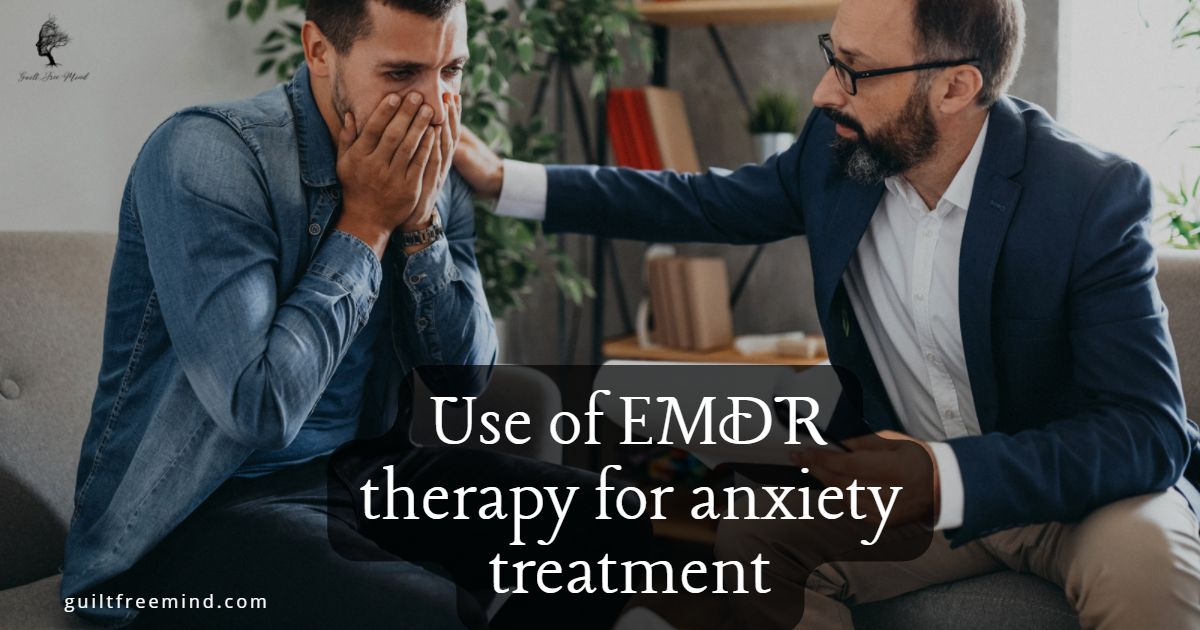
The therapeutic process of EMDR involves eight different phases.
First phase
The first phase primarily focuses on compiling the history of the patient. The therapist understands the traumatic past of the patient. The next step is to identify which memories need to be targeted for the upcoming therapy sessions. With a single traumatic event, treatment may be relatively short; with several, it usually takes more sessions.
Second phase
The second phase of the EMDR therapy will target the specific memories that the therapist has selected for the therapeutic procedure. The therapist will teach stress reduction techniques to the patient and encourage the patient to use those when under stress.
Third phase
The third phase will focus on transformation. The therapist will identify the visual images of the trauma, the negative self-belief, and the bodily sensations the patient experiences when the trauma comes to mind. The therapist will use bilateral stimulation to redirect the trauma and negative experience of the traumatic past.
The eventual phases will focus on strengthening the coping mechanisms so that the patient can successfully deal with the past traumas if and when they resurface in the future. If at any step it seems that the patient is struggling, the therapist will guide him back on track. The focus will be on the successful processing of the trauma. Once the patient processes one trauma, the therapist will move on to the next trauma.
The Eight Phases of EMDR Therapy: A Step-by-Step Breakdown
EMDR therapy follows a structured eight-phase approach designed to help individuals process traumatic memories and reduce anxiety symptoms. Each phase builds on the previous one, ensuring a safe and systematic treatment. Below is a detailed overview, adapted for anxiety disorders:
History Taking and Treatment Planning
The therapist gathers a comprehensive history of your anxiety triggers, past traumas, and current symptoms. This phase identifies target memories (e.g., events causing phobias or panic) and develops a personalized treatment plan. It typically involves 1-2 sessions to establish goals and assess readiness.
Preparation
The therapist explains the EMDR process, builds trust, and teaches coping skills like deep breathing or safe place imagery to manage distress. For anxiety patients, this includes relaxation techniques to handle potential emotional intensity during sessions.
Assessment
You and the therapist select a specific target memory related to your anxiety. You identify a negative belief (e.g., “I’m powerless”), associated emotions, body sensations, and a positive belief to replace it (e.g., “I’m in control”). Distress levels are rated on a scale (SUD: Subjective Units of Disturbance) to measure progress.
Desensitization
Using bilateral stimulation (e.g., eye movements, taps, or tones), the therapist guides you to reprocess the memory while focusing on it. This reduces the emotional charge of the anxiety trigger. Sessions continue until distress drops significantly, often revealing new insights.
Installation
The positive belief is strengthened through bilateral stimulation. You focus on the target memory while reinforcing the new, empowering cognition until it feels true (rated on a Validity of Cognition scale).
Body Scan
You scan your body for any residual tension or sensations linked to the memory. If any remain, further bilateral stimulation is used to clear them, ensuring the anxiety is processed at a physical level.
Closure
The session ends with stabilization techniques to return you to equilibrium. The therapist reviews progress and assigns self-care homework, like journaling anxiety triggers, to maintain gains between sessions.
Reevaluation
At the start of the next session, the therapist assesses the processed memory’s impact on your anxiety. Any remaining issues are addressed, and new targets may be identified for ongoing treatment.
Sessions usually last 60–90 minutes.
The eight-phase protocol was developed by the American psychologist Francine Shapiro. How many sessions you need depends on your history: a single recent event may need only a few, while long-standing or multiple traumas usually take longer.
How is EMDR therapy tailored to the needs of anxiety patients?
Most often, the therapy lasts for an hour. Depending on the severity of the panic attacks, the therapist decides the specific treatment method after a discussion with the patient.
EMDR therapy for phobias
Suppose, as an illustrative example, that a patient has a phobia of watching violent scenes in movies. The patient’s history contains domestic abuse. Thus, every time the patient comes across a violent scene on television, it triggers a panic attack. Before the psychotherapist starts the process of EMDR therapy with the patient, he will teach the patient some relaxation techniques. The therapist asks the patient to make use of these relaxation techniques whenever things get tough.
Sometimes, the trauma is so damaging that people cannot put it in words. The therapist may encourage the patient to discuss the trauma part by part. These discussions are intermingled it with stress reduction techniques and breathing exercises. This way, the past can be discussed without going into a full-blown panic attack. The therapist will then focus on identifying certain positive and negative aspects of the experience.

Understanding the effects of trauma
Following this, the therapist will enlighten the patient about how trauma manifests, moulds the mind, and interferes with the day-to-day functioning of the patient’s life. Once the patient understands the effect of trauma on the mind and body and has learned certain relaxation techniques, the therapist will encourage the patient to work on the relaxation techniques.
The next step starts once the patient successfully deals with the memory of trauma by using relaxation techniques. Now, the therapist will take the patient’s history. The focus is to learn about the different incidences that have contributed to the patient’s trauma. During the discussion, the therapist will encourage the patient to use relaxation techniques. This helps keep the psychological impact of the past tolerating levels.
When the patient realizes that they can talk easily about the history of trauma, their self-confidence will improve. This will also motivate the patient to proceed with the therapeutic process.
Induction of relaxation techniques
As the therapy goes deeper, the therapist may introduce more relaxation techniques. These techniques include calm imagery, breathing exercises, etc. They will help the patient relax when tackling traumatic memories.
Once the patient starts to open up and discuss the past without panic attacks, the mental and emotional state of the patient will improve. The patient will gain confidence, and the relaxation therapies will help the patient stay in control. This may happen even without the patient realizing it.
Once the patient can successfully discuss past traumas, the therapist will go into the phobia-inducing scenarios. The therapist may ask the patient to bring along an object, animal, or person that helps them feel comfortable. A familiar, comforting presence can make the work feel safer; ask your therapist what is possible.
Once the patient has tackled the past traumas, the factor that induces phobia can easily be handled. The same relaxation techniques and imaginary therapies would be applied when the patient looks at the scenarios that induce a phobia.
The desensitization
This desensitization step works much like exposure therapy, and EMDR protocols for phobias often combine the two. It would begin with small timed intervals of exposure to the scene that induces phobia. For example, initially the therapist will expose the patient to two seconds of the visual footage showing violence. The patient will use the relaxation techniques to curb the anxiety attack. Once the patient has become comfortable viewing 2 seconds of a violent movie scene, the duration will increase. This way, step by step, the patient will learn to handle violent scenes without having a panic attack.
EMDR therapy for performance anxiety
Suppose a patient suffers from performance anxiety type anxiety disorder. In that case, the therapist will focus on the instances that cause performance anxiety in the patient. Once the triggers have been identified, the therapist will work with the patient to identify how the past instances brought on the performance anxiety. Often, a few difficult or embarrassing experiences sit at its root.
The therapist works to identify the triggers first. Following this, the therapist will employ the eight-stage protocol of the EMDR therapy to help the patient see those failures in a new light. Once the patient can see those past moments in perspective, the bilateral stimulation method of the EMDR therapy can be employed to help the brain access the positives of the past incident.
Overall, EMDR therapy can help boost confidence, alleviate past traumas and gain a more positive sense of self. The relaxation techniques and positive beliefs allow the patient to emerge as a stronger, confident individual with a positive attitude.
The success of EMDR therapy is not only dependent on the therapist. The patient must work along with the therapist. He must also follow through with the instructions to notice the change in themselves.

How to find a qualified EMDR therapist?
Finding a qualified EMDR therapist is crucial for effective treatment, especially if you’re dealing with anxiety rooted in trauma. Many people find the search overwhelming, but breaking it down step by step makes it manageable. Start with licensed professionals who have completed recognised EMDR training.
Use Reputable Directories
A good place to begin is the EMDRIA Find an EMDR Therapist directory, which lists members of the EMDR International Association trained in EMDR therapy and can be searched by location, name, specialty and other criteria such as language. Some listed therapists also hold EMDRIA certification (Certified Therapist or Approved Consultant). EMDRIA notes that its directory is not a way to verify a licence, so still check credentials yourself. Outside the US, look for your country’s national EMDR association.
Explore Additional Search Platforms
Another excellent resource is Psychology Today, where you can search for EMDR specialists with filters for issues like anxiety, PTSD, or phobias. Profiles include bios and credentials — look for licensed mental health professionals (for example, psychologists or clinical social workers) who have completed EMDR training approved by EMDRIA or a national EMDR association.
Verify Credentials and Experience
Once you have candidates, check the relevant licensing body (for example, a state licensing board in the US, or the Rehabilitation Council of India register for clinical psychologists in India) to confirm active licenses and no disciplinary actions. Ask about their EMDR experience—key questions include: “How many clients with anxiety have you treated using EMDR?” “What is your approach to integrating EMDR with other therapies like CBT?” “Can you share anonymized success stories or typical outcomes?” and “Do you offer online sessions?” A good therapist will welcome these and discuss potential session numbers (often 3-12 for anxiety).
Consider Online and Accessibility Options
For flexibility, ask about online sessions. Some therapists deliver EMDR by video, using on-screen eye movements, self-tapping or audio tones; ask how they adapt it. Online therapy platforms may list EMDR-trained therapists, but always confirm their training.
Evaluate Practical Factors
Ask about fees, insurance coverage where it applies, and any sliding-scale options; costs vary widely between countries and therapists. Many therapists offer a short introductory call to see whether you are a good fit.
Watch for Red Flags
Avoid anyone without a license, who promises instant cures, or pressures you into long commitments. Trust your instincts—if communication feels off, keep searching.
Take your time with this step. A therapist whose specialisation matches what you are bringing — anxiety, panic, phobia, trauma — makes a real difference to how the work feels. EMDRIA’s directory is a sensible place to start.
🌿 Explore More on Guilt Free Mind: Related Resources
Guilt Free Mind is your trusted space for mental health support, offering six core categories filled with actionable strategies to help you heal and grow—especially if you’re navigating anxiety, trauma, or emotional overwhelm. Whether you’re exploring EMDR therapy or seeking long-term recovery tools, these hubs are here to support you holistically:
🧘♀️ Self-Care and Wellness
Build routines that soothe your nervous system and strengthen emotional well-being. This hub is ideal for grounding practices that pair well with EMDR therapy.
🧠 Understanding Personality Disorders
Gain clarity on complex emotional and behavioral patterns. Learn how trauma-informed approaches like EMDR intersect with conditions such as PTSD or borderline personality disorder.
🎨 Creative Healing and Therapy
Engage the mind-body connection through creative outlets like art, journaling, and somatic techniques that complement trauma recovery.
💡 Mindful Productivity and Focus
Harness mindful strategies to stay focused and present—even when anxiety tries to hijack your day. Great for building resilience between EMDR sessions.
💪 Emotional Recovery and Resilience
This hub offers trauma-informed tools to help you rebuild emotional strength, process distressing memories, and foster lasting calm—perfect alongside therapeutic modalities like EMDR.
😌 Stress, Anxiety, and Depression Toolkit
Explore in-depth resources to understand and manage anxiety, panic attacks, and chronic stress. If EMDR therapy is part of your plan, this hub expands your toolkit for healing and relief.
Ready to Try EMDR? Take the Next Step
EMDR therapy can help manage anxiety, past traumas, PTSD, and more through its eight phases. Consult a trained EMDR therapist — EMDRIA’s directory is a sensible place to start. Subscribe to my newsletter for tips or check out related articles in the Stress, Anxiety, and Depression Toolkit. Consider art therapy or sandplay therapy for additional support.
Have you tried EMDR? Share your thoughts below to inspire others. For questions, reach out via social media, the contact form, or email. Subscribe to Guilt Free Mind’s newsletter or YouTube for updates.
See you in my next blog post
Pin this article for later

If You Need Support Right Now
If you are in crisis or having thoughts of harming yourself, please reach out now. India: Tele-MANAS 14416 (free, 24/7) or 112 in an emergency. US: call or text 988 (Suicide & Crisis Lifeline). UK: Samaritans 116 123. Anywhere else, call your local emergency number or go to the nearest emergency department.
Frequently Asked Questions
It can. A 2026 review that pooled meta-analyses of randomised trials found EMDR moderately reduced anxiety symptoms overall, but its advantage over other active therapies was small, and most of the evidence came from people with PTSD. Evidence for panic disorder, phobias and generalised anxiety is more limited.
EMDR is generally considered safe when delivered by a trained therapist, and WHO guidelines include it as an option for children and adolescents with PTSD. For other childhood anxiety problems the evidence is thinner and CBT is usually tried first, so talk to a child mental health professional about what suits your child.
EMDR involves less talking about the memory and focuses on reprocessing it with bilateral stimulation. CBT works on thoughts and behaviours and has the broadest evidence across anxiety disorders. In a small pilot study of panic disorder, both helped and gave similar results.
Side effects are usually temporary: vivid dreams, strong emotions, tiredness or memories surfacing between sessions. Tell your therapist if they feel too intense; they can slow the pace.
It varies. Sessions usually last 60–90 minutes. A single recent event may need only a few sessions, while long-standing or multiple traumas usually take longer.
Yes. EMDR is often used alongside CBT or medication. Never start, stop or change a medicine without talking to your doctor.
About the Author
Dr. Shruti Bhattacharya is the founder and heart of Guilt Free Mind, where she combines a Ph.D. in Immunology with additional psychology training to deliver science-backed mental health strategies. Her mission is to empower readers to overcome stress, anxiety, and emotional challenges with practical, evidence-based tools. Dr. Bhattacharya’s unique blend of expertise and empathy shapes her approach to wellness:
- Academic & Scientific Rigor – Holding a Ph.D. in Immunology and a Bachelor’s degree in Microbiology, Dr. Bhattacharya brings a deep understanding of the biological foundations of mental health, including the gut-brain connection. Her completion of psychology courses, such as The Psychology of Emotions: An Introduction to Embodied Cognition, from University of Cambridge enhances her ability to bridge science and emotional well-being.
- Dedicated Mental Health Advocacy – With over 15 years of experience, Dr. Bhattacharya has supported hundreds of individuals through online platforms and personal guidance, helping them navigate mental health challenges with actionable strategies. Her work has empowered readers to adopt holistic practices, from mindfulness to nutrition, for lasting resilience.
- Empathetic Connection to Readers – Known for her compassionate and relatable voice, Dr. Bhattacharya is a trusted guide in mental health, turning complex research into accessible advice. Her personal journey as a trauma survivor fuels her commitment to helping others find calm and confidence.
- Lifelong Commitment to Wellness – Dr. Bhattacharya lives the principles she shares, integrating science-based habits like balanced nutrition and stress management into her daily life. Her personal exploration of mental health strategies inspires Guilt Free Mind’s practical, reader-focused content.

Disclaimer: This content is for informational purposes only and is not a substitute for professional medical advice.
References
- American Psychological Association. Eye Movement Desensitization and Reprocessing (EMDR) Therapy. https://www.apa.org/ptsd-guideline/treatments/eye-movement-reprocessing
- World Health Organization. (2013). Guidelines for the Management of Conditions Specifically Related to Stress. https://www.who.int/publications/i/item/9789241548502
- EMDR International Association. Find an EMDR Therapist directory. https://www.emdria.org/find-an-emdr-therapist/
- Jarero, I., Artigas, L., & Hartung, J. (2006). EMDR Integrative Group Treatment Protocol: A Postdisaster Trauma Intervention for Children and Adults. Traumatology, 12(2), 121-129. https://doi.org/10.1177/1534765606294561
- Faretta, E. (2013). EMDR and Cognitive Behavioral Therapy in the Treatment of Panic Disorder: A Comparison. Journal of EMDR Practice and Research, 7(3), 121-133. https://doi.org/10.1891/1933-3196.7.3.121
- Leeds, A. M. (2012). EMDR treatment of panic disorder and agoraphobia: Two model treatment plans. Journal of EMDR Practice and Research, 6(3), 110–119. https://doi.org/10.1891/1933-3196.6.3.110
- Wilson, S., Becker, L. A., & Tinker, R. H. (1995). Eye Movement Desensitization and Reprocessing (EMDR) Treatment for Psychologically Traumatized Individuals. Journal of Consulting and Clinical Psychology, 63(6), 928-937. https://doi.org/10.1037/0022-006X.63.6.928
- Edmond, T., Rubin, A., & Wambach, K. G. (1999). The Effectiveness of EMDR with Adult Female Survivors of Childhood Sexual Abuse. Social Work Research, 23(2), 103-116. https://doi.org/10.1093/swr/23.2.103
- Psychology Today. Find an EMDR therapist. https://www.psychologytoday.com/us/therapists/emdr
- Marcus, S. V., Marquis, P., & Sakai, C. (1997). Controlled study of treatment of PTSD using EMDR in an HMO setting. Psychotherapy: Theory, Research, Practice, Training, 34(3), 307–315. https://doi.org/10.1037/h0087791
- Marcus, S., Marquis, P., & Sakai, C. (2004). Three- and 6-month follow-up of EMDR treatment of PTSD in an HMO setting. International Journal of Stress Management, 11(3), 195–208. https://doi.org/10.1037/1072-5245.11.3.195
- Antuña-Camblor, C., Rabito-Alcón, M. F., Mathias-Fonseca, K., et al. (2026). Efficacy of eye movement desensitization and reprocessing for anxiety: An umbrella review and meta-meta-analysis of randomized controlled trials. Journal of Anxiety Disorders. https://doi.org/10.1016/j.janxdis.2026.103243
- National Institute of Mental Health. Any anxiety disorder (statistics). https://www.nimh.nih.gov/health/statistics/any-anxiety-disorder

22 Comments
I agree with your point of view, your article has given me a lot of help and benefited me a lot. Thanks. Hope you continue to write such excellent articles.
I agree with your point of view, your article has given me a lot of help and benefited me a lot. Thanks. Hope you continue to write such excellent articles.
Very well presented. Every quote was awesome and thanks for sharing the content. Keep sharing and keep motivating others.
I have read your article carefully and I agree with you very much. This has provided a great help for my thesis writing, and I will seriously improve it. However, I don’t know much about a certain place. Can you help me?
This is really interesting, You’re a very skilled blogger. I’ve joined your feed and look forward to seeking more of your magnificent post. Also, I’ve shared your site in my social networks!
I like the efforts you have put in this, regards for all the great content.
Hi there to all, for the reason that I am genuinely keen of reading this website’s post to be updated on a regular basis. It carries pleasant stuff.
I’m often to blogging and i really appreciate your content. The article has actually peaks my interest. I’m going to bookmark your web site and maintain checking for brand spanking new information.
I appreciate you sharing this blog post. Thanks Again. Cool.
I truly appreciate your technique of writing a blog. I added it to my bookmark site list and will
This was beautiful Admin. Thank you for your reflections.
Your writing is clear and concise, and your ideas are well-supported with evidence. This is a great example of how to present complex ideas in an easy-to-understand way.
Hi there to all, for the reason that I am genuinely keen of reading this website’s post to be updated on a regular basis. It carries pleasant stuff.
I do not even understand how I ended up here, but I assumed this publish used to be great
I am truly thankful to the owner of this web site who has shared this fantastic piece of writing at at this place.
I truly appreciate your technique of writing a blog. I added it to my bookmark site list and will
There is definately a lot to find out about this subject. I like all the points you made
There is definately a lot to find out about this subject. I like all the points you made
very informative articles or reviews at this time.
Cool that really helps, thank you.
I just like the helpful information you provide in your articles
This is really interesting, You’re a very skilled blogger. I’ve joined your feed and look forward to seeking more of your magnificent post. Also, I’ve shared your site in my social networks!