
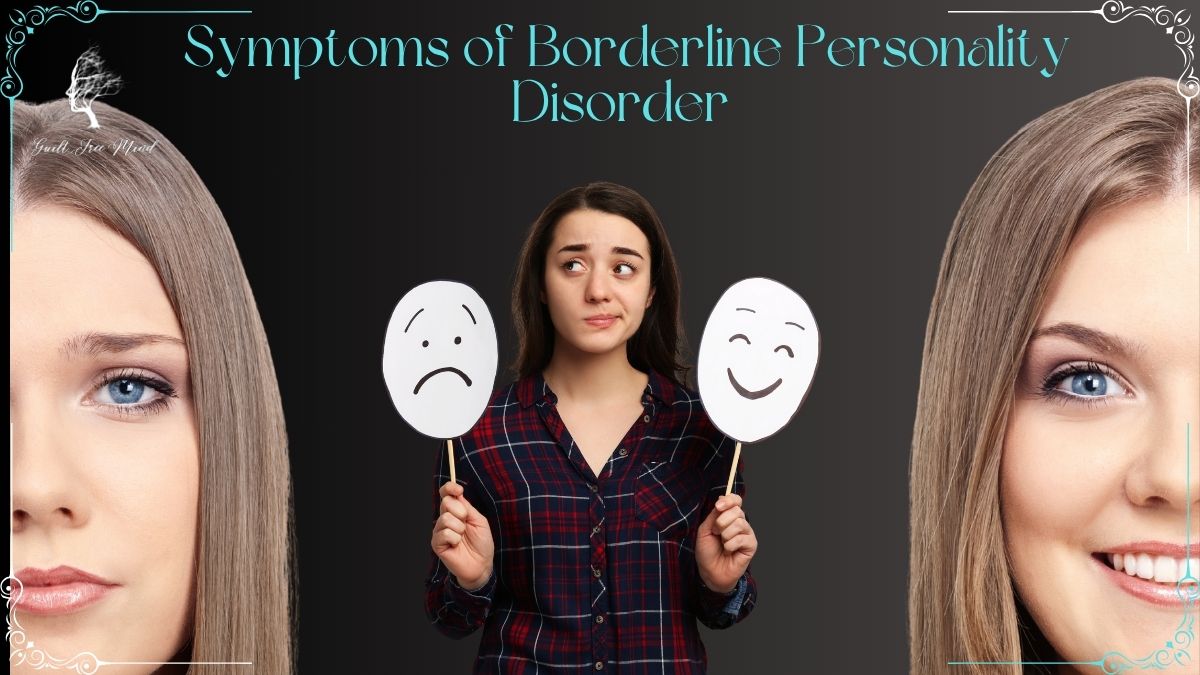

Quick answer: Borderline personality disorder (BPD) is a mental health condition marked by intense, fast-changing emotions, unstable relationships, an unsteady sense of self and impulsive behaviour. Doctors diagnose it when someone has at least five of nine core symptoms — including fear of abandonment, mood swings, chronic emptiness, intense anger and self-harm. BPD is treatable: talking therapies such as DBT help many people, and most people’s symptoms improve substantially over time.
BPD is one of the most misunderstood conditions in mental health. People living with it are often labelled “dramatic” or “manipulative”, when in reality they are frequently in enormous emotional pain. In this post, I’ll explain the symptoms of borderline personality disorder in plain language, what causes it, how it differs from bipolar disorder, and — most importantly — the real hope that treatment offers.

Table of Contents
At a Glance: Symptoms of Borderline Personality Disorder
| Question | Short answer |
|---|---|
| How common is BPD? | About 1.4% of US adults in a given year; about 5.9% at some point in life in one large survey |
| Core symptoms | Fear of abandonment, unstable relationships, unstable self-image, impulsivity, self-harm, mood swings, emptiness, intense anger, stress-related paranoia or dissociation |
| How is it diagnosed? | By a mental health professional, when at least 5 of the 9 DSM-5 criteria are present over time |
| What causes it? | A mix of genes (about 40% of the variation in BPD traits) and environment, including childhood adversity |
| Best treatments | Specialist talking therapies such as DBT, mentalization-based treatment and schema therapy |
| Do medicines treat BPD? | No medicine treats BPD itself; medicines may help co-occurring conditions |
| Can people recover? | Yes — most people’s symptoms improve substantially over the years |
What Is Borderline Personality Disorder?
Borderline personality disorder is a long-term pattern of instability in emotions, relationships, self-image and behaviour. It belongs to “Cluster B” personality disorders, alongside antisocial, histrionic and narcissistic personality disorders. In the UK, it is sometimes called emotionally unstable personality disorder (EUPD).
BPD is more common than many people think. According to the US National Institute of Mental Health (NIMH), about 1.4% of US adults have BPD in a given year. In a large US survey of nearly 35,000 adults, 5.9% met the criteria at some point in their lives — and rates were similar in men (5.6%) and women (6.2%) (Grant et al., 2008). Women are diagnosed more often in clinics, which may partly reflect who seeks help and how symptoms are interpreted.
The 9 Symptoms of Borderline Personality Disorder
Mental health professionals use the criteria in the DSM-5-TR. A diagnosis requires at least five of these nine symptoms, as a long-standing pattern that starts by early adulthood and shows up across many situations (Chapman et al., 2024). Not everyone with BPD experiences every symptom.
1. Intense Fear of Abandonment
Frantic efforts to avoid real or imagined rejection — for example, panicking when a partner is late, begging someone not to leave, or ending relationships first to avoid being left.
2. Intense, Unstable Relationships
Relationships may swing between idealising someone (“You’re perfect, you understand me like no one else”) and devaluing them (“You never cared about me”) — sometimes within days or hours.
3. An Unstable Sense of Self
A shifting self-image: frequent changes in goals, values, career plans, friendships or even identity, and often feeling unsure of who you really are.
4. Impulsive, Risky Behaviour
Impulsivity in at least two areas that could be harmful, such as spending sprees, reckless driving, binge eating, substance misuse or unsafe sex.
5. Self-Harm or Suicidal Behaviour
Repeated self-harm, suicidal threats or suicide attempts. These are signs of severe distress, not “attention-seeking”, and always deserve to be taken seriously.
If you are thinking about suicide or harming yourself, please reach out now: call your local emergency number (112 in India) or Tele-MANAS on 14416 (free, 24×7, India). In the US, call or text 988; in the UK, call Samaritans on 116 123. You deserve support, and this feeling can pass.
6. Intense, Rapid Mood Swings
Intense episodes of sadness, irritability or anxiety that usually last a few hours and only rarely more than a few days — often triggered by events in relationships.
7. Chronic Feelings of Emptiness
A persistent sense of inner emptiness or numbness. A review of 99 studies described it as a feeling of disconnection from both self and others, linked with self-harm and poorer recovery (Miller et al., 2020). Many people describe it as different from boredom, loneliness or depression.
8. Intense or Hard-to-Control Anger
Frequent anger, sarcasm, bitterness or angry outbursts — often followed by shame and guilt.
9. Stress-Related Paranoia or Dissociation
Under stress, some people with BPD feel suspicious of others or “zone out” — feeling detached from themselves or their surroundings. These experiences are common in BPD but tend to decline over time: in a 16-year study, they became much less frequent as patients improved (Zanarini et al., 2013). If you often feel detached from yourself, my post on dissociative disorders may help.

Other Signs and Common Companions
- Difficulty trusting others — fearing betrayal or rejection even in safe relationships.
- Other mental health conditions: according to NIMH, about 85% of people with BPD in a given year also have another condition, most often anxiety, mood or substance use disorders.
- Sensitivity to rejection and criticism, and difficulty calming down once upset.
How BPD Affects Loved Ones
BPD affects not only the person living with it, but also partners, family, friends and colleagues. Loved ones may feel confused by sudden shifts between closeness and anger, or exhausted by repeated crises. Understanding that these patterns come from intense emotional pain — and learning how to respond — can make a big difference for everyone (see “How to Support Someone with BPD” below).
Quick Self-Check: Do You Recognise BPD Symptoms?
This isn’t a diagnosis — only a mental health professional can diagnose BPD. But it can help you decide whether to seek an assessment. Answer yes or no for yourself or a loved one:
- Do you feel an intense fear of abandonment, or make frantic efforts to avoid rejection?
- Do your relationships swing between seeing someone as perfect and then as worthless?
- Does your sense of who you are, or what you want, change often?
- Do you act impulsively in ways that could harm you, such as reckless spending or substance misuse?
- Do you self-harm or have recurring suicidal thoughts?
- Do your moods change intensely within hours, especially after conflict?
- Do you often feel empty inside?
- Do you struggle to control your anger?
If you answered yes to four or more, please consider speaking to a mental health professional. Two or three may still be worth exploring, especially if they cause distress. And if you answered yes to the question about self-harm or suicidal thoughts, please reach out for support today, whatever your other answers.
What Causes Borderline Personality Disorder?
There’s no single cause. BPD seems to develop from a combination of factors:
- Genes: in a study of more than 5,000 twins in three countries, genetic factors explained about 42% of the differences in BPD features (Distel et al., 2008).
- Childhood adversity: a meta-analysis of 97 studies found that people with BPD were about 14 times more likely to report childhood adversity — such as abuse, neglect or loss — than people without a mental health condition (Porter et al., 2020). Many people with BPD, however, did not experience trauma. My post on repressed childhood trauma explores how early experiences can echo into adulthood.
- Emotional sensitivity and the environment: a temperament that feels emotions very intensely, combined with an environment that dismisses or punishes those emotions, may make it harder to learn how to regulate them.
BPD vs Bipolar Disorder
BPD and bipolar disorder are often confused because both involve mood changes, but they are different conditions. A review of studies directly comparing them found overlapping features but important differences — for example, impulsivity seems to be more of an ongoing trait in BPD, and more tied to mood episodes in bipolar disorder (Massó Rodriguez et al., 2021).
| Feature | Borderline personality disorder | Bipolar disorder |
|---|---|---|
| Mood changes | Rapid, often within hours; usually triggered by relationships or stress | Distinct episodes of mania/hypomania and depression lasting days to weeks or longer |
| Between episodes | Instability is ongoing | People often feel stable between episodes |
| Sense of self | Often unstable or unclear | Usually stable outside episodes |
| Main treatment | Specialist psychotherapy (e.g., DBT) | Mood-stabilising medication plus psychological support |
| How common (US) | About 1.4% of adults in a given year | About 2.8% of adults in a given year |
It’s possible to have both conditions, which is one reason a careful assessment matters.
How Is BPD Diagnosed?

A psychiatrist, clinical psychologist or other qualified professional diagnoses BPD through detailed interviews about your symptoms, relationships and history — sometimes with questionnaires and, with your permission, input from people close to you. They will also look for conditions that can look similar or occur alongside BPD, such as depression, bipolar disorder, PTSD, ADHD or substance use. Because symptoms overlap and change over time, getting the right diagnosis can take a while.
Treatment for Borderline Personality Disorder

The most important message: BPD is treatable, and talking therapies are the main treatment. A Cochrane review of 75 trials found that psychotherapy reduced BPD severity, self-harm and suicide-related outcomes and improved day-to-day functioning compared with usual treatment (Storebø et al., 2020).
- Dialectical behaviour therapy (DBT) teaches skills in mindfulness, emotion regulation, distress tolerance and relationships. In one trial, women receiving DBT were half as likely to make a suicide attempt as those receiving therapy from community experts (Linehan et al., 2006).
- Mentalization-based treatment (MBT) helps you understand your own and other people’s thoughts and feelings. In a randomised trial, it led to steeper improvements — including fewer suicide attempts and hospitalisations — than structured clinical management (Bateman & Fonagy, 2009).
- Schema therapy works on deep-rooted patterns formed in childhood. In one trial, more people recovered with schema therapy than with transference-focused psychotherapy (Giesen-Bloo et al., 2006).
- Cognitive behavioural therapy (CBT) can also help with specific problems — see my guide to CBT.
What About Medication?
No medicine treats BPD itself. A 2022 Cochrane review found no medication that effectively treats the core features of BPD (Stoffers-Winterling et al., 2022), and the UK’s NICE guideline advises against using drugs specifically for BPD or its individual symptoms. Medicines may still help with co-occurring conditions such as depression or anxiety, and are sometimes used briefly in a crisis — always under a doctor’s guidance.
Recovery: There Is Real Hope
BPD used to be seen as lifelong and untreatable. Long-term research tells a very different story. In a study that followed 290 people with BPD for 10 years, 93% had a period of at least two years with few symptoms, and half reached full recovery — meaning good relationships and work or study as well as fewer symptoms (Zanarini et al., 2010). Over 16 years, sustained symptom remission was common, although full recovery remained harder to reach for some (Zanarini et al., 2012).
Suicide risk is real and must be taken seriously: in a 24-year follow-up, 5.9% of people with BPD died by suicide (Temes et al., 2019). This is exactly why early help, crisis plans and specialist therapy matter so much.
Overcoming Stigma

Sadly, stigma around BPD is common — even among health professionals. A systematic review of 37 studies found that negative attitudes toward people with BPD remain a problem among clinicians, though more training and contact were linked with more positive attitudes (Baker & Beazley, 2022). Words like “manipulative” or “attention-seeking” hurt and get in the way of care. Behind the behaviour is a person in pain who deserves compassion and effective treatment.
How to Support Someone with BPD

- Learn about BPD so you can understand what your loved one is experiencing.
- Listen and validate feelings (“I can see you’re really hurting”) without necessarily agreeing with every interpretation.
- Stay calm and consistent. Predictability helps people who fear abandonment.
- Set kind, clear boundaries — and keep them. Boundaries are good for both of you.
- Encourage professional help and support them in sticking with treatment.
- Take every mention of suicide or self-harm seriously and know the crisis numbers.
- Look after yourself too — support groups and therapy for family members can help.
If someone in your family has a different personality disorder, you may also find my posts on histrionic personality disorder and schizoid personality disorder helpful.
Explore More on Guilt Free Mind: Related Resources
Guilt Free Mind is your trusted space for mental health support, offering six core categories filled with actionable strategies to help you understand and manage borderline personality disorder (BPD) symptoms—especially if you’re navigating emotional instability, unstable relationships, or impulsivity. Whether you’re exploring BPD symptoms or seeking support tools, these hubs are here to guide you holistically:
🧘♀️ Self-Care and Wellness
Build routines to calm your nervous system and enhance emotional stability. This hub offers grounding practices that complement BPD management strategies, such as mindfulness to reduce mood swings.
🧠 Understanding Personality Disorders
Gain clarity on BPD’s complex emotional and behavioral patterns. Learn how therapies like Dialectical Behavior Therapy (DBT) and Cognitive Behavioral Therapy (CBT) address symptoms like fear of abandonment or splitting.
🎨 Creative Healing and Therapy
Engage the mind-body connection through creative outlets like journaling or art therapy, which support emotional regulation and complement BPD coping techniques.
💡 Mindful Productivity and Focus
Harness mindful strategies to stay present and manage impulsivity, even during intense emotional moments. Ideal for building resilience alongside BPD therapy.
💪 Emotional Recovery and Resilience
This hub provides tools to rebuild emotional strength, process intense feelings, and foster lasting calm—perfect for addressing BPD’s chronic emptiness or anger.
😌 Stress, Anxiety, and Depression Toolkit
Explore in-depth resources to manage co-occurring conditions like anxiety or depression, common with BPD. This hub expands your toolkit with strategies to support therapy and symptom tracking.
Conclusion
The symptoms of borderline personality disorder — fear of abandonment, stormy relationships, an unsteady sense of self, impulsivity, mood swings, emptiness and anger — can make life feel like an emotional rollercoaster, both for the person with BPD and for those who love them. But BPD is not a life sentence. With understanding, specialist therapy and support, most people improve significantly over time. If you recognise yourself in this post, please take the next step and talk to a mental health professional. You deserve to feel steadier — and you can.
Do you wish to lead a more positive and worry-free life? Subscribe to Guilt Free Mind — the subscription option is in the sidebar. If you like watching videos, subscribe to the Guilt Free Mind YouTube channel too.
See you in my next blog post,
Dr. Shruti
Frequently Asked Questions
The nine DSM-5 symptoms are: fear of abandonment; unstable, intense relationships; an unstable sense of self; impulsivity in at least two potentially harmful areas; recurrent self-harm or suicidal behaviour; intense mood swings; chronic emptiness; intense or poorly controlled anger; and stress-related paranoia or dissociation. At least five are needed for a diagnosis.
There is no single cause. BPD appears to develop from a mix of genetic factors, which explain about 40% of the variation in BPD traits, and environmental factors such as childhood adversity, along with a temperament that feels emotions very intensely.
BPD is very treatable. Long-term studies show that most people have long periods with few symptoms, and many reach full recovery with good relationships and work. Specialist therapies such as DBT, mentalization-based treatment and schema therapy help.
In BPD, moods change quickly, often within hours and in response to relationships or stress, and instability is ongoing. In bipolar disorder, mood changes come in distinct episodes of mania or depression that last days to weeks, often with stable periods in between. Treatments also differ.
No medication treats BPD itself, and guidelines advise against using medicines specifically for BPD. Medicines may help with co-occurring conditions such as depression or anxiety. Psychotherapy is the main treatment.
Learn about BPD, listen and validate their feelings, stay calm and consistent, set clear and kind boundaries, encourage professional treatment, take any mention of suicide seriously, and look after your own wellbeing too.
About the Author
Dr. Shruti Bhattacharya is the founder and heart of Guilt Free Mind, where she combines a Ph.D. in Immunology with advanced psychology training to deliver science-backed mental health strategies. Her mission is to empower readers to overcome stress, anxiety, and emotional challenges with practical, evidence-based tools. Dr. Bhattacharya’s unique blend of expertise and empathy shapes her approach to wellness:
- Academic & Scientific Rigor – Holding a Ph.D. in Immunology and a Bachelor’s degree in Microbiology, Dr. Bhattacharya brings a deep understanding of the biological foundations of mental health, including the gut-brain connection. Her completion of psychology courses, such as The Psychology of Emotions: An Introduction to Embodied Cognition, from University of Cambridge enhances her ability to bridge science and emotional well-being.
- Dedicated Mental Health Advocacy – With over 15 years of experience, Dr. Bhattacharya has supported hundreds of individuals through online platforms and personal guidance, helping them navigate mental health challenges with actionable strategies. Her work has empowered readers to adopt holistic practices, from mindfulness to nutrition, for lasting resilience.
- Empathetic Connection to Readers – Known for her compassionate and relatable voice, Dr. Bhattacharya is a trusted guide in mental health, turning complex research into accessible advice. Her personal journey as a trauma survivor fuels her commitment to helping others find calm and confidence.
- Lifelong Commitment to Wellness – Dr. Bhattacharya lives the principles she shares, integrating science-based habits like balanced nutrition and stress management into her daily life. Her personal exploration of mental health strategies inspires Guilt Free Mind’s practical, reader-focused content.
🏆 Guilt Free Mind was named one of the Top 100 Mental Health Blogs on Feedspot in 2025.

Follow me on:
Disclaimer: This content is for informational purposes only and is not a substitute for professional medical advice.
References
- Baker, J., & Beazley, P. I. (2022). Judging personality disorder: A systematic review of clinician attitudes and responses to borderline personality disorder. Journal of Psychiatric Practice, 28(4), 275–293. https://doi.org/10.1097/PRA.0000000000000642
- Bateman, A., & Fonagy, P. (2009). Randomized controlled trial of outpatient mentalization-based treatment versus structured clinical management for borderline personality disorder. American Journal of Psychiatry, 166(12), 1355–1364. https://doi.org/10.1176/appi.ajp.2009.09040539
- Chapman, J., Jamil, R. T., Fleisher, C., & Torrico, T. J. (2024). Borderline personality disorder. In StatPearls. StatPearls Publishing. https://www.ncbi.nlm.nih.gov/books/NBK430883/
- Distel, M. A., Trull, T. J., Derom, C. A., Thiery, E. W., Grimmer, M. A., Martin, N. G., Willemsen, G., & Boomsma, D. I. (2008). Heritability of borderline personality disorder features is similar across three countries. Psychological Medicine, 38(9), 1219–1229. https://doi.org/10.1017/S0033291707002024
- Giesen-Bloo, J., van Dyck, R., Spinhoven, P., van Tilburg, W., Dirksen, C., van Asselt, T., Kremers, I., Nadort, M., & Arntz, A. (2006). Outpatient psychotherapy for borderline personality disorder: Randomized trial of schema-focused therapy vs transference-focused psychotherapy. Archives of General Psychiatry, 63(6), 649–658. https://doi.org/10.1001/archpsyc.63.6.649
- Grant, B. F., Chou, S. P., Goldstein, R. B., Huang, B., Stinson, F. S., Saha, T. D., Smith, S. M., Dawson, D. A., Pulay, A. J., Pickering, R. P., & Ruan, W. J. (2008). Prevalence, correlates, disability, and comorbidity of DSM-IV borderline personality disorder: Results from the Wave 2 National Epidemiologic Survey on Alcohol and Related Conditions. Journal of Clinical Psychiatry, 69(4), 533–545. psychiatrist.com
- Linehan, M. M., Comtois, K. A., Murray, A. M., Brown, M. Z., Gallop, R. J., Heard, H. L., Korslund, K. E., Tutek, D. A., Reynolds, S. K., & Lindenboim, N. (2006). Two-year randomized controlled trial and follow-up of dialectical behavior therapy vs therapy by experts for suicidal behaviors and borderline personality disorder. Archives of General Psychiatry, 63(7), 757–766. https://doi.org/10.1001/archpsyc.63.7.757
- Massó Rodriguez, A., Hogg, B., Gardoki-Souto, I., Valiente-Gómez, A., Trabsa, A., Mosquera, D., García-Estela, A., Colom, F., Pérez, V., Padberg, F., Moreno-Alcázar, A., & Amann, B. L. (2021). Clinical features, neuropsychology and neuroimaging in bipolar and borderline personality disorder: A systematic review of cross-diagnostic studies. Frontiers in Psychiatry, 12, 681876. https://doi.org/10.3389/fpsyt.2021.681876
- Miller, C. E., Townsend, M. L., Day, N. J. S., & Grenyer, B. F. S. (2020). Measuring the shadows: A systematic review of chronic emptiness in borderline personality disorder. PLoS ONE, 15(7), e0233970. https://doi.org/10.1371/journal.pone.0233970
- National Institute for Health and Care Excellence. (2009, updated 2022). Borderline personality disorder: Recognition and management (CG78). nice.org.uk
- National Institute of Mental Health. (n.d.). Bipolar disorder [Statistics]. nimh.nih.gov
- National Institute of Mental Health. (n.d.). Personality disorders [Statistics]. nimh.nih.gov
- Porter, C., Palmier-Claus, J., Branitsky, A., Mansell, W., Warwick, H., & Varese, F. (2020). Childhood adversity and borderline personality disorder: A meta-analysis. Acta Psychiatrica Scandinavica, 141(1), 6–20. https://doi.org/10.1111/acps.13118
- Stoffers-Winterling, J. M., Storebø, O. J., Pereira Ribeiro, J., Kongerslev, M. T., Völlm, B. A., Mattivi, J. T., Faltinsen, E., Todorovac, A., Jørgensen, M. S., Callesen, H. E., Sales, C. P., Schaug, J. P., Simonsen, E., & Lieb, K. (2022). Pharmacological interventions for people with borderline personality disorder. Cochrane Database of Systematic Reviews, 2022(11), CD012956. https://doi.org/10.1002/14651858.CD012956.pub2
- Storebø, O. J., Stoffers-Winterling, J. M., Völlm, B. A., Kongerslev, M. T., Mattivi, J. T., Jørgensen, M. S., Faltinsen, E., Todorovac, A., Sales, C. P., Callesen, H. E., Lieb, K., & Simonsen, E. (2020). Psychological therapies for people with borderline personality disorder. Cochrane Database of Systematic Reviews, 2020(5), CD012955. https://doi.org/10.1002/14651858.CD012955.pub2
- Temes, C. M., Frankenburg, F. R., Fitzmaurice, G. M., & Zanarini, M. C. (2019). Deaths by suicide and other causes among patients with borderline personality disorder and personality-disordered comparison subjects over 24 years of prospective follow-up. Journal of Clinical Psychiatry, 80(1), 18m12436. https://doi.org/10.4088/JCP.18m12436
- Zanarini, M. C., Frankenburg, F. R., Reich, D. B., & Fitzmaurice, G. (2010). Time to attainment of recovery from borderline personality disorder and stability of recovery: A 10-year prospective follow-up study. American Journal of Psychiatry, 167(6), 663–667. https://doi.org/10.1176/appi.ajp.2009.09081130
- Zanarini, M. C., Frankenburg, F. R., Reich, D. B., & Fitzmaurice, G. (2012). Attainment and stability of sustained symptomatic remission and recovery among patients with borderline personality disorder and axis II comparison subjects: A 16-year prospective follow-up study. American Journal of Psychiatry, 169(5), 476–483. https://doi.org/10.1176/appi.ajp.2011.11101550
- Zanarini, M. C., Frankenburg, F. R., Wedig, M. M., & Fitzmaurice, G. M. (2013). Cognitive experiences reported by patients with borderline personality disorder and axis II comparison subjects: A 16-year prospective follow-up study. American Journal of Psychiatry, 170(6), 671–679. https://doi.org/10.1176/appi.ajp.2013.13010055
