
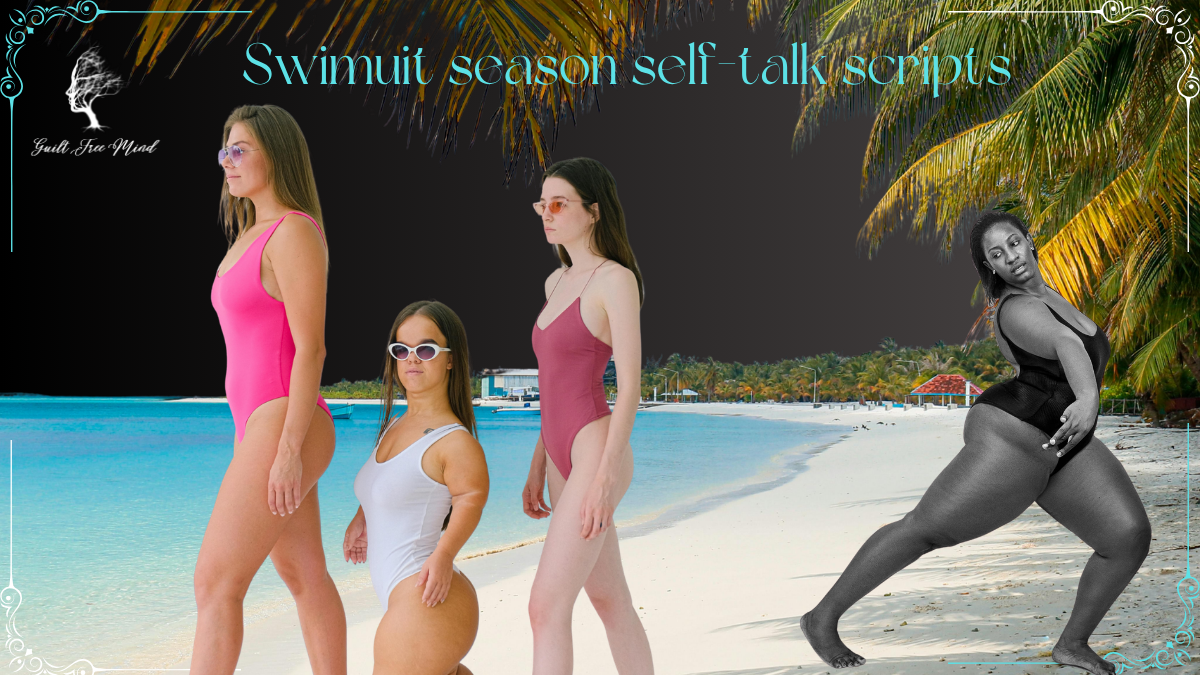

That familiar knot in your stomach returns the moment you open the drawer and see last year’s swimsuit. The inner voice starts immediately: “You can’t go out like this—your stomach looks huge,” or “Everyone will stare.” If you are looking for swimsuit season self-talk scripts that actually work, this guide delivers gentle, research-backed phrases you can use right now. No diets. No pressure to “fix” your body first. Just kind, practical words that quiet the shame and let you enjoy the water, the sun, and the season in the body you already have.

Readers write to me every spring describing the exact same spike in anxiety. One shared how she used to skip family beach days because the negative body talk felt louder than her children’s laughter. After practicing these swimsuit season self-talk scripts, she stayed the full afternoon and sent a photo with the note: “I was present.” That shift is possible, and it starts with the words you say to yourself.
Table of Contents
Swimsuit Season Self-Talk Scripts: At a Glance
- Swimsuit season anxiety is normal — Research shows clear seasonal spikes in body dissatisfaction, with July often the highest in the Northern Hemisphere. About 70% of people report their body image fluctuates by season, peaking in summer. Similar patterns appear globally, including in urban India and other nations.
- You don’t need to “fix” your body first — Lasting relief comes from kinder self-talk and small practical shifts, not diets or perfection.
- Body neutrality works better than forced positivity for many — Focus on respect and function instead of “loving every inch” when the mirror feels harsh.
- Core compassionate scripts to try today:
- “I am allowed to take up space exactly as I am this summer.”
- “My body lets me swim, play, and laugh today.”
- “I deserve to enjoy today.”
- “This feeling is real, but it does not define my worth.”
- Body neutrality affirmations for swimsuit season:
- “My inherent value is not measured by how I look.”
- “I focus on how I feel, not just how I look.”
- “I respect and nurture my body for all it does for me.”
- Quick 60-second shame reset:
- Hand on chest → breathe.
- “This feeling is real, but it does not define me.”
- “I am allowed to take up space exactly as I am.”
- Proceed with your day.
- Beyond self-talk — Curate your feed, set boundaries around body talk, choose comfort over trends, and shift focus to experiences and memories you want to create.
- One gentle truth — Your body is already summer-ready for living, laughing, and feeling the sun. The scripts here help you believe it, one kind thought at a time.
Gentle Check-In: How Strong Is Your Summer Body Anxiety Right Now?
Before we dive into the swimsuit season self-talk scripts that actually help, take a gentle moment to understand where you are right now. This short, compassionate quiz will show you how strong your summer body anxiety feels at the moment — without any judgment or pressure. Many readers discover they’re carrying more than they realized, and that simple awareness itself becomes the first kind step toward freedom. Answer honestly. There are no wrong answers here. The results will gently guide you back to the exact scripts and tools in this article that will support you best. Once you finish, come back here and we’ll begin working with the words that can truly make a difference.
Click hereWhy Swimsuit Season Triggers Body Anxiety – And Why It’s Completely Normal
Swimsuit season brings more skin into view, more social media images of “perfect” bodies, and more fear of being seen. Research tracking social media over four years shows clear seasonal spikes in body image dissatisfaction. In the Northern Hemisphere, expressions of body dissatisfaction rose significantly in July, with June and August also above average. Women showed higher rates than men overall. Similar patterns appear in other parts of the world, including urban areas in India and global nations where warmer months and increased social media use correlate with heightened self-criticism.
You are not vain or broken for feeling this. The anxiety is a real, human response to cultural pressure meeting natural vulnerability. As one reference notes, summer traditionally reigns supreme as the most self-conscious time of the year because more of the body is exposed, and media pushes “bikini body” or “slim for summer” messages.
How Perfectionism Fuels Swimsuit Anxiety
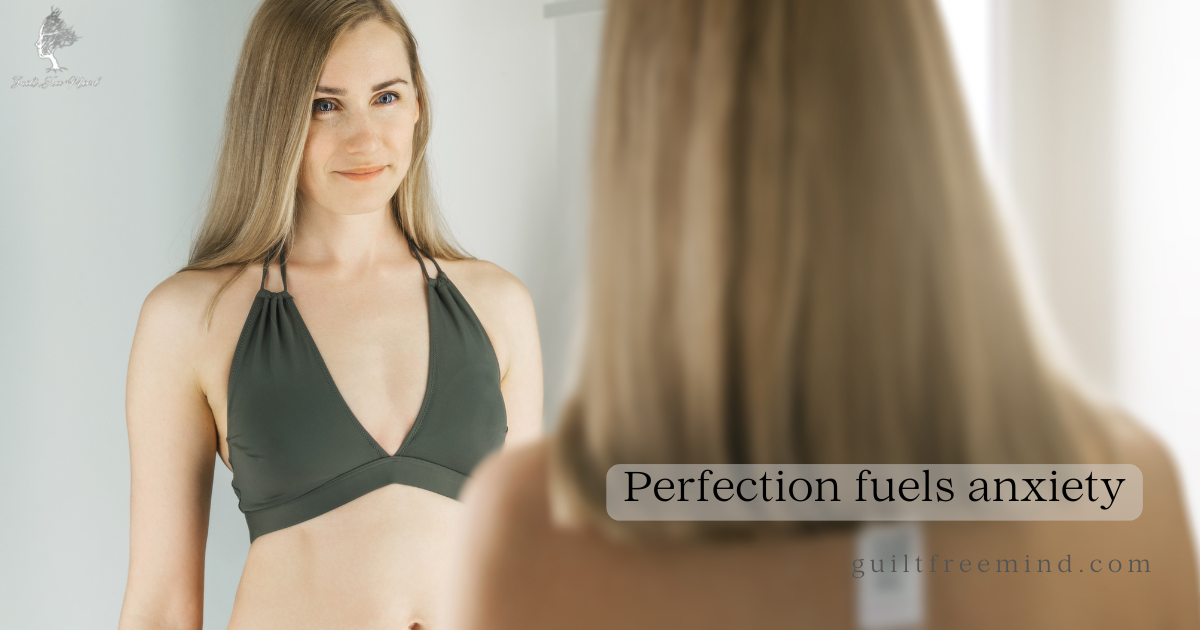
Perfectionism turns swimsuit season into a performance. Thoughts like “I’ll wear a swimsuit when I lose X pounds” or “I can’t be seen unless my stomach looks perfect” create impossible standards. This is not about vanity—it is about the deep fear of rejection or unworthiness. The anxiety of being seen connects to our basic human needs for belonging and safety (Gardiner, H., 2025).
One article explains that perfectionism imposes rigid rules that real bodies can never meet, leading to shame and withdrawal from joyful activities (Jensen, W., 2025). Recognizing this emotional layer reduces self-blame. The issue is not your body; it is the unrealistic standards you have absorbed.
The Power of Swimsuit Season Self-Talk Scripts
Swimsuit season self-talk scripts interrupt the spiral by catching distorted thoughts and replacing them with balanced, compassionate ones. This is the science of cognitive reframing from Cognitive Behavioral Therapy. You notice the anxious story, name the distortion (catastrophizing, mind-reading, or black-and-white thinking), and reframe with truth and kindness.
Regular practice changes how your brain responds to stress. Instead of letting the amygdala hijack the moment, you bring the prefrontal cortex back online with grounded self-talk.
Here are ready-to-use compassionate self-talk scripts for swimsuit season drawn from real reader experiences and clinical insights:
- “This feeling is real, but it does not define my worth today.”
- “I am allowed to take up space exactly as I am this summer.”
- “I deserve to enjoy today.”
- “My body lets me swim, play, and laugh today.”
- “I don’t have to like how I look today to treat myself with kindness.”
Say them out loud in the mirror or silently while packing your bag. One reader repeated “I am allowed to take up space” before a pool party and stayed longer than she ever had before.
Body Neutrality Affirmations for Swimsuit Season – A Gentler Path
Body positivity asks you to love every part of your appearance, which can feel forced when the mirror feels harsh. Neutrality towards your body offers a more realistic middle ground: your worth is not measured by looks, and you can respect and care for your body even on days you do not feel fully comfortable in your skin.
These body neutrality affirmations swimsuit season shift focus from “Do I look good?” to “How does this feel, and what can my body do?”
- “My inherent value is not measured by how I look or how much I weigh.”
- “My body is strong and capable.”
- “I will treat my body with kindness and respect.”
- “I am worthy of feeling confident and comfortable in my own skin.”
- “I focus on how I feel, not just how I look.”
- “My body is a miraculous vessel that keeps me alive, not an object to be scrutinized.”
- “I am so much more than my body.”
- “I deserve to eat foods I enjoy and wear clothes that express my style.”
- “My appearance will change—that’s normal.”
- “I respect, nurture, and appreciate my body for all it does for me.”
From Project HEAL’s collection of body neutrality affirmations, these statements emphasize function, respect, and intrinsic worth. They help during swimsuit season by reducing comparison and promoting size inclusivity.
Additional affirmations readers find helpful:
- “I will focus on my passions and ambitions instead of how I look.”
- “I matter because I exist. I do not have to earn or prove this to anyone.”
How to Stop Negative Body Talk When Trying on Swimsuits
The fitting room is often where anxiety peaks. Here is practical guidance for how to stop negative body talk when trying on swimsuits:
- Before undressing, place one hand on your chest and breathe: “I am safe. This is just fabric.”
- Put the suit on and immediately assess function, not appearance. Does it allow breathing? Can you move, sit, bend, and raise your arms without discomfort or riding up?
- If a critical thought arises, pause and reframe: “I notice I’m having the thought that I look wrong. That thought is old conditioning. What does my body need right now—comfort or a different style?”
- Limit mirror time. Step back, move around, and ask: “Does this let me enjoy the water?”
- Try multiple styles. What looks meh on the hanger may feel better on your unique body. Focus on coverage, support, and how the fabric behaves when wet if possible.
Clothes are meant to fit you—not the other way around. Most swimsuits are mass-produced, so if one does not suit, it is not a flaw in your body. Pair with a cover-up you love for times you want more coverage (Improve Body Image, 2025).

Positive Self-Talk for Swimsuit Anxiety in Real Moments
When swimsuit anxiety hits—before leaving the house, at the beach, or while scrolling—reach for these positive self-talk for swimsuit anxiety lines:
- “I am choosing presence over perfection today.”
- “My friends and family want to see me, not a filtered version.”
- “I am grateful for my body’s ability to move and feel the sun.”
- “What do I want to experience today—fun, connection, relaxation?”
- “Others are focused on their own lives more than judging mine.”
One reader used “I deserve to enjoy today” every time doubt crept in at her child’s swim meet. She stayed the full event and created memories instead of hiding.
Real-life scenario: A working parent named Deborah avoided beach trips for years. She practiced the fitting-room script and the body neutrality statement “My body lets me swim and laugh today.” On her first outing, anticipatory anxiety was high, but she used grounding (feet on the sand, slow breaths) and stayed present with her family.
Another reader, Riley, felt exposed at work pool parties. He rehearsed “I focus on how I feel, not just how I look” in the car (Moves Taipei K., 2024). Within a few weekends, he joined games instead of staying under an umbrella.
Self-Compassion Scripts for Mirror Anxiety Swimsuit
Mirror moments can feel brutal. These self-compassion scripts for mirror anxiety swimsuit create space:
- “I see you, body. You have carried me through another year. I’m here with kindness.”
- “The mirror is not the boss of my summer.”
- “Would I speak to someone I love this way? Then I won’t speak to myself this way either.”
- “This discomfort is temporary. My worth is permanent.”
Pair with the 60-Second Shame Reset: hand on chest, slow breath, name one kind fact (“I am allowed to take up space”), then proceed.
Research supports this approach. A randomized controlled trial found that Compassion-Focused Therapy had a significant positive impact, reducing body weight shame, increasing self-compassion, reducing self-criticism, and easing related distress (Carter et al., 2023).
Evidence-Based Coping Tools Beyond Self-Talk
While swimsuit season self-talk scripts give you powerful words to use in the moment, lasting relief comes from pairing them with practical, research-supported actions that address the environment, habits, and relationships feeding your anxiety. These tools go beyond inner dialogue to create real-world conditions that make kindness toward yourself easier.
Curate your social media feed intentionally.
Limit your doomscrolling. Unfollow or mute accounts that leave you feeling “not enough” after scrolling—especially those pushing “beach body” transformations or filtered perfection. Instead, follow creators who show real bodies of all shapes and sizes enjoying summer: swimming, laughing, playing with kids, or simply relaxing on the sand. One reference highlights how perfectionism fuels the anxiety of being seen, and curating your feed directly counters that by reducing comparison triggers. Before a beach day or pool party, take five minutes to hide any posts that spark self-criticism and replace them with content that celebrates presence and joy rather than appearance. Readers often tell me this single step lowers the volume of negative body talk within a week.

Shift your focus from appearance to experience.
Perfectionism keeps your mind locked on how you look. A powerful antidote is to ask yourself: What memories do I want to create today? How do I want to feel—free, refreshed, playful, connected? One article on perfectionism and swimsuit season recommends this exact reorientation: root your day in experience, not appearance. Before heading out, write or mentally note three things you hope to experience (the cool water on your skin, your child’s laughter, the warmth of the sun). When anxious thoughts arise, gently redirect: “I’m here for the fun, not for a performance.” This cognitive shift, drawn from cognitive reframing techniques, reduces self-objectification and helps you stay present.
Practice media literacy to dismantle unrealistic standards.
Marketing and social media create the illusion that you can completely control how your body looks through diet and exercise alone. In reality, genetics and environment play major roles—experts estimate that only a small portion of factors affecting body weight and shape fall under individual control, with heritability of body weight traits ranging from 40% to 70% across studies. Understanding this frees you from the false narrative that your body is a “project” that must be fixed before summer. When you see “get swimsuit ready” ads, remind yourself: these messages are designed to sell products, not reflect biological reality. Media literacy like this weakens the power of seasonal body image pressure.
Choose clothing that honors your body’s needs rather than trends.
Wear what feels comfortable and functional. Focus on coverage, support, fabric that moves with you, and styles that let you breathe, sit, bend, and play without constant adjustment. If a swimsuit rides up or digs in, it is not your body’s fault—it is a design mismatch. Many readers find relief by keeping a trusted cover-up or rash guard they love for moments when they want more protection. The goal is not to hide but to feel safe and able to participate fully. As one guide on trying on swimsuits emphasizes, clothes are meant to fit you, not the other way around. Test movement in the fitting room: raise your arms, sit down, walk around. If it restricts joy, let it go without self-judgment.
Set clear boundaries around body and food talk.
Ask loved ones to avoid negative comments about bodies or food in your presence this season. You can say something simple and kind: “I’m working on being gentler with myself this summer—can we skip the body talk?” This protects your progress and models compassionate communication. Family gatherings or group beach trips often amplify anxiety when conversations turn to weight or “looking good in a swimsuit.” Setting this boundary in advance reduces those moments and lets you focus on connection instead.
Incorporate body functionality practices.
Shift attention to what your body does rather than how it looks. Notice how your legs carry you across the sand, how your arms help you swim or hug someone, how your lungs breathe in fresh air. Research on body neutrality shows that emphasizing function over appearance reduces self-objectification and improves body satisfaction more accessibly than forced positivity for many people. Try this during a walk or while getting ready: name three things your body allows you to experience today. This practice aligns beautifully with the body neutrality affirmations we covered earlier.
Build in sensory and grounding supports.
When anxiety spikes, combine your self-talk scripts with simple grounding: feel your feet on the warm sand or pool deck, notice the temperature of the water, listen to the sounds around you. These sensory anchors pull you back into the present moment and interrupt rumination. They complement the CBT-based reframing you already use and are especially helpful in high-exposure situations like public beaches or pool parties.

Seek professional support when needed.
If the anxiety feels overwhelming or begins to limit your life significantly, reaching out to a therapist is a strong, compassionate choice—not a sign of failure. Compassion-Focused Therapy (CFT), in particular, has strong evidence for reducing body weight shame. A randomized controlled trial showed that a 12-session group CFT program significantly reduced body weight shame, increased self-compassion, reduced self-criticism, and improved health-engaging behaviors. These tools complement therapy beautifully; many readers use the scripts and printables here as they work with a professional.
These strategies work best when you layer them: use your swimsuit season self-talk scripts in the moment, support them with curated feeds and boundary-setting, and reinforce everything with body neutrality and functionality focus. Small, consistent actions create momentum far more effectively than waiting to feel “ready.”
Expert Insight on Self-Talk and Body Image
“Compassion-Focused Therapy had a significant positive impact… reducing body weight shame, increasing self-compassion, and reducing self-criticism.”
(Carter et al., 2023)
This clinical finding underscores why kind self-talk matters.
Common questions regarding Swimuit season self-talk scripts
I still don’t love my body—can I wear a swimsuit anyway?
Yes. You do not need to love every part of your appearance to treat your body with kindness and enjoy the season. Many readers wear swimsuits while gently working on their relationship with their bodies. That is valid and brave.
How do I stop the “I’m not beach-body ready” spiral?
Catch the thought early. Ask: “Is this helping me live the life I want?” Replace with a body neutrality statement or compassionate reframe. Take one small action—pack the bag, step outside, feel your feet on the ground.
What self-talk should I use right before leaving the house or posting a photo?
Try: “I am choosing presence over perfection today.” Or “I deserve to enjoy this moment as I am.” Focus on the experience you want to have.

Explore the Other Guilt Free Mind Categories
Whether you are working with body neutrality, noticing how shame quietly steals joy from sunny days, or simply looking for kinder ways to exist in your body without pressure or self-judgment, these resources from Guilt Free Mind are here to support you — one gentle, guilt-free step at a time.
🧘♀️ Self-Care and Wellness
Discover daily practices that honor your body exactly as it is. Explore movement that feels good rather than punitive, rest that restores without guilt, and small rituals that help you feel safe and present even when summer clothes or mirror moments trigger discomfort. Related reads: Sleep, Nutrition, and Physical Wellness; Body Neutrality for Hot Summer Days.
🧠 Understanding Personality Disorders
Learn how deep-rooted patterns of self-worth and inner criticism can sometimes amplify summer body anxiety. These articles offer compassionate insight into old emotional wiring without turning your experience into a diagnosis or something that needs to be “fixed.” They help you understand where harsh self-talk comes from so you can respond with more kindness.
🎨 Creative Healing and Therapy
Use art, journaling, digital painting, or gentle somatic practices to externalize the shame and anxiety that arise around your body. Giving shape to these feelings — whether through color, words, or movement — creates distance and kindness instead of staying trapped in harsh self-talk. Check the Beginner’s Painting Art Therapy Checklist or the color-based emotion mapping template for practical starting points.
💡 Mindful Productivity and Focus
Protect your peace on days when body neutrality makes it hard to focus or enjoy simple plans. Find micro-strategies that work with your nervous system rather than demanding you push through shame or comparison. Articles on stopping overanalyzing and mindful productivity help you stay grounded when seasonal triggers pull you out of the present moment.
💪 Emotional Recovery and Resilience
Build quiet inner anchors that help you recover from shame spirals and body-related triggers. These pieces support you in rebuilding self-trust so that your worth no longer feels conditional on how your body looks in summer clothes. Explore resources on social media’s effect on body image and building resilience after setbacks.
😌 Stress, Anxiety, and Depression Toolkit
This is exactly where today’s article lives. Here you will find more tools for working with body neutrality, body shame, and the emotional weight that often accompanies warmer months — always with science-backed insights and a deep commitment to guilt-free healing. Start with the full Summer Body Anxiety guide or the new Swimsuit Season Self-Talk Script Cards printable for immediate support.below).
Pin this article for later
Download your free printable
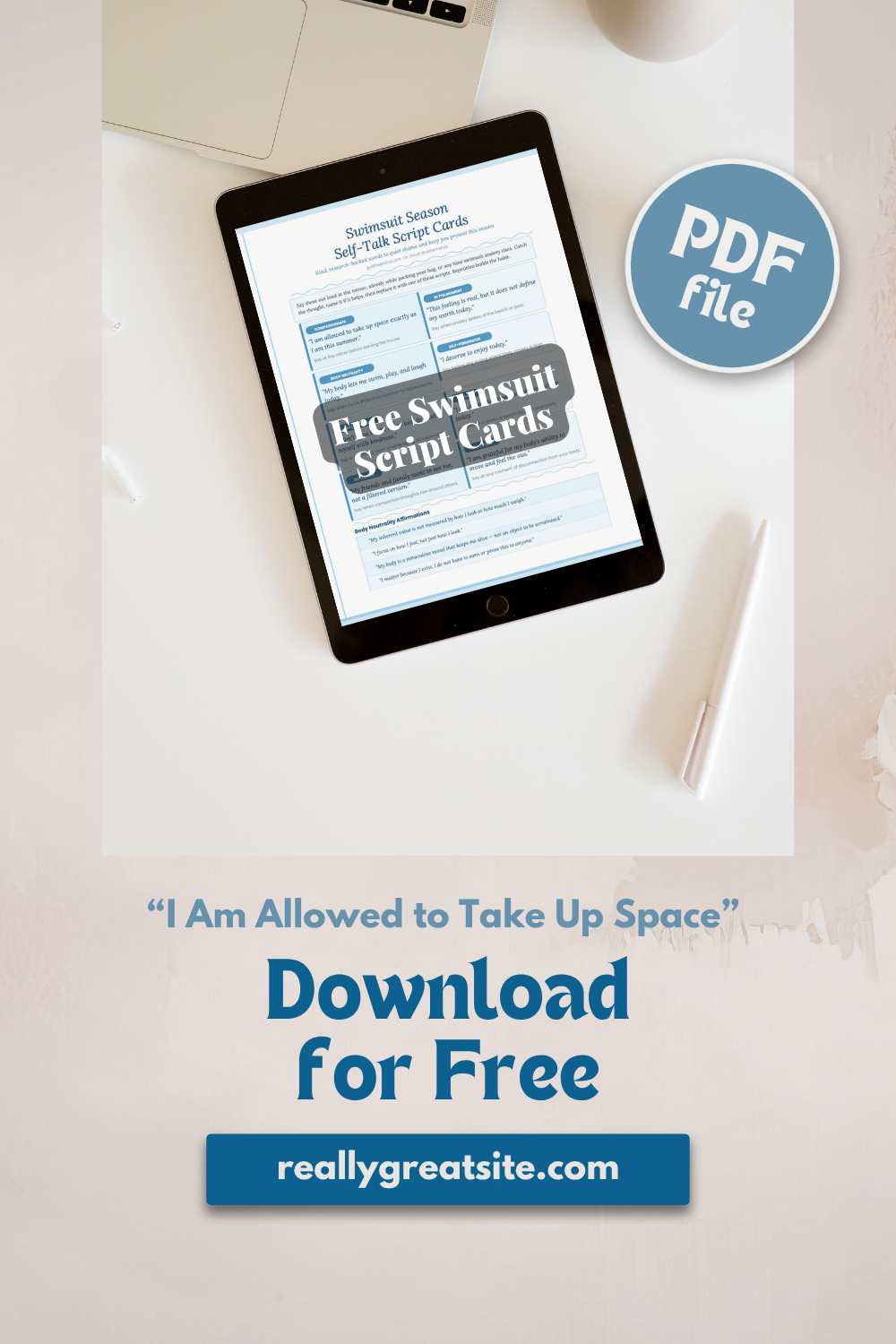
This gentle printable includes the exact compassionate scripts and body neutrality affirmations from this article, plus a simple weekly reflection sheet to help you track your progress without pressure. Print it out and keep it in your beach bag, or save the PDF on your phone so you have kind words ready whenever anxiety shows up in front of the mirror, in the fitting room, or right before heading to the pool or beach. Many readers tell me having these scripts in their hands makes it so much easier to choose kindness instead of criticism in the moment.
Ready to Rewrite Your Inner Dialogue This Summer?
You do not have to wait until you feel “ready” or “perfect” to enjoy the season. Start with one script today. Download the free Script Cards printable and keep it handy. Visit the Guilt Free Mind YouTube channel for gentle videos on seasonal body anxiety, practical demos of the shame reset, and more tools that fit real life.
Your summer belongs to you—presence, connection, and joy are available right now, in the body you have today.
Frequently Asked Questions
It is the seasonal rise in body dissatisfaction triggered by revealing clothing, social media, and fear of judgment. Research shows these spikes are well-documented, with July often highest in the Northern Hemisphere. It is a normal human response, not vanity.
Pause, place a hand on your chest, breathe slowly, and speak or think one script. Repeat as needed. Catch the thought, name the distortion if it helps, then reframe with compassion. Practice builds the habit.
Body positivity encourages loving your appearance. Body neutrality removes the pressure to love or hate your looks and focuses on respect and function. For many during swimsuit season, body neutrality feels more accessible and sustainable because it allows complex feelings without shame.
Yes. Cognitive reframing and self-compassion practices reduce shame and self-criticism. Clinical trials, including Compassion-Focused Therapy, show meaningful improvements in body weight shame and emotional distress.
The guide provides the broader understanding and 60-Second Shame Reset. This article gives the exact swimsuit season self-talk scripts and fitting-room strategies for those specific high-anxiety moments.
About the Author
Dr. Shruti Bhattacharya is the founder and heart of Guilt Free Mind. With a Master’s in Counselling Psychology and Ph.D. in Immunology, she combines scientific understanding of the body’s stress and inflammatory responses with compassionate mental health tools. Her mission is to help readers build emotional freedom without guilt or shame.
Dr. Bhattacharya’s unique blend of expertise and empathy shapes every piece of content:
- Academic & Scientific Rigor — Holding a Ph.D. in Immunology and a Bachelor’s degree in Microbiology, she brings deep insight into how chronic shame and body-related stress trigger low-grade inflammation and disrupt the gut-brain axis. This biological understanding informs her strong advocacy for body neutrality — recognizing that reducing the mental fight with your body can lower unnecessary stress responses and support both mental and physical well-being.
- Dedicated Mental Health Advocacy — With over 15 years of experience supporting hundreds of individuals through online platforms and personal guidance, Dr. Bhattacharya helps readers navigate body image struggles, anxiety, and emotional challenges with practical, evidence-based strategies.
- Empathetic Connection to Readers — Known for her warm and relatable voice, she turns complex research into accessible advice. Her personal journey as a trauma survivor fuels her commitment to creating safe spaces where readers can drop the pressure to love or hate their bodies and simply exist with more peace.
- Lifelong Commitment to Wellness — Dr. Bhattacharya lives the principles she shares, integrating science-based habits like mindfulness, balanced nutrition, and body-neutral self-care into her daily life. Her work on Guilt Free Mind continues to inspire readers to find calm and confidence through gentle, guilt-free approaches.
🏆 Guilt Free Mind was named one of the Top 100 Mental Health Blogs on Feedspot in 2025.

Follow me on:
Disclaimer:
This article is for informational and educational purposes only. It is not a substitute for professional mental health advice, diagnosis, or treatment. Please consult a qualified mental health professional for personalized support.
References
- Carter, A., Steindl, S. R., Parker, S., Gilbert, P., & Kirby, J. N. (2023). Compassion-focused therapy to reduce body weight shame for individuals with obesity: A randomized controlled trial. Behavior Therapy, 54(5), 747–764.
- Gardiner, H. (n.d.). Navigating body image and self-confidence during swimsuit season. The Chronicle Journal.
- Improve Body Image. (2025). How to try on a swimsuit if you don’t like how your body looks.
- Jensen, W. (2025). Perfectionism, body image, and swimsuit season: Coping with the anxiety of being seen. Inside Wellness.
- Moves Taipei, K. (2025). Body neutrality affirmations for summer. Katie Moves Taipei.
- Project HEAL. (2024). 20 body neutrality affirmations for disordered eating healing. The Project HEAL.
