


Depression can feel like a heavy fog, clouding your thoughts and draining your energy. As a mental health blogger at Guilt Free Mind, I write often about how this condition so often comes with overwhelming guilt. Cognitive behavioral therapy for depression is a powerful tool to lift that fog, helping you reframe negative thoughts and rediscover joy. In this article, I’ll guide you through how cognitive behavioral therapy for depression works, share practical strategies, and walk through illustrative examples to show how it works. Whether you’re struggling with persistent sadness or guilt, this post will equip you with actionable steps to start your journey toward a guilt-free mind.
Table of Contents
At a Glance
| Category | Quick Insight |
|---|---|
| Overview | Cognitive Behavioral Therapy (CBT) is a structured, evidence-based psychotherapy that manages depression by addressing negative thought patterns and behaviors. Works well for mild to moderate depression, is about as effective as antidepressants in the short term, and lowers the risk of relapse [AAFP]. |
| Key Techniques | – Cognitive Restructuring: Reframe negative thoughts (e.g., “I’m worthless” to “I’m capable”) in 10-15 min/day. – Behavioral Activation: Schedule enjoyable activities (5-30 min). – Thought Journaling: Track thoughts/emotions to identify patterns (10-20 min). – Mindfulness-Based CBT: Focus on breath to reduce rumination (5-15 min). |
| Effectiveness | – Supported by hundreds of trials, including a 2022 review of 106 studies [npj Digital Medicine]. – Comparable to antidepressants for mild/moderate depression [APA]. – Reduces guilt, especially in postpartum depression [Healthline]. |
| Who It’s For | Adults, adolescents, diverse populations (e.g., India, US). Ideal for guilt, rumination, or sadness. |
| How to Start | – Self-Help: Use CBT worksheets, journal, or practice mindfulness. – Professional Help: In-person ($100-$200/session) or online therapy ($60-$120/session) via BetterHelp or Psychology Today. |
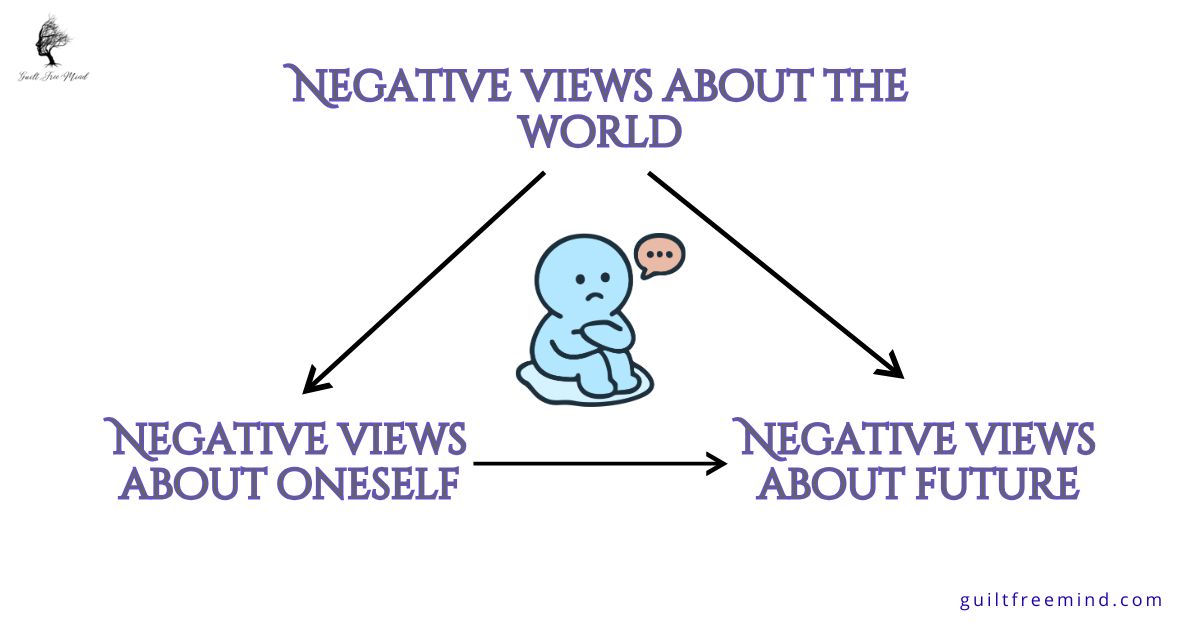
| Why It Works | Targets the cognitive triad (negative views of self, world, future) with practical, skill-based tools for resilience [BPS Medicine]. |
| Resources | Explore Guilt Free Mind’s CBT guide and breathing exercises. |
| Author | Dr. Shruti Bhattacharya, Ph.D. in Immunology, blends science and psychology for actionable mental health strategies. Featured in Feedspot’s Top 100 Mental Health Blogs. |
| Disclaimer | This content is for informational purposes only and not a substitute for professional medical advice. |
What Is Cognitive Behavioral Therapy for Depression?
Cognitive behavioral therapy for depression is a structured, goal-oriented form of psychotherapy that focuses on changing negative thought patterns and behaviors. But the basic idea behind the therapy is always the same: What we think, how we behave, and how other people make us feel are all closely related – and they all affect our wellbeing (InformedHealth.org, 2025). Unlike traditional talk therapy, it’s short-term (typically 5-20 sessions) and emphasizes practical skills you can apply daily. Developed by Dr. Aaron Beck in the 1960s, it’s based on the idea that thoughts, feelings, and behaviors are interconnected. By addressing distorted thoughts, cognitive behavioral therapy for depression helps you break the cycle of negativity that fuels low mood.

For example, if you think, “I’m a failure,” cognitive behavioral therapy for depression teaches you to challenge that belief and replace it with a more balanced perspective, like, “I made a mistake, but I’m learning.” It’s evidence-based, with studies showing it’s as effective as antidepressants for mild to moderate depression, and it lowers the risk of relapse AAFP. Pooled effect sizes indicated that receiving CBT contributed to lower levels of depression in MI patients compared with conventional treatment [SMD = −0.80, 95% CI (−1.26, −0.34), P = 0.001, I² = 93.5%] (Frontiers in Psychology, 2026).
Why Cognitive Behavioral Therapy for Depression Works
Cognitive behavioral therapy for depression targets the root of depressive symptoms: distorted thinking. It’s built on the “cognitive triad,” which suggests depression stems from negative views of yourself, the world, and the future. By restructuring these thoughts, cognitive behavioral therapy for depression empowers you to take control of your emotions. It’s effective because it’s:
- Structured: Sessions follow a clear plan, with homework to reinforce skills.
- Practical: You learn tools like journaling and behavioral activation to use in everyday life.
- Evidence-Based: A 2022 review of 106 studies (11,854 patients) found that both face-to-face and digital CBT reduce depressive symptoms.
CBT works on the thinking and behaviour patterns that keep low mood going — and it leaves you with skills you can keep using after therapy ends.
Depression affects hundreds of millions of people worldwide (WHO), and clinical practice guidelines in India recommend CBT as a treatment for it (Gautam et al., 2020). In the US, about 21 million adults have a major depressive episode each year (NIMH), and the American Psychological Association’s depression guideline recommends CBT for adults (APA).
Illustrative Example (Composite)
Illustrative example (a composite, not a real reader): Meet Sarah, a 32-year-old teacher who felt trapped in a cycle of sadness and self-doubt. She often thought, “I’m not good enough for my students,” which led to withdrawing from social activities. After starting cognitive behavioral therapy for depression, Sarah worked with her therapist to identify these thoughts as “all-or-nothing” thinking. Using cognitive restructuring, she replaced them with, “I’m doing my best, and my students appreciate my effort.” She also practiced behavioral activation by scheduling coffee dates with friends, which lifted her mood. Within 12 weeks, Sarah felt more confident and reconnected with her passion for teaching.
This example shows how cognitive behavioral therapy for depression can transform lives by addressing both thoughts and actions. It’s not about “thinking positive” but about thinking realistically.
Brain-imaging research is starting to show how CBT-style therapy works. In a Stanford randomized trial of 108 adults with depression and obesity, people whose cognitive-control brain circuit changed early in problem-solving therapy (a CBT approach) were the ones most likely to keep improving over two years (Zhang et al., 2024). It is early science, but it supports the idea that CBT changes how the brain handles problems, not just how you talk about them.
Cognitive Behavioral Therapy Techniques for Managing Depression
Cognitive behavioral therapy for depression offers a set of practical, evidence-based strategies to help you challenge negative thoughts, shift behaviors, and reclaim your emotional well-being. These cognitive behavioral therapy techniques for managing depression are designed to be accessible, whether you’re working with a therapist or practicing self-help at home. As the mental health blogger behind Guilt Free Mind, I write about these techniques because they give people practical ways to break free from depression and guilt. Below, I’ve detailed eight key cognitive behavioral therapy techniques for managing depression, including step-by-step guidance, real-life examples, specific time durations for each practice, and tips to make them work for you. Each technique is rooted in research and can be tailored to your needs [healthline].
Cognitive Restructuring: Rewiring Negative Thoughts
Time Duration: 10-15 minutes per session
Cognitive restructuring is a cornerstone of cognitive behavioral therapy for depression, helping you identify and challenge distorted thought patterns that fuel low mood and guilt. Depression often leads to “cognitive distortions,” like all-or-nothing thinking (“I’m a complete failure”) or overgeneralization (“I always mess up”). This technique teaches you to question these thoughts and replace them with balanced, realistic ones, reducing the emotional weight of guilt [Mayoclinic].
Time needed: 15 minutes
How to Practice
- Step 1
When a negative thought arises (e.g., “I’m worthless because I missed a deadline”), write it down (2 minutes).
- Step 2
Identify the distortion, such as overgeneralization (1 minute).
- Step 3
List evidence for the thought (e.g., “I missed the deadline”) and against it (e.g., “I’ve met deadlines before and received positive feedback”) (5 minutes).
- Step 4
Create a balanced thought (e.g., “Missing one deadline doesn’t define my worth; I’m capable and can improve”) (2 minutes).
- Step 5
Rate how much you believe the new thought (1-10) and practice repeating it (2-5 minutes).
Illustrative example (a composite, not a real person): Emma, a 28-year-old graphic designer, felt guilty for not completing a project on time, thinking, “I’m letting my team down.” Using cognitive restructuring, she spent 10 minutes daily identifying this as catastrophizing. She listed evidence of her past successes and reframed the thought: “I’m human, and one delay doesn’t make me a bad designer.” After two weeks, her guilt and depressive symptoms eased significantly.
Tip: Set a timer for 10-15 minutes to keep the session focused. Use a small notebook or an app like MoodTools to track your thoughts.

In CBT, a feeling of worthlessness is treated as a thought to examine — not as a fact you have to accept.
Behavioral Activation: Breaking the Cycle of Withdrawal
Time Duration: 5-30 minutes per activity (plus 5 minutes for planning)
Depression often leads to withdrawal, where you avoid activities that once brought joy or purpose. Behavioral activation, a key part of cognitive behavioral therapy for depression, encourages you to schedule and engage in meaningful activities, even when motivation is low. This technique boosts mood by increasing positive experiences and countering guilt from inactivity [Cleveland Clinic]. The results from Behaviour Research and Therapy, 2026, supports the preventive effect of CBT on depression onset. In particular, efficacious depression prevention interventions can include problem-solving and behavioral activation.
How to Practice:
- Step 1: List activities you enjoy or used to enjoy, like walking, cooking, or calling a friend (2 minutes).
- Step 2: Choose one small activity and schedule it for a specific time (e.g., “Take a 10-minute walk at 4 PM”) (3 minutes).
- Step 3: Do the activity, starting with 5-30 minutes depending on your energy level.
- Step 4: Reflect on how it felt afterward, noting any mood improvement in a journal (2-5 minutes).
- Step 5: Gradually increase the frequency or duration of activities over weeks.
Illustrative example (a composite, not a real person): Mike, a 40-year-old IT specialist, stopped playing guitar due to depression. He spent 5 minutes planning to play for 10 minutes twice a week. Initially, it felt forced, but after a month, the 20-minute sessions rekindled his passion and reduced his guilt over “wasting his talents.”
Tip: Use a calendar app to set reminders for your 5-30 minute activities. Pair them with something enjoyable, like listening to music during a walk, to make starting easier.
Thought Journaling: Tracking Patterns for Clarity
Time Duration: 10-20 minutes per session
Thought journaling is a powerful cognitive behavioral therapy technique for managing depression, allowing you to track negative thoughts, identify triggers, and spot patterns. By writing down your thoughts, you gain perspective and reduce the intensity of emotions like guilt or sadness, making it easier to challenge them [Better Health].
How to Practice:
- Step 1: Create a table with columns: Situation, Thought, Emotion, Evidence For, Evidence Against, Balanced Thought (2 minutes).
- Step 2: When you feel down, note the situation (e.g., “Got a low performance review”) (2 minutes).
- Step 3: Write the thought (e.g., “I’m a failure at my job”) and the emotion (e.g., guilt, sadness) (2 minutes).
- Step 4: List evidence for the thought (e.g., “My boss criticized my report”) and against it (e.g., “I’ve received praise for other projects”) (5-8 minutes).
- Step 5: Write a balanced thought (e.g., “I made a mistake, but I’m skilled and can improve”) (2 minutes).
- Step 6: Review your journal weekly to identify recurring distortions (2-5 minutes).
Illustrative example (a composite, not a real person): Priya, a 35-year-old nurse, felt guilty for taking breaks at work, thinking, “I’m not doing enough for my patients.” She spent 15 minutes daily journaling and noticed this thought came after long shifts. Reframing it as, “Taking breaks helps me care better for my patients,” reduced her guilt within weeks.
Tip: Dedicate 10-20 minutes each evening for journaling. Use the printable thought record from the main article or apps like CBT Thought Diary for structure.
Mindfulness-Based CBT: Staying Present to Reduce Rumination
Time Duration: 5-15 minutes per session
Mindfulness-based cognitive therapy (MBCT), a blend of mindfulness and cognitive behavioral therapy for depression, helps you stay present and reduce rumination—repetitive negative thinking that fuels depression and guilt. This technique teaches you to observe thoughts without judgment, creating mental space for clarity [BPS Medicine].
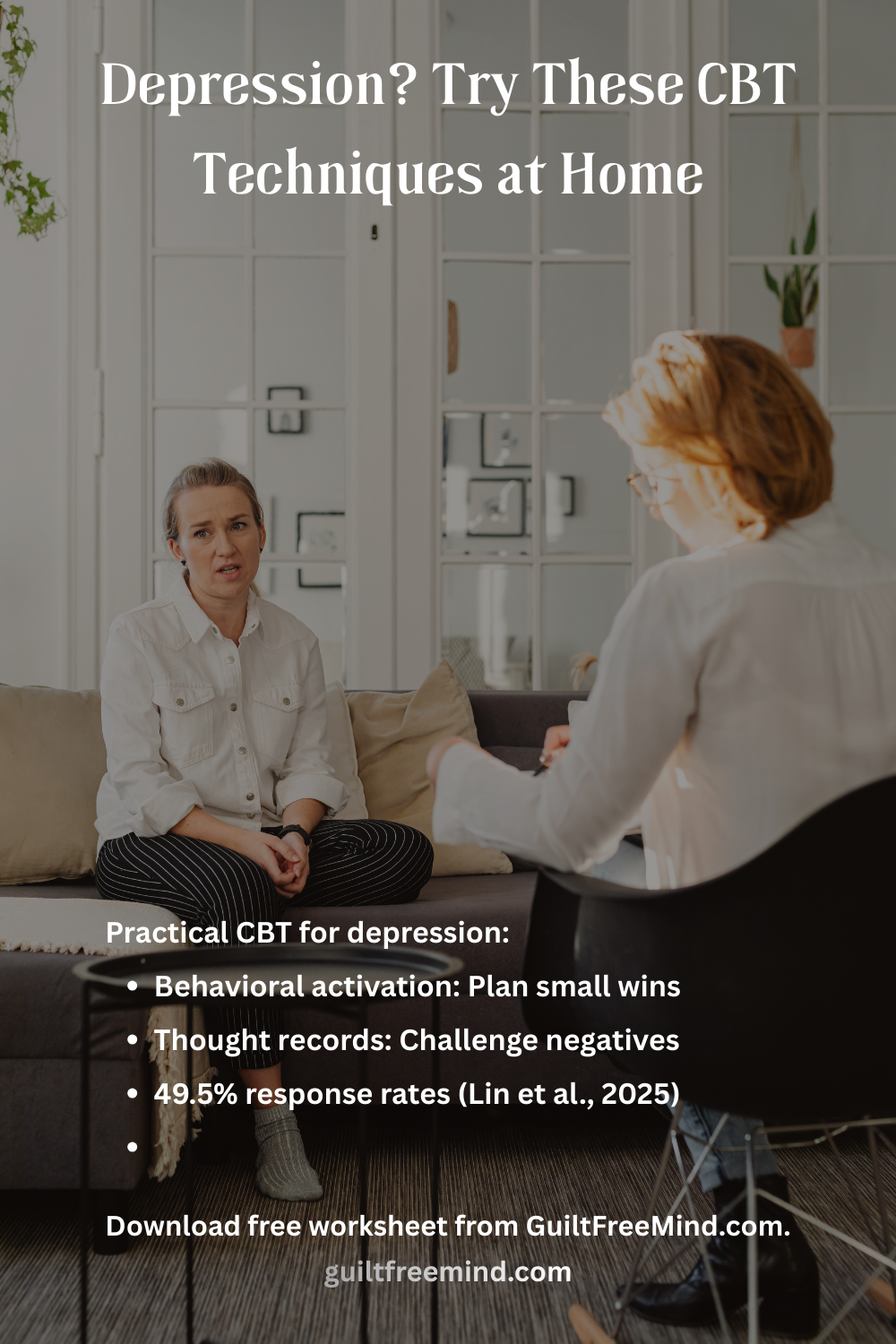
Pin this article for later:
How to Practice:
When thoughts arise, find a quiet space and sit comfortably (1 minute). Focus on your breath for 5-15 minutes, noticing the air moving in and out (5-15 minutes).
How to Use CBT to Overcome Depression Naturally
Wondering how to use CBT to overcome depression naturally? You don’t always need a therapist to start. Cognitive behavioral therapy for depression can be applied through self-help strategies, though professional guidance enhances results. Here’s how to begin:
- Identify Negative Thoughts: Notice thoughts like “I’m worthless” when they arise. Keep a journal to track them.
- Challenge Distortions: Ask, “Is this thought based on facts?” For example, if you think, “Nobody likes me,” list evidence of people who care about you.
- Replace with Balanced Thoughts: Swap negative thoughts for realistic ones, like “I’m valued by my friends.”
- Engage in Activities: Schedule one enjoyable activity daily, like reading or gardening, to boost your mood.
- Practice Mindfulness: Spend 5 minutes focusing on your breath to stay grounded.
Sarah, from our earlier scenario, used these steps to rebuild her confidence. Start small, and consistency will lead to progress.

Effective Cognitive Behavioral Therapy Strategies for Depression
Effective cognitive behavioral therapy strategies for depression go beyond basic techniques to create lasting change. Here are some advanced approaches:
- Goal Setting: Work with a therapist to set achievable goals, like socializing once a week.
- Social Skills Training: Practice assertiveness or communication to improve relationships, which can lift mood.
- Homework Assignments: Complete tasks between sessions, like journaling or trying a new activity, to reinforce learning.
- Relapse Prevention: Develop a plan to maintain gains, such as identifying triggers and coping strategies.
These effective cognitive behavioral therapy strategies for depression are tailored to your needs, making them powerful tools for long-term recovery.
Comparing CBT to Other Therapies for Depression
While cognitive behavioral therapy for depression is highly effective, it’s helpful to compare it to other evidence-based approaches like Dialectical Behavior Therapy (DBT) and Interpersonal Therapy (IPT) to determine the best fit. Each targets different aspects of depression, and understanding these can guide your treatment choices.
CBT focuses on identifying and restructuring negative thought patterns and behaviors, making it ideal for guilt-driven depression. In contrast, DBT, developed for borderline personality disorder but adapted for depression, emphasizes emotional regulation, mindfulness, and distress tolerance. It’s particularly useful for those with intense emotions or self-harm tendencies, though it requires longer commitment (6–12 months vs. CBT’s 5–20 sessions).
IPT, on the other hand, addresses interpersonal issues like grief, role transitions, or conflicts that contribute to depression. It’s shorter-term (12–16 weeks) and effective for mild to moderate cases linked to relationships, but less focused on internal thought processes than CBT.
Reviews find cognitive therapy about as effective as interpersonal or brief psychodynamic therapy (Rupke et al., 2006), and the largest meta-analysis found CBT only slightly ahead of other psychotherapies — a difference that disappeared in most of its checks (Cuijpers et al., 2023). CBT’s skill-building may help protect against relapse, and for severe depression, combining CBT with medication works better than medication alone (Cuijpers et al., 2023).
| Therapy | Focus | Duration | Efficacy for Depression | Best For |
|---|---|---|---|---|
| CBT | Changing negative thoughts and behaviors | 5–20 sessions | High (hundreds of trials; lower relapse after treatment ends) | Mild to severe depression, guilt, rumination |
| DBT | Emotional regulation and mindfulness | 6–12 months | Moderate for depression (effective with co-occurring BPD) | Depression with intense emotions or self-harm |
| IPT | Improving interpersonal relationships | 12–16 weeks | High for mild/moderate depression | Depression linked to social conflicts or grief |
This comparison highlights CBT’s versatility, especially for self-help applications in managing depression and guilt.
CBT vs. Emerging Therapies
Newer options for treatment-resistant depression, such as accelerated TMS (transcranial magnetic stimulation) and ketamine-based treatments, can work faster for some people, and VR-based CBT is still being tested. These are specialist treatments that don’t teach the coping skills CBT does, so they are usually combined with therapy rather than replacing it.
Potential Side Effects and Risks of CBT for Depression
While CBT is generally safe, it can bring temporary discomfort, such as more anxiety or emotional intensity while you face difficult thoughts, or tiredness from homework tasks. In a study of unwanted events in CBT, therapists reported events such as distress or strain for a sizeable share of their patients; most were mild and temporary, and genuine side effects were less common (Schermuly-Haupt et al., 2018). Work with a professional who checks in on how you are doing, and speak up if things feel worse rather than better.

Addressing Guilt with CBT Worksheets for Coping with Depression and Guilt
Guilt is a common symptom of depression, often making you feel unworthy or responsible for things beyond your control. CBT worksheets for coping with depression and guilt can help you address these feelings systematically. Here’s a printable worksheet you can use:
Using CBT worksheets for coping with depression and guilt helps you process emotions logically, reducing their hold over you. Print this worksheet and try it during a quiet moment.
Illustrative Example: Using CBT for Guilt After a Job Loss
Illustrative example (a composite, not a real reader): John, a 45-year-old accountant, struggled with depression and guilt after losing his job. He thought, “I’m a failure as a provider.” Through cognitive behavioral therapy for depression, John used a CBT worksheet to challenge this thought. He realized his job loss was due to company downsizing, not personal failure. By practicing behavioral activation, he started volunteering, which restored his sense of purpose. John also used mindfulness to manage guilt, focusing on the present instead of ruminating. After 10 weeks, his guilt and sadness decreased significantly, and he felt empowered to seek new opportunities Following treatment, we found an increase in frequency of gaze towards the faces of the audience while speaking… increased eye gaze can potentially reverse the negative spiral by reducing negative responses from others, improving social interactions and consequently leading to a reduction in impairment (Velthuizen et al., 2026).
This example highlights how cognitive behavioral therapy for depression can address guilt, a core theme of Guilt Free Mind.
CBT helps you spot and correct inaccurate beliefs about yourself that drive low mood and unhelpful behaviour.
This quote underscores why cognitive behavioral therapy for depression is so effective: it targets the root of negative emotions, empowering you to rewrite your mental narrative.
The Science Behind Cognitive Behavioral Therapy for Depression
CBT is one of the most studied treatments for depression. The largest meta-analysis so far pooled 409 trials with 52,702 patients: CBT had moderate to large effects compared with usual care or a waitlist, and the benefit was still there 6–12 months later. It worked about as well as antidepressants in the short term and better at 6–12 months, although only a few trials measured that (Cuijpers et al., 2023). A review of 106 studies (11,854 patients) found that face-to-face and digital CBT both reduced depressive symptoms and worked about equally well once differences between the studies were taken into account (Kambeitz-Ilankovic et al., 2022). CBT targets the “cognitive triad” — negative views of yourself, the world and the future — and gives you practical tools to question repetitive negative thinking (Beck, 2008).
For Severe Depression and Combination Therapy
CBT also helps with severe or long-lasting depression, usually alongside medication. The American Academy of Family Physicians recommends combining cognitive therapy with antidepressants for severe or chronic depression (Rupke et al., 2006). In a trial of 681 adults with chronic depression, 73% responded to an antidepressant combined with a CBT-based therapy called CBASP, compared with 48% for either treatment on its own (Keller et al., 2000). In the 2023 meta-analysis, combined treatment did better than medication alone in both the short and the long term, though it was not clearly better than CBT alone (Cuijpers et al., 2023).
CBT can also help when antidepressants have only partly worked. In a trial of 158 people who still had symptoms after antidepressant treatment, adding cognitive therapy lowered the relapse rate from 47% to 29% over 68 weeks (Paykel et al., 1999). In a UK trial of 469 people whose depression had not improved enough on antidepressants, adding CBT to their usual care led to lower depression scores that were still visible three to five years later (Wiles et al., 2016).
Depression is common. It affects hundreds of millions of people worldwide and is more common in women than in men (WHO). In the US, about 21 million adults — roughly 8% — have a major depressive episode in a given year, with the highest rates among 18–25-year-olds (NIMH). A national survey found that 13.1% of Americans aged 12 and over had depression symptoms in a two-week period between 2021 and 2023 (Brody & Hughes, 2025).

What Brain-Imaging Studies Show
Brain scans are starting to show how CBT works. A 2025 systematic review of 14 fMRI studies found that after CBT, the brain’s emotional “alarm” areas (the limbic system, which includes the amygdala) reacted less strongly, reward areas (the striatum) became more active when people processed rewards, and activity changed in the cingulate and prefrontal cortex; some of these changes went along with recovery (König et al., 2025).
In a 2025 trial, 72 adults with major depression were randomly assigned either to a shortened CBT programme — five sessions with a therapist plus computer exercises at home — or to a waitlist. Depression scores fell after the programme, and brain scans showed changes in how mood and thinking networks connect (Sheline et al., 2025). Another study compared people who recovered with CBT and people who recovered with antidepressants: most of the brain-connectivity changes were specific to the treatment, with CBT strengthening links between networks for cognitive control and attention (Dunlop et al., 2023).
These studies are still small, so they show patterns rather than precise numbers.
Adaptability
CBT can be adapted for different people and settings. For severe depression it is often combined with medication, as described above. For postpartum depression, it can help with the guilt and harsh beliefs about parenting that often come with low mood. CBT also helps children and adolescents, and it even works as unguided self-help (Cuijpers et al., 2023). In India, clinical practice guidelines published in the Indian Journal of Psychiatry describe how to use CBT for depression (Gautam et al., 2020).
CBT’s benefits also tend to last. Because it teaches skills you keep using, its effects held up better than medication’s at 6–12 months in the 2023 meta-analysis (Cuijpers et al., 2023), and the AAFP review describes good evidence that cognitive therapy reduces relapse (Rupke et al., 2006). Techniques like cognitive restructuring and behavioral activation help you manage triggers long after therapy ends (NHS).
Finding a CBT Therapist: Online vs. In-Person Options
If self-help CBT isn’t enough, seeking a professional therapist can accelerate your progress. Start by searching directories from authoritative organizations like NIMH or NAMI.
In-Person Therapy: Ideal for building rapport through face-to-face sessions. Costs range from $100–$200 per session without insurance; many accept coverage. Use Psychology Today’s therapist finder to locate local CBT specialists.
Online Therapy: Convenient and often more affordable ($60–$120 per session). Platforms like BetterHelp or Talkspace offer licensed therapists specializing in CBT for depression, with flexible scheduling and text/video options. For severe cases, ensure the platform supports crisis intervention.
Consider factors like therapist credentials (look for licensed psychologists or counselors with CBT certification) and reviews. Free or low-cost options include community mental health centers or apps like MoodKit for guided CBT. Remember, therapy is an investment—starting with 8–12 sessions can yield significant improvements.
Cost Comparison Table (US Insurance vs. Self-Pay)
Content:
| Aspect | With Insurance | Self-Pay |
|---|---|---|
| Per Session Cost | $0-$50 (after copay/deductible; 80-100% coverage common) | $100-$288 (average $143-$174 nationally) |
| Total for 12 Sessions | $0-$600 (depending on plan; e.g., Medicare covers most) | $1,200-$3,456 (varies by location/therapist experience) |
| Factors Affecting Cost | Plan type (e.g., HMO vs. PPO), in-network providers, annual limits | Therapist credentials (PhD vs. LCSW), session length (45-60 min), urban vs. rural |
| Savings Tips | Use EAPs or directories like Psychology Today for covered options | Sliding scales ($75-$150 in some areas), group sessions ($50-$100) |
| Recent trends | Parity laws ensure equal coverage; telehealth often lowers copays | Rising due to demand, but apps offer free/low-cost alternatives ($0-$20/month) |
Sources: Based on 2025 data from Project Healthy Minds and The Hope Institute.
Digital CBT Options for Depression
Apps like MoodTools (for journaling and mood tracking) and Moodfit (customizable stress reduction) offer CBT-style self-help tools, although the evidence behind individual apps varies [Choosing Therapy; Digital Health Insider]. PsyTech VR and Verywell Mind-recommended tools like Sanvello offer gamified CBT for anxiety/depression, costing free to $10/month versus traditional sessions (PsyTech VR). Ideal for mild cases, with evidence-based strategies.

CBT and Technology
As we step into 2025, CBT is evolving with technology, making it more accessible and personalized. From AI apps to telehealth, these integrations bridge gaps in mental health care, especially for busy folks or those in remote areas. Findings indicate that NG-CBT interventions improve treatment accessibility and engagement while maintaining clinical effectiveness. Personalized digital tools enhance adherence, and teletherapy platforms provide scalable and cost-effective alternatives to traditional therapy (Medicina, 2025). Let’s explore how tech is transforming CBT without losing its human touch.
AI-Powered Apps: On-Demand CBT Support
AI-CBT apps are booming, using machine learning to deliver therapy-like experiences. Many popular wellness apps now include CBT-style exercises. For example, Noah AI and Woebot offer chatbots that guide cognitive restructuring—users chat about worries, and the AI suggests reframes based on CBT principles.
Veterans benefit too
The first randomized trial of a generative-AI therapy chatbot (Dartmouth’s Therabot) found that adults with depression reported an average 51% drop in depressive symptoms, a significantly larger improvement than a waitlist group (Heinz et al., 2025). It was a small, closely monitored trial, so treat apps like this as a supplement to human care — not a replacement, especially if you are in crisis.
Telehealth: Virtual Sessions for Broader Reach
Telehealth is reshaping CBT delivery, and hybrid care (a mix of in-person and video sessions) is now common. Online CBT can help people reach therapy where services are scarce, and digital CBT tends to work better when a trained person guides it (Kambeitz-Ilankovic et al., 2022).
My personal Experience
I’ve drawn from my own journey as a trauma survivor to understand the depths of depression. Several years ago, during a particularly challenging period following a personal loss, I found myself trapped in a cycle of guilt and negative self-talk, thinking, “I’m broken and unworthy of happiness.” Turning to cognitive behavioral therapy for depression, I began practicing cognitive restructuring daily. I challenged these thoughts by listing evidence against them—such as my successful career in immunology and the support from loved ones—and replaced them with balanced affirmations like, “I’m resilient and deserving of healing.” Over eight weeks, this technique, combined with behavioral activation like resuming yoga, lifted the fog of depression and reduced my guilt significantly. This personal experience fuels my passion for sharing CBT strategies, as I’ve seen firsthand how it empowers individuals to reclaim their mental well-being.
🌿 Explore More on Guilt Free Mind: Related Resources
Guilt Free Mind is your trusted space for mental health support, offering six core categories filled with actionable strategies to help you heal and grow—especially if you’re navigating anxiety, depression, or emotional challenges. Whether you’re exploring Cognitive Behavioral Therapy (CBT) or seeking long-term recovery tools, these hubs are here to support you holistically:
🧘♀️ Self-Care and Wellness
Build routines that soothe your nervous system and strengthen emotional well-being. This hub is ideal for grounding practices that pair well with CBT techniques.
🧠 Understanding Personality Disorders
Gain clarity on complex emotional and behavioral patterns. Learn how evidence-based approaches like CBT intersect with conditions such as PTSD or borderline personality disorder.
🎨 Creative Healing and Therapy
Engage the mind-body connection through creative outlets like art, journaling, and somatic techniques that complement cognitive restructuring in CBT.
💡 Mindful Productivity and Focus
Harness mindful strategies to stay focused and present—even when anxiety tries to hijack your day. Great for building resilience between CBT sessions.
💪 Emotional Recovery and Resilience
This hub offers practical tools to help you rebuild emotional strength, challenge distorted thinking, and foster lasting calm—perfect alongside therapeutic modalities like CBT.
😌 Stress, Anxiety, and Depression Toolkit
Explore in-depth resources to understand and manage anxiety, panic attacks, and chronic stress. If CBT is part of your plan, this hub expands your toolkit for healing and relief.
Take the Next Step: Your Path to a Guilt-Free Mind Starts Here
Cognitive Behavioral Therapy for Depression (CBT) is your evidence-based ally in lifting the fog of low moods and guilt, targeting negative thoughts and behaviors for real relief and lasting resilience—often in just 5-20 sessions, with lower relapse than meds alone. As explored, its strengths shine in practical techniques like restructuring and activation, adaptable for severe cases when combined with medication, with early brain-imaging studies starting to show how it works.
Whether starting with self-help journaling or a certified therapist (e.g., via Psychology Today), CBT empowers your active role in healing. Side effects like temporary discomfort are minimal, outweighed by boosted relationships and productivity. If guilt or rumination lingers, talk to a mental health professional. Explore our Stress Toolkit for more.
Ready to reframe? Download your FREE CBT Worksheet, subscribe for exclusive tips, and watch walkthroughs on Guilt Free Mind YouTube. Pin our infographics on Pinterest—your share amplifies reach! Change starts now. 🌿
If You Need Support Right Now
If you are in crisis or having thoughts of harming yourself, please reach out now. India: Tele-MANAS 14416 (free, 24/7) or 112 in an emergency. US: call or text 988 (Suicide & Crisis Lifeline). UK: Samaritans 116 123. Anywhere else, call your local emergency number or go to the nearest emergency department.
Frequently Asked Questions
The 3 C’s of cognitive behavioral therapy for depression are Catch, Check, and Change. Catch the negative thought (e.g., “I’m a failure”). Check its validity by examining evidence for and against it. Change it to a more balanced thought (e.g., “I’m learning from my mistakes”). This process helps you reframe distorted thinking.
The 4 Ps are Predisposing factors (e.g., genetics), Precipitating factors (e.g., a stressful event), Perpetuating factors (e.g., negative thinking), and Protective factors (e.g., social support). Understanding these helps tailor cognitive behavioral therapy for depression to your unique situation.
The 5 steps of cognitive behavioral therapy for depression are:
Identify the problem (e.g., feeling sad).
Set goals (e.g., improve mood).
Recognize negative thoughts and behaviors.
Challenge and reframe thoughts using techniques like cognitive restructuring.
Practice new behaviors, like scheduling activities.
The cognitive approach focuses on changing negative thought patterns that fuel depression. It uses techniques like cognitive restructuring and thought journaling to replace distorted thoughts (e.g., “I’m worthless”) with realistic ones (e.g., “I have value”). This approach, central to cognitive behavioral therapy for depression, improves mood and behavior.
About the Author
Dr. Shruti Bhattacharya is the founder and heart of Guilt Free Mind, where she combines a Ph.D. in Immunology with training in psychology to deliver science-backed mental health strategies. Her mission is to empower readers to overcome stress, anxiety, and emotional challenges with practical, evidence-based tools. Dr. Bhattacharya’s unique blend of expertise and empathy shapes her approach to wellness:
- Academic & Scientific Rigor – Holding a Ph.D. in Immunology and a Bachelor’s degree in Microbiology, Dr. Bhattacharya brings a deep understanding of the biological foundations of mental health, including the gut-brain connection. Her completion of psychology courses, such as The Psychology of Emotions: An Introduction to Embodied Cognition, from University of Cambridge enhances her ability to bridge science and emotional well-being.
- Dedicated Mental Health Advocacy – With over 15 years of experience, Dr. Bhattacharya has supported hundreds of individuals through online platforms and personal guidance, helping them navigate mental health challenges with actionable strategies. Her work has empowered readers to adopt holistic practices, from mindfulness to nutrition, for lasting resilience.
- Empathetic Connection to Readers – Known for her compassionate and relatable voice, Dr. Bhattacharya is a trusted guide in mental health, turning complex research into accessible advice. Her personal journey as a trauma survivor fuels her commitment to helping others find calm and confidence.
- Lifelong Commitment to Wellness – Dr. Bhattacharya lives the principles she shares, integrating science-based habits like balanced nutrition and stress management into her daily life. Her personal exploration of mental health strategies inspires Guilt Free Mind’s practical, reader-focused content.

Disclaimer: This content is for informational purposes only and is not a substitute for professional medical advice.
References
- Rupke, S. J., Blecke, D., & Renfrow, M. (2006). Cognitive therapy for depression. American Family Physician, 73(1), 83–86.
- American Psychological Association (APA). (2019). Clinical practice guideline for the treatment of depression across three age cohorts.
- Better Health Channel. (2022). Cognitive behaviour therapy (CBT). Department of Health, State Government of Victoria, Australia.
- Nakao, M., Shirotsuki, K., & Sugaya, N. (2021). Cognitive-behavioral therapy for management of mental health and stress-related disorders: Recent advances in techniques and technologies. BioPsychoSocial Medicine, 15, 16. https://doi.org/10.1186/s13030-021-00219-w
- Cleveland Clinic. (n.d.). Cognitive behavioral therapy (CBT).
- Raypole, C., & Marcin, A. (2025, March 19). Cognitive behavioral therapy: Techniques, types, and uses. Healthline.
- Mayo Clinic Staff. (2025, February 26). Cognitive behavioral therapy. Mayo Clinic.
- Rasing, S. P. A., Stikkelbroek, Y. A. J., den Hollander, W., et al. (2021). Pragmatic quasi-experimental controlled trial evaluating the outcomes of blended CBT compared to face-to-face CBT and treatment as usual for adolescents with depressive disorders. International Journal of Environmental Research and Public Health, 18(6), 3102. https://doi.org/10.3390/ijerph18063102
- NHS. (2025, March 28). Cognitive behavioural therapy (CBT) – Overview. NHS.
- Bai, N. (2024, September 6). Cognitive behavioral therapy enhances brain circuits to relieve depression. Stanford Medicine.
- Beck Institute. (n.d.). Understanding CBT. Beck Institute for Cognitive Behavior Therapy.
- Jarrett, C. (2018). Psychotherapy is not harmless: On the side effects of CBT. Aeon.
- Schermuly-Haupt, M.-L., Linden, M., & Rush, A. J. (2018). Unwanted events and side effects in cognitive behavior therapy. Cognitive Therapy and Research, 42, 219–229.
- Institute for Quality and Efficiency in Health Care (IQWiG). (2025). In brief: Cognitive behavioral therapy (CBT). InformedHealth.org [NCBI Bookshelf].
- World Health Organization (WHO). (2025). Depressive disorder (depression). World Health Organization.
- Brody, D. J., & Hughes, J. P. (2025). Depression prevalence in adolescents and adults: United States, August 2021–August 2023. NCHS Data Brief, No. 527. Centers for Disease Control and Prevention.
- König, P., Zwiky, E., Küttner, A., Uhlig, M., & Redlich, R. (2025). Brain functional effects of cognitive behavioral therapy for depression: A systematic review of task-based fMRI studies. Journal of Affective Disorders, 368, 872–887. https://doi.org/10.1016/j.jad.2024.09.084
- Sheline, Y. I., Thase, M. E., Hembree, E. A., et al. (2025). Neuroimaging changes in major depression with brief computer-assisted cognitive behavioral therapy compared to waitlist. Molecular Psychiatry, 30(8), 3579–3587. https://doi.org/10.1038/s41380-025-02945-x
- Boudin, M. (2025). The best CBT apps of 2025. Choosing Therapy.
- Digital Health Insider. (2025). Top mental health apps in 2025. Digital Health Insider.
- Maltzeva, I. (2025, Octo). How to use CBT apps: Top cognitive behavioral therapy tools and software. PsyTech VR.
- Owens, H. (2025). 6 mental health apps you’ll want to try, picked by a therapist. Verywell Mind.
- Velthuizen, S. L. M., van den Bos, E., Miers, A. C., Chen, J., & Westenberg, P. M. (2026). Does cognitive behavior therapy change socially anxious adolescents’ behavior during a public speaking task? Research on Child and Adolescent Psychopathology, 54(1), Article 14.
- Gkintoni, E., Vassilopoulos, S. P., & Nikolaou, G. (2025). Next-generation cognitive-behavioral therapy for depression: Integrating digital tools, teletherapy, and personalization for enhanced mental health outcomes. Medicina, 61(3), Article 431.
- Wei, X., Fu, L., Liu, H., Huang, Z., & Lu, X. (2026). Effects of cognitive behavioral therapy on anxiety and depression in patients with myocardial infarction: A systematic review and meta-analysis. Frontiers in Psychology, 17, Article 1713464.
- Sakata, M., Sahker, E., Luo, Y., Takayama, T., Toyomoto, R., Furukawa, Y., Sugita, S., Ito, M., Tada, M., Honda, Y., Kishimoto, S., Harrer, M., Buntrock, C., Sprenger, A. A., Miguel, C., Cuijpers, P., & Furukawa, T. A. (2026). Components of cognitive-behavioral interventions to prevent the onset of depression among the high-risk population: A systematic review and component network meta-analysis. Behaviour Research and Therapy, 197, Article 104960.
- Cuijpers, P., Miguel, C., Harrer, M., et al. (2023). Cognitive behavior therapy vs. control conditions, other psychotherapies, pharmacotherapies and combined treatment for depression: a comprehensive meta-analysis including 409 trials with 52,702 patients. World Psychiatry, 22(1), 105–115. doi:10.1002/wps.21069
- Beck, A. T. (2008). The evolution of the cognitive model of depression and its neurobiological correlates. American Journal of Psychiatry, 165(8), 969–977. doi:10.1176/appi.ajp.2008.08050721
- Heinz, M. V., Mackin, D. M., Trudeau, B. M., et al. (2025). Randomized trial of a generative AI chatbot for mental health treatment. NEJM AI, 2(4). doi:10.1056/AIoa2400802
- Zhang, X., Pines, A., Stetz, P., et al., & Williams, L. M. (2024). Adaptive cognitive control circuit changes associated with problem-solving ability and depression symptom outcomes over 24 months. Science Translational Medicine, 16(763). doi:10.1126/scitranslmed.adh3172
- Kambeitz-Ilankovic, L., Rzayeva, U., Völkel, L., et al. (2022). A systematic review of digital and face-to-face cognitive behavioral therapy for depression. npj Digital Medicine, 5, 144. https://doi.org/10.1038/s41746-022-00677-8
- Keller, M. B., McCullough, J. P., Klein, D. N., et al. (2000). A comparison of nefazodone, the cognitive behavioral-analysis system of psychotherapy, and their combination for the treatment of chronic depression. New England Journal of Medicine, 342(20), 1462–1470. https://doi.org/10.1056/NEJM200005183422001
- Paykel, E. S., Scott, J., Teasdale, J. D., et al. (1999). Prevention of relapse in residual depression by cognitive therapy: A controlled trial. Archives of General Psychiatry, 56(9), 829–835. https://doi.org/10.1001/archpsyc.56.9.829
- Wiles, N. J., Thomas, L., Turner, N., et al. (2016). Long-term effectiveness and cost-effectiveness of cognitive behavioural therapy as an adjunct to pharmacotherapy for treatment-resistant depression in primary care: Follow-up of the CoBalT randomised controlled trial. Lancet Psychiatry, 3(2), 137–144. https://doi.org/10.1016/S2215-0366(15)00495-2
- Gautam, M., Tripathi, A., Deshmukh, D., & Gaur, M. (2020). Cognitive behavioral therapy for depression. Indian Journal of Psychiatry, 62(Suppl 2), S223–S229. https://doi.org/10.4103/psychiatry.IndianJPsychiatry_772_19
- Dunlop, B. W., Cha, J., Choi, K. S., Rajendra, J. K., Nemeroff, C. B., Craighead, W. E., & Mayberg, H. S. (2023). Shared and unique changes in brain connectivity among depressed patients after remission with pharmacotherapy versus psychotherapy. American Journal of Psychiatry, 180(3), 218–229. https://doi.org/10.1176/appi.ajp.21070727
- National Institute of Mental Health. (n.d.). Major depression [Statistics]. https://www.nimh.nih.gov/health/statistics/major-depression
