

Last medically reviewed/updated: Dr. Shruti Bhattacharya, March 19, 2026
Anxiety feels physical when your chest tightens like a band, your heart races for no clear reason, or fatigue settles into your bones even after sleep. These sensations are real. In the US, an estimated 19.1% of adults experience any anxiety disorder in a given year, with women at 23.4% and men at 14.3%. While globally hundreds of millions carry these loads, and in India about 11 in 100 people face mental health challenges, the body’s whispers feel just as personal everywhere.
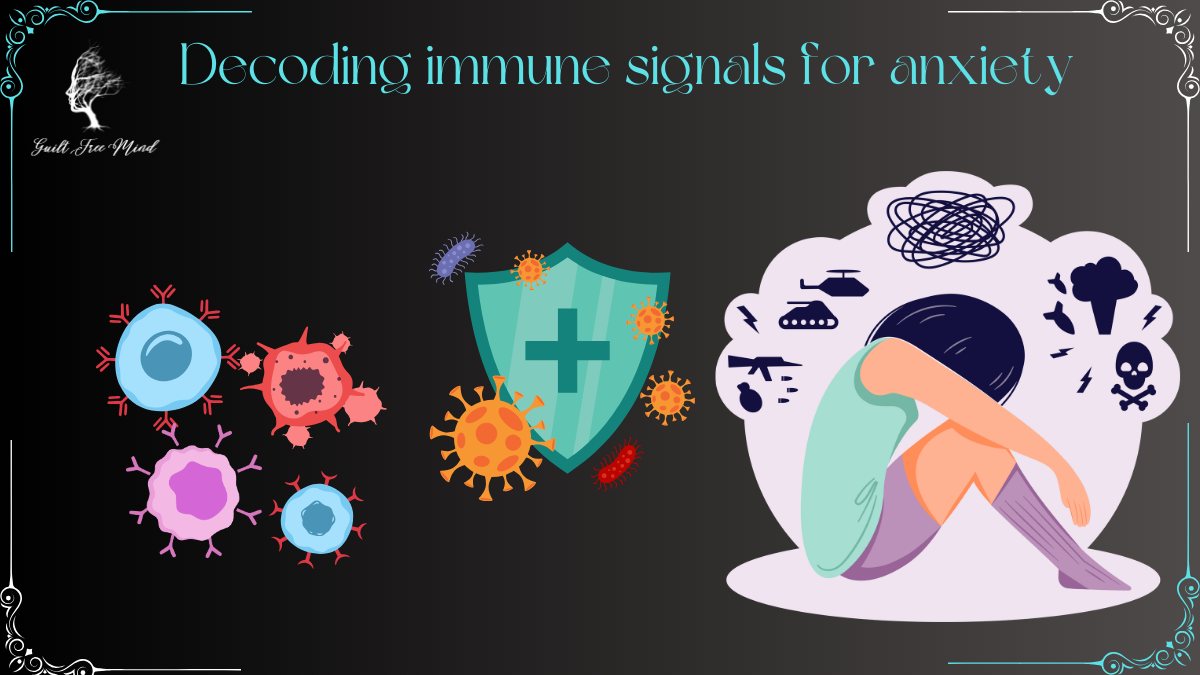
Recent insights show that immune activity can quietly shape how fear and worry show up in the body. Your system isn’t failing — it’s whispering through immune signals anxiety pathways that have been part of human protection for a very long time.
Imagine a parent who has been up with a sick child for three nights. The worry feels heavy in the chest and shoulders long after the child is better. Or picture someone returning to the office after weeks of remote work; the sudden noise and lights make the body feel wired and exhausted at the same time. These are everyday moments where anxiety feels physical because the body and mind are already talking.
Table of Contents
At a Glance: When Anxiety Feels Physical
| What You Feel | Immune Signal at Work | One Quick Action |
|---|---|---|
| Chest tightness or heavy band | Cytokines signaling extra alertness | Hand on chest for 30 seconds |
| Racing heart / palpitations | Anxiety-immune loop raising heart signals | Three slow breaths |
| Wired-but-tired exhaustion | Lower natural killer cells + inflammation | Hold a warm drink, sip slowly |
| Muscle tension that won’t ease | Microglia acting as accelerator/brake | Bare feet on ground for 1 minute |
| Fatigue that rest doesn’t lift | Ongoing nervous system immune whispers | Voice note: “I’m feeling the whisper” |
The Anxiety Immune Loop: How Your Body and Mind Whisper to Each Other
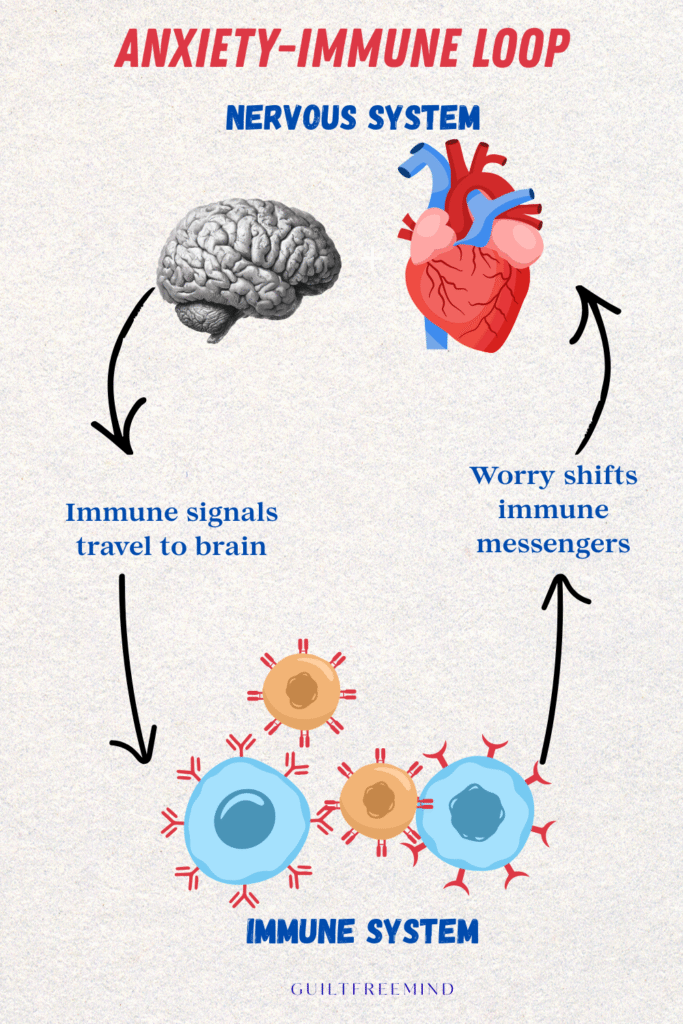
Your body and mind stay in constant conversation through tiny messengers. When worry lingers, it can gently shift immune signals, sometimes lowering certain protector cells while turning up others that heighten alertness. At the same time, those immune signals can travel toward the brain and make the feeling of caution feel stronger in the chest or limbs. This is the anxiety immune loop — a two-way whisper, not a fault line.
Pin this article for later
A 2018 review on the immune system’s relationship to anxiety disorders explains it clearly: “The demonstration that behavioral states and central nervous system (CNS) processes are associated with immune function suggests that alterations in the immune system may be found in anxiety disorders.”(Psychiatric Clinics of North America, 1988)
How This Differs from Typical Fight-or-Flight Explanations
Most explanations stop at “it’s just adrenaline for danger.” But the gentle immune perspective adds a quieter, longer-lasting layer:
| Typical Fight-or-Flight View | Gentle Anxiety-Immune Loop View |
|---|---|
| Sudden surge for immediate threat | Ongoing immune messengers that can create chest tightness or wired fatigue even on quiet days |
| Short-term response that ends when danger passes | Two-way whisper that can linger and gently shift energy, sleep, and protection long after the moment |
| Focuses only on nervous system | Includes your immune system as a caring partner trying to keep you safe |
This difference matters because it helps you meet the feeling with kindness instead of “why can’t I just calm down?”
Key Immune Signals Anxiety Pathways That Shape How You Feel
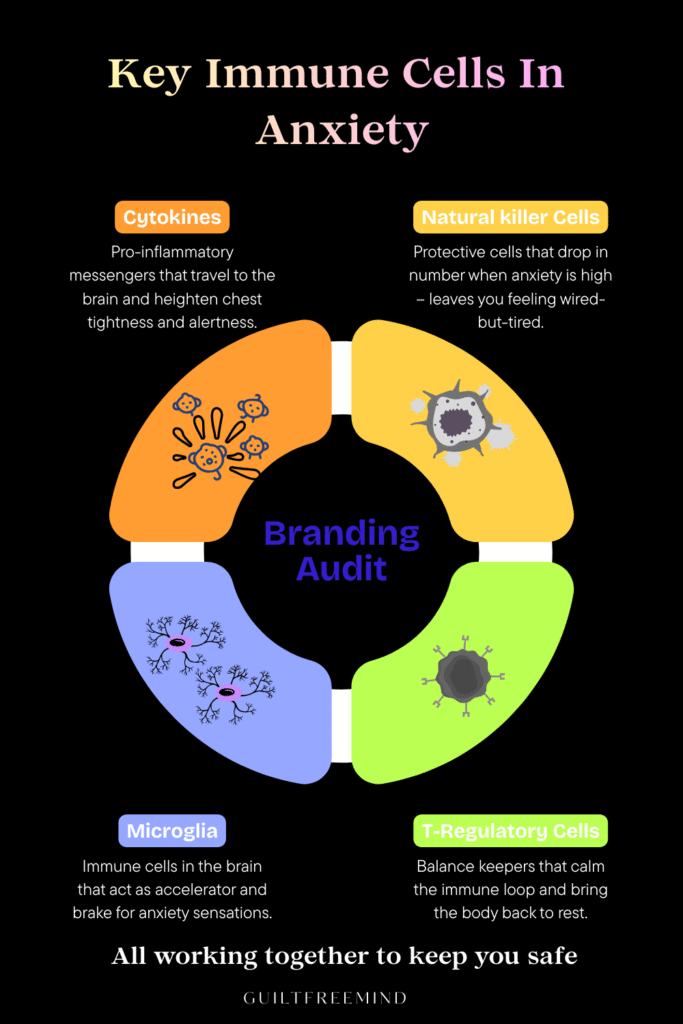
Several quiet players take part in immune signals anxiety:
A 2025 study on anxiety and insomnia found that students with anxiety symptoms had a lower percentage and number of circulatory natural killer cells. First author Dr. Renad Alhamawi shared, “Students with general anxiety symptoms, on the other hand, had a lower percentage and number of circulatory NK cells and their sub-populations, compared to symptom-free students (Frontiers, 2025).” This came from a survey of 60 female students aged 17–23, where 75% reported anxiety symptoms and those with symptoms showed significantly lower NK cell counts and percentages.
Chronic anxiety can also raise pro-inflammatory cytokines. As one clear explanation puts it, “Chronic anxiety alters cytokine production, increasing levels of pro-inflammatory cytokines. This chronic state of inflammation not only weakens immune function but also heightens the risk of developing long-term health problems (Immunize Nevada, 2024).”
Common Physical Sensations vs. Possible Immune Whispers
| Common Physical Sensation | Possible Immune Whisper (a gentle explanation) |
|---|---|
| Tight or heavy feeling in the chest | Your immune messengers (cytokines) may be quietly signaling extra alertness to keep you safe. This is your body’s protective loop at work. |
| Racing heart or palpitations | The anxiety immune loop can gently increase heart-rate signals while your nervous system stays on watch. |
| Wired-but-tired exhaustion | Lower natural killer cell activity and low-grade inflammation can leave you feeling both alert and drained at the same time. |
| Muscle tension that won’t release | Microglia and meningeal immune cells may be holding a gentle “brake or accelerator” on anxious sensations in the body. |
| Heavy fatigue that rest doesn’t fully lift | Ongoing nervous system immune whispers can quietly shift energy levels as your body tries to restore balance. |
Real-Life Moments When Anxiety Lives in Your Body Too
Sarah (one of my readers), a graphic designer who loves her quiet home office. After a busy week of deadlines, she notices her chest feels tight every time the phone rings. She rests, but the wired feeling stays. This is when anxiety lives in your body too — the immune signals anxiety have been quietly responding to sustained stress.
Pin this article for later
Or consider Alex, a teacher who caught a virus last winter. Months later, even small worries bring back that heavy exhaustion and racing heart. The anxiety immune loop can stay active long after the original trigger, making anxiety feels physical feel familiar and frustrating.
These instances mirror what so many readers share with me. The body isn’t betraying you. It’s offering information through nervous system immune whispers that deserve attention.
Immune Perspective on Anxiety – What the Latest Insights Show
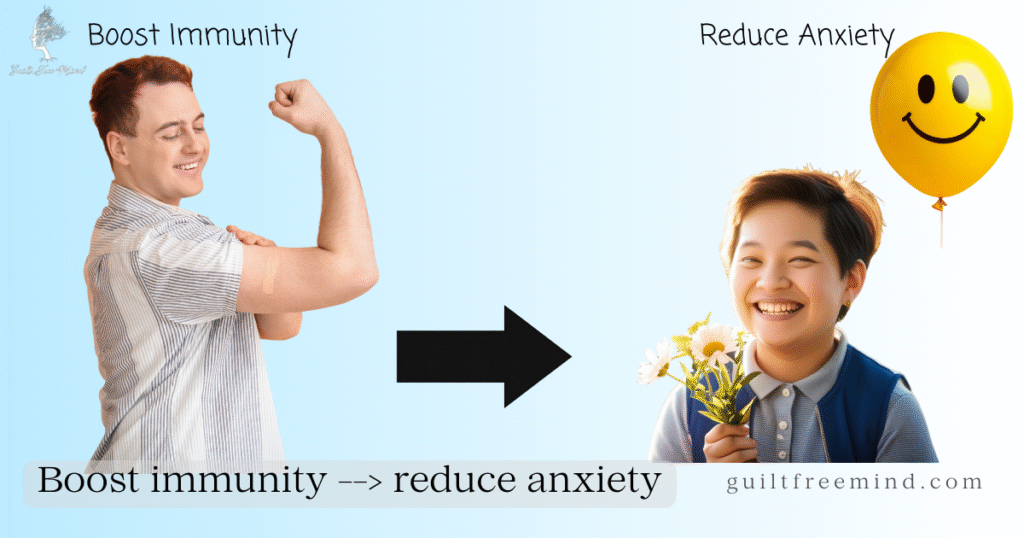
From a gentle immune perspective on anxiety, the science is reassuring rather than alarming. Immune cells in the meninges and brain can influence mood without any fault on your part.
Harvard researchers put it this way: “Broadly, our results highlight the important role of immune signaling in shaping moods and behaviors by acting on specific brain pathways (Harvard Medical School, 2025).”
Mario Capecchi, PhD, shared in a 2025 University of Utah study: “These two populations of microglia have opposite roles. Together, they set just the right levels of anxiety in response to what is happening in the mouse’s environment (ScienceDaily, 2025).”
Neuroscientist Freya Shepherd described the balance beautifully: “It’s like a seesaw… When the body is invaded by a virus or bacteria, inflammation shoots up and T-reg activity dips down so infection can be cleared. But then T-regs must bring the immune system back to balance (BrainFacts.org., 2024).”
Newer work shows meningeal immune cells producing IL-17a can gently regulate anxiety-like responses (National Center for Complementary and Integrative Health, 2020). And Cambridge researchers noted, “Our findings show that these ‘first responder’ immune cells leave the skull bone marrow and travel to the brain, where they can influence mood and behaviour (University of Cambridge, 2025).”
Additional Studies
Further studies confirm the same gentle loop through mast cells, T-regulatory cells, and microglia acting as both accelerator and brake (Cells, 2025). Additional research gently confirms the same protective loop through mast cells, T-regulatory cells, and microglia acting as both accelerator and brake (see references [10]–[16]).
How This Connects to Your Everyday Nervous System Immune Whispers
The nervous system’s immune whispers show up in daily life as muscle tension, sleep changes, or that wired-but-tired feeling. You might notice your shoulders creeping up toward your ears during a regular Zoom call, or wake at 3 a.m. with a racing mind even though nothing urgent is happening. Maybe the simplest tasks — folding laundry, answering a text — suddenly feel heavy in your arms, like your body is carrying an invisible weight.
These aren’t random glitches. They’re the quiet language of the anxiety immune loop at work. When chronic stress lingers, it gently nudges your immune messengers — cytokines, microglia, and T-regulatory cells — to stay on a low, protective alert. That same loop can quietly shift your sleep rhythm, tighten muscles that never quite release, or leave you feeling both wired and utterly drained at the same time. Your body isn’t betraying you; it’s doing exactly what it evolved to do: trying to keep you safe in a world that sometimes feels too loud, too fast, or too much.
And here’s the beautiful part: even when the loop stays active, your system is always, always reaching for calm. Just like a river finds its way back to steady flow after a storm, your immune signals and nervous system keep sending little invitations toward balance. Some days the whispers are louder. Other days they soften on their own. Both are okay.
You’re not doing anything wrong when these sensations appear. They’re simply information — gentle reminders that your body and mind are still talking, still protecting, still trying to bring you home.
A Printable Tool for Your Anxious Moments
Download the Body Signals Reflection Printable (one-page PDF)
Print it, keep it by your bed, or save it on your phone for low-energy days.
How to Listen When Inflammation and Anxiety Body Sensations Arise
There is no checklist here. Only invitations.
You might rest a hand on your chest for thirty seconds and simply notice the warmth of your own palm meeting the tightness. Or hold a warm drink — maybe chamomile, maybe plain water — and let the steam rise slowly while you take three unhurried sips. Perhaps you record a short voice note to someone safe (or even to yourself) saying nothing more than “I’m feeling the whisper today.” These small pauses are quiet forms of co-regulation that meet the anxiety and immune system connection with kindness instead of force.
Other moments may call to you too. You could step outside and let your bare feet touch the earth for a minute, letting the ground hold what your shoulders have been carrying. Or light a single candle and watch the flame dance, reminding your nervous system that not every signal needs an answer right now. Some days the softest invitation is simply speaking to your body in the gentlest voice: “Thank you for trying to keep me safe. I’m here with you.”
Each of these tiny acts sends a loving signal back through the same pathways your immune messengers have been using — gently lowering the volume on pro-inflammatory whispers, inviting your microglia and T-regulatory cells to soften their grip. Nothing to achieve. Nothing to fix. Just a few heartbeats of meeting your body where it is.
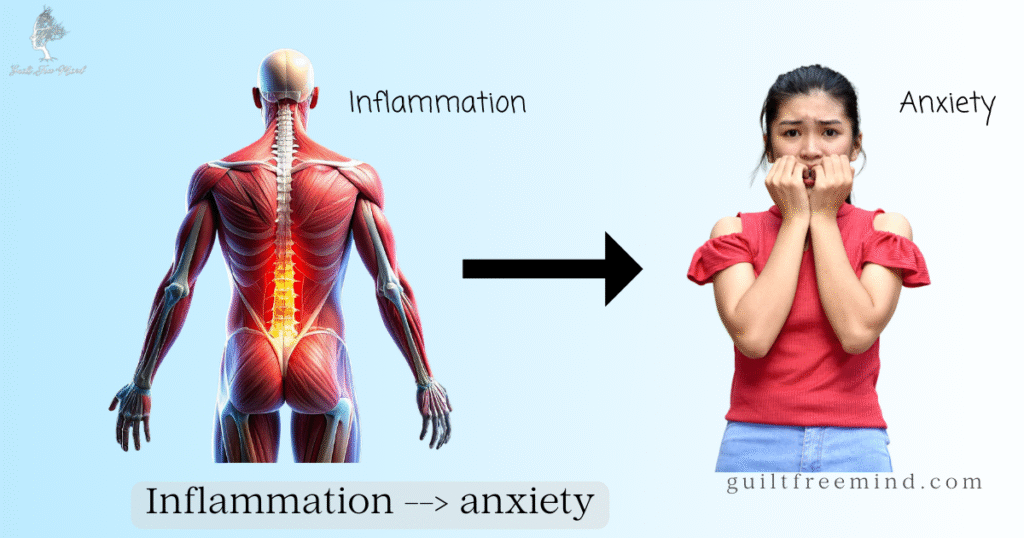
You’ll know which invitation feels possible today. Trust that knowing. The anxiety immune loop doesn’t need to be silenced — it only needs to feel heard.
A Printable Tool for Your Quiet Moments
Sometimes the body’s signals feel too big to hold in words alone. This one-page printable gives you three simple, kind prompts to meet them with curiosity instead of judgment.
No rules. No right answers. Just a soft space to notice, understand, and respond — one small breath at a time.
You’re Already Taking the Bravest Step
The fact that you’re here, wanting to understand why anxiety feels physical, shows how gently you care for yourself. In a world that often rushes past these quiet body signals, simply choosing to pause and listen is already an act of deep kindness toward yourself.
Your body’s anxiety and immune system connection is not an enemy. It is part of the same protective system that has carried you this far — those immune signals and nervous system whispers have been looking out for you since the beginning, trying their best to keep you safe in their own quiet language.
You’re allowed to rest while you learn. You are allowed to feel the physical side without shame. You’re allowed to let the tightness in your chest or the heaviness in your limbs simply be there today, without needing to fix or explain it away. And you’re never alone in it. This gentle loop lives in so many of us, and this space is always here, holding you with warmth and zero pressure.

Exploring Body-Mind Wisdom Across Guilt Free Mind Categories
Whether you’re learning to meet the physical whispers of anxiety with softness, gently understanding how your immune signals speak through the body, or quietly finding small ways to co-regulate when the chest feels tight or exhaustion settles in, these resources from Guilt Free Mind support your journey—one compassionate breath at a time.
Discover gentle daily rituals that meet your body exactly where it is—soft movement, grounding touch, sensory pauses, and nervous-system-soothing practices that honor the immune whispers without trying to silence them.
🧠 Understanding Personality Disorders
Explore how anxiety that lives in the body can sometimes overlap with deeper emotional patterns. These pieces offer compassionate insight without blame, helping you recognize what’s yours and what belongs to old wiring.
🎨 Creative Healing and Therapy
Use art, journaling, somatic drawing, or voice memos to give shape to the tightness, heaviness, or wired-but-tired feelings. Turn the body’s quiet signals into something visible that you can hold with kindness.
💡 Mindful Productivity and Focus
Learn to protect your energy on days when physical anxiety makes focus feel far away. Gentle micro-boundaries and presence practices help you work with your nervous system instead of pushing against it.
💪 Emotional Recovery and Resilience
Build quiet inner anchors that don’t depend on the sensations disappearing. These articles guide you through meeting fatigue, chest tightness, or immune-loop waves with self-trust and zero shame.
😌 Stress, Anxiety, and Depression Toolkit
This is where today’s piece lives—alongside gentle companions like “When Burnout Feels Bone-Deep,” “That Lingering Mental Fog,” and “Heavy or Falling Dreams.” Find body-first tools and reflections that create small pockets of relief exactly when anxiety feels physical.
Conclusion
If this gentle look at immune signals anxiety landed softly, I’d love for you to carry it with you. Save this page for the next time anxiety feels physical. And if you’d like more quiet companions for your healing journey, come join me on the Guilt Free Mind YouTube channel. New videos on nervous system whispers and body-mind wisdom drop regularly — always at a pace that respects your energy. Hit subscribe and let’s keep walking this path together, one soft breath at a time.
Frequently Asked Questions
There isn’t one single remedy that works for everyone, and that’s okay. Many readers find that listening gently to their body’s signals — through rest, creative expression, or professional support — brings the most lasting ease. The goal isn’t to erase the feeling but to meet it with compassion while the anxiety immune loop does its quiet work.
Certain vitamins and minerals — like B vitamins, magnesium, and vitamin D — are often mentioned in reader stories as gentle supporters of mood and energy. They may help the body manage stress signals, but they work best alongside other caring practices. Always check with a trusted professional before adding anything new.
Yes, it can gently contribute. Pro-inflammatory signals like IL-6 and TNF-alpha can travel toward the brain and heighten that tight or heavy feeling in the chest. This isn’t “all in your head” — it’s your body’s protective system sending real signals. Many readers describe this exact pattern, and it makes complete sense.
Yes — it can lower natural killer cell activity and make you more prone to colds or slower healing. This is your body’s honest response to ongoing stress, never a personal failure. Gentle self-compassion is key. GAD affects 1.9–5.1% of people, often with higher inflammation.
About the Author
Dr. Shruti Bhattacharya is the founder and heart of Guilt Free Mind, where she combines a Ph.D. in Immunology with advanced psychology training to deliver science-backed mental health strategies. Her mission is to empower readers to overcome stress, anxiety, and emotional challenges with practical, evidence-based tools. Dr. Bhattacharya’s unique blend of expertise and empathy shapes her approach to wellness:
- Academic & Scientific Rigor – Holding a Ph.D. in Immunology and a Bachelor’s degree in Microbiology, Dr. Bhattacharya brings a deep understanding of the biological foundations of mental health, including the gut-brain connection. Her completion of psychology courses, such as The Psychology of Emotions: An Introduction to Embodied Cognition, from University of Cambridge enhances her ability to bridge science and emotional well-being.
- Dedicated Mental Health Advocacy – With over 15 years of experience, Dr. Bhattacharya has supported hundreds of individuals through online platforms and personal guidance, helping them navigate mental health challenges with actionable strategies. Her work has empowered readers to adopt holistic practices, from mindfulness to nutrition, for lasting resilience.
- Empathetic Connection to Readers – Known for her compassionate and relatable voice, Dr. Bhattacharya is a trusted guide in mental health, turning complex research into accessible advice. Her personal journey as a trauma survivor fuels her commitment to helping others find calm and confidence.
- Lifelong Commitment to Wellness – Dr. Bhattacharya lives the principles she shares, integrating science-based habits like balanced nutrition and stress management into her daily life. Her personal exploration of mental health strategies inspires Guilt Free Mind’s practical, reader-focused content.
🏆 Guilt Free Mind was named one of the Top 100 Mental Health Blogs on Feedspot in 2025.

Follow me on:
References
- Stein, M. B. (1988). Immune system: Relationship to anxiety disorders. Psychiatric Clinics of North America, 11(2), 349–360.
- Frontiers. (2025). Anxiety and insomnia may lower natural killer cell count, potentially repressing immune function.
- Immunize Nevada. (2024). Immune system breakdown: The link between anxiety disorders and immune function.
- Harvard Medical School. (2025). Inflammation and the brain: How immune activity can alter mood and fuel anxiety.
- ScienceDaily. (2025). Your anxiety may be controlled by hidden immune cells in the brain.
- McWhinnie, A. (2024). The immune system may be a regulator of fear and anxiety. BrainFacts.org.
- National Center for Complementary and Integrative Health. (2020). New study links signaling by immune cells in the meninges to anxiety-like behavior.
- University of Cambridge. (2025). Depression linked to presence of immune cells in the brain’s protective layer.
- [Hole, C., Dhamsania, A., Brown, C., & Ryznar, R. (2025). Immune dysregulation in depression and anxiety: A review of the immune response in disease and treatment. Cells, 14(8), Article 607.
- Immunopaedia. (2025). How anxiety and insomnia quietly weaken the immune system.
- Science. (2008). Immune to anxiety.
- Mayo Clinic Staff. (2023). Chronic stress puts your health at risk. Mayo Clinic.
- Alotiby, A. (2024). Immunology of stress: A review article.
- Breeze, C., Medvedev, O. N., Cervin, M., Sutton, A., Barcaccia, B., Couyoumdjian, A., Pallini, S., Billot, M., Chalmers, R., Iqbal, N., Reid, V., & Singh, N. N. (2024). Unique contributions of anxiety, stress and depression to immunity: A cross-cultural investigation. Journal of Affective Disorders Reports, 15(Suppl. C), Article 100699.
- University of Utah Health. (2025). Research in mice reveals brain cells that drive and prevent anxiety.
- Breeze, C., Medvedev, O. N., Cervin, M., Sutton, A., Barcaccia, B., Couyoumdjian, A., Pallini, S., Billot, M., Chalmers, R., Iqbal, N., Reid, V., & Singh, N. N. (2024). Unique contributions of anxiety, stress and depression to immunity: A cross-cultural investigation. Journal of Affective Disorders Reports, 15(Suppl. C), Article 100699.
