

Last Updated: April 13th, 2026
When the temperature climbs and clothes stick to your skin, many readers tell me the inner critic gets louder. Sweaty thighs, clinging fabric, visible bumps, or the way your body feels heavier in the heat — suddenly every sensation seems to scream that something is wrong with how you look. Eventually, anxiety regarding your body’s look takes over. Here, body neutrality is the answer.
Body neutrality offers a kinder middle path. It doesn’t demand that you love every inch of your body in the heat, nor does it let harsh criticism take over (Alleva, J. M., et al., 2023). Instead, it lets your body simply be — a vessel that carries you through sticky days, without turning it into a project that needs fixing or constant celebration.

You don’t have to feel beautiful in the heat. You just need to stop fighting your body long enough to enjoy the season. This guide brings together clear explanations, real reader experiences, and practical tools so you can move through hot summer days with more peace and less mental weight.
Table of Contents
At a Glance: Body Neutrality for Hot Summer Days
| Aspect | Key Point |
|---|---|
| What It Is | Accepting your body as a functional vessel without needing to love or hate its appearance |
| Why It Helps in Heat | Reduces pressure when sweat, chafing, and clingy clothes trigger discomfort |
| Difference from Body Positivity | No requirement to feel positive — neutrality allows “it’s just a body” |
| Main Benefit | Less self-objectification and mental energy spent on appearance |
| Quick Tool | Focus on what your body does rather than how it looks |
| Who It’s For | Anyone tired of summer body anxiety or forced positivity |
| Key Takeaway | Your body doesn’t need fixing to deserve comfort this summer |
What Body Neutrality Actually Means
Body neutrality is the practice of relating to your body with neutrality rather than strong positive or negative emotions. Your body is seen as a vehicle that allows you to live — to walk, hug, work, rest, breathe, and experience the world — rather than an object whose main job is to look a certain way. According to Healthline 2021, body neutrality encourages shifting focus from appearance to functionality, allowing individuals to accept their bodies without the pressure of needing to feel positively about them at all times.
Middle Ground Between Hate and Positivity
It sits comfortably in the middle ground between body hate and body positivity. You don’t have to force yourself to love every inch of your reflection when it’s 38°C and your clothes are sticking to your skin (Tylka, T. L., & Wood-Barcalow, N. L., 2023). At the same time, you also don’t have to criticize every bump, sweat patch, or roll that becomes more visible in summer heat. You simply let the body exist without making its appearance the center of your worth or daily emotional energy.
Many readers describe the shift to body neutrality as a huge relief (Prnjak, K., et al., 2024). One reader shared, “For the first time, I didn’t have to perform love or perform hate. I could just be in my body.”
Research Supports Body Neutrality
Recent research supports this relief. One study found that individuals practicing body neutrality showed significantly lower levels of self-objectification and body dissatisfaction compared to those focused on body positivity. Another study reported measurable reductions in anxiety symptoms and improved emotional regulation when people adopted a body-neutral mindset instead of striving for constant positive feelings. These findings suggest body neutrality may offer more sustainable benefits, especially during physically uncomfortable periods like hot summer days.
Another said, “It felt like permission to stop the constant mental fight. My body could just be a body — sweaty, tired, or whatever it was that day — and I could still live my life.”
In practical terms, body neutrality means:
- Your worth is not decided by how flat your stomach looks in a tank top.
- Your right to enjoy a summer evening doesn’t depend on whether your thighs rub or your arms jiggle.
- Discomfort from heat, sweat, or clingy fabric is treated as a normal physical experience, not proof that something is wrong with you.
A Powerful Approach
This approach is especially powerful during hot summer days because the heat constantly reminds us of our bodies in very physical ways. When you stop turning every sensation into a judgment, you free up enormous mental space. Instead of spending energy on “Do I look okay?”, you can ask gentler questions like “What does my body need right now to feel more comfortable?”
Body neutrality doesn’t mean you stop caring about your appearance entirely. You can still enjoy wearing nice clothes or feeling put-together. The difference is that your value and right to joy no longer depend on how your body looks in the heat. It simply gets to exist and function — and that alone is enough.
Body Neutrality vs Body Positivity
Body positivity encourages loving and celebrating your body no matter what it looks like. While powerful for many, it can feel exhausting when you’re sweating through your clothes or dealing with heat-related discomfort (Halliwell, E., & Tiggemann, M., 2023). The pressure to feel positive about every part of yourself can sometimes backfire into more self-criticism. Time magazine notes that “body neutrality may offer a more sustainable path than body positivity for many people, especially when constant self-love feels unrealistic or exhausting (Time, 2023).
Body neutrality removes that pressure. It says your body doesn’t have to be a source of joy or pride every day. It can simply exist. This approach is often more accessible, especially during hot summer days when functionality (staying cool, moving comfortably) matters more than appearance.
A Clear Comparison
Many readers ask how body neutrality differs from body positivity, especially during hot summer days when loving your body can feel unrealistic. The table below breaks it down simply and honestly.
| Aspect | Body Positivity | Body Neutrality (Guilt-Free Approach) |
|---|---|---|
| Core Message | Love and celebrate your body no matter what | Your body can simply exist without needing strong emotions about it |
| Emotional Requirement | You should feel positive or loving toward your body | No pressure to feel love or hate — neutrality is enough |
| Summer Heat Reality | “Love your sweat, love your rolls, love every inch” | “My body is doing its job in this heat — it doesn’t need to look perfect” |
| When It Feels Hard | Can create more shame if you can’t genuinely love it | Gives permission to feel uncomfortable without self-attack |
| Focus | Appearance + worth tied to loving your looks | Function + comfort — what your body does, not how it looks |
| Energy Required | High — constant effort to feel positive | Lower — allows rest from body-related mental work |
| Best For | People who can genuinely cultivate love and pride | People exhausted by appearance pressure, especially in heat |
| Outcome in Hot Weather | Pressure to feel beautiful while sweating | Freedom to prioritize comfort and ease over aesthetics |
| Guilt Free Mind View | Can sometimes feel performative | More sustainable and compassionate for real life |
Takeaway: Body positivity is beautiful when it works, but body neutrality often feels more realistic and kind during hot summer days when your body is simply trying to survive the heat. You don’t have to love every sweaty, sticky moment — you just need to stop fighting your body long enough to enjoy the season.
Why Hot Summer Days Make Body Neutrality So Powerful?
Hot weather turns up the volume on body awareness. Sweat makes clothes cling, thighs chafe, skin feels sticky, and many readers say they become hyper-aware of every roll, bump, or shape that shows through lighter fabrics.
In these moments, body neutrality shines because it shifts attention from “how do I look?” to “what does my body need right now to feel comfortable?” It gives permission to prioritize ease over aesthetics — choosing loose clothes, seeking shade, drinking water, or resting without guilt.
Real-life example: Payton used to dread stepping out in summer because her clothes would stick and she’d spend the whole day mentally listing everything she disliked about her body. After practicing body neutrality, she started asking, “What does my body need to stay comfortable?” The mental load lightened dramatically.
Another reader, Raynauld, noticed he avoided outdoor plans when he felt bloated from the heat. Shifting to neutrality helped him focus on “my body is working hard to keep me cool” instead of judging its shape.
Common Summer Triggers and How Body Neutrality Helps
Hot summer days don’t just raise the temperature — they raise the volume on body awareness. Sweat, humidity, and lighter clothing make everything feel more visible and more uncomfortable. Many readers tell me this is when body neutrality becomes their strongest ally.
Picture this: You’re getting ready for a beach day, a family barbecue, or even just stepping out for errands. You stand in front of the mirror in your summer clothes and suddenly notice sweat patches forming, fabric clinging in places you wish it wouldn’t, or skin that looks different under bright daylight. Old, familiar thoughts rush in:
- “I can’t go out looking like this.”
- “My body looks too soft / too big / too much in this heat.”
- “My thighs are rubbing again — everyone will notice.”
- “I should have prepared better. I look sweaty and messy.”
- “Everyone else seems cooler, drier, and more put-together than me.”
These thoughts hit hard because summer strips away layers — both literally and emotionally. The heat makes your body feel louder, heavier, and more exposed. What used to be hidden under winter clothes is now on full display, and the mind quickly turns it into proof that something is wrong with you.
This is exactly where body neutrality steps in as a gentle interrupter.
Redirect your attention
Instead of fighting the thoughts or forcing yourself to feel positive about the sweat and clinginess, body neutrality offers a quieter truth: “My body is doing its job in this heat. It’s working hard to keep me cool. It doesn’t need to look perfect or pretty to deserve comfort, rest, or joy today.”
Accept Facts
One reader shared that she used to cancel plans the moment she saw sweat marks on her shirt. After practicing body neutrality, she started responding with: “This is what bodies do when it’s 38 degrees. Mine is functioning, not failing.” That small shift allowed her to walk out the door without the usual wave of shame.
Understand the Body’s Needs
Another reader, who struggled with thigh chafing, began reminding herself: “My legs are carrying me through the day. The rubbing is uncomfortable, but it doesn’t mean my body is wrong.” She switched to breathable fabrics and carried a small powder — not to hide, but to care for her body’s needs in the moment.
Body neutrality doesn’t erase the discomfort of hot weather. It simply stops you from turning that discomfort into self-attack. It gives you permission to prioritize feeling physically okay over looking a certain way. In the heat, when your body is already working overtime, this approach feels like a deep exhale.
Natural Reminders
When those mirror thoughts or sticky-clothes moments arise, try gently redirecting with one of these neutral reminders:
- “This is what my body does in summer heat.”
- “My body is regulating temperature right now — that’s its job.”
- “I don’t need to look cool to be allowed to enjoy the day.”
These small mental shifts create space between the trigger and the shame spiral. Over time, they help your nervous system register summer sensations as normal instead of threatening.
Body Neutrality for Swimsuit Season
When the thought of wearing a swimsuit triggers old shame patterns, body neutrality gently reminds you: “This fabric is simply covering my body so I can enjoy the water. My body doesn’t need to look a certain way to deserve this experience.” Many readers find this mindset shift allows them to focus on the sensation of water or the joy of being outside instead of worrying about how they look.
Body Neutrality When You’re Sweating
Sweat patches, damp clothes, and that sticky feeling can quickly spiral into self-criticism. A neutral response might be: “My body is working to regulate temperature right now. This is a normal physical process, not a personal failure.” This perspective helps reduce the emotional charge and lets you continue your day without turning discomfort into self-judgment.
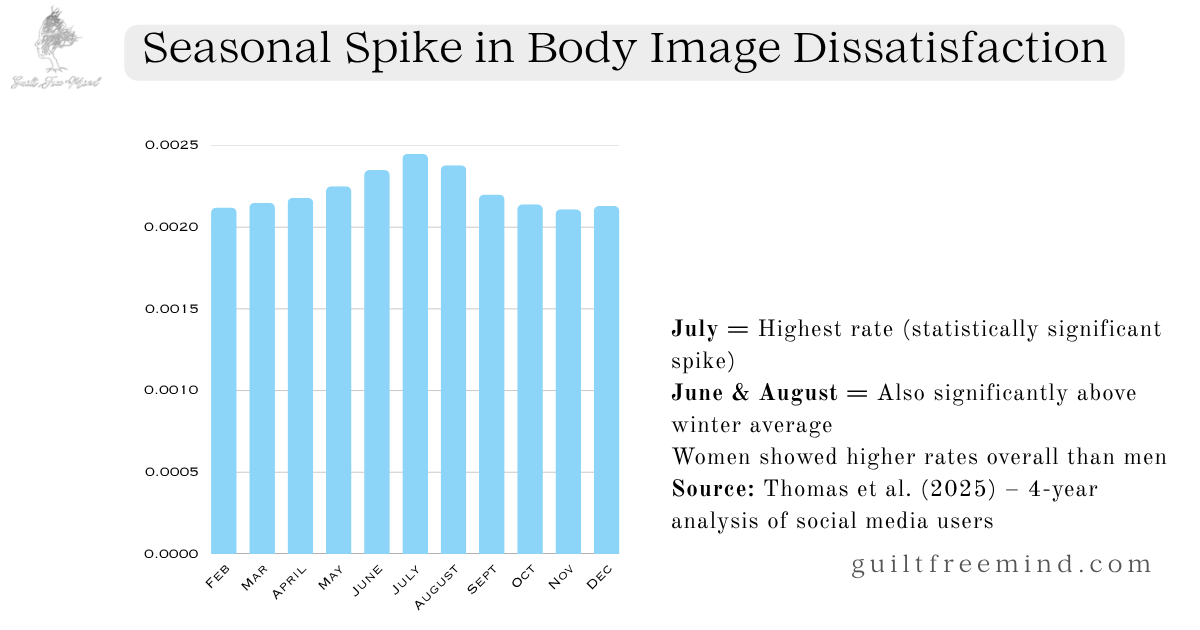
Practicing Body Neutrality in Hot Weather
On particularly humid or scorching days, shift the question from “How do I look?” to “What does my body need to stay comfortable?” Small choices like breathable fabrics, seeking shade, or slowing down become acts of care rather than hiding. Over time, this practice trains the mind to respond to heat-related sensations with acceptance instead of criticism.
Practical Ways to Practice Body Neutrality on Hot Summer Days
Here are 10 gentle, realistic ways readers have found helpful when the temperature rises and body neutrality feels most needed. These aren’t about forcing positivity or changing your body — they’re about reducing the mental fight so you can simply exist more comfortably in the heat.
Focus on Function, Not Form
When discomfort hits, pause and ask: “What is my body doing right now?” It’s regulating temperature, moving you through the day, letting you feel the breeze or hold a cold drink. This small shift from “how do I look?” to “what is my body doing?” is one of the most powerful acts of body neutrality.
Choose Comfort Over Appearance
Pick clothes based on how they feel against sweaty skin rather than how they look. Loose, breathable cotton or linen becomes an act of care, not hiding. Many readers say this single choice dramatically lowers the daily mental load of body neutrality in summer.
Use Neutral Language
Replace harsh self-talk like “I look terrible in this heat” with a neutral observation: “This is how my body feels in 38-degree weather today.” Neutral language creates emotional distance without demanding you feel positive.
Practice Sensory Awareness
Notice neutral or pleasant sensations instead of focusing on appearance — the fan’s breeze on damp skin, cold water on your wrists, the relief of stepping into shade, or the softness of breathable fabric. This grounds you in the present moment and supports body neutrality.
Limit Body Checking and Body Talk
Reduce mirror checks, phone selfies, or conversations about appearance when the heat makes everything feel more exposed. Gently redirect both inner and outer talk toward experiences: “How does the water feel?” instead of “How do I look?”
Move for Ease, Not Looks
Choose movement that helps you feel cooler or more comfortable — evening walks when the sun is lower, swimming, or slow stretching indoors. The goal is ease, not earning a “summer body.”
Normalize Sweat and Stickiness
Remind yourself, “Sweating is my body’s intelligent cooling system working hard right now. This is normal, not a flaw.” Treating sweat as a neutral physical process rather than something shameful is a core part of practicing body neutrality in hot weather.
Create a “Comfort First” Rule
Before leaving the house or changing clothes, ask: “What would help my body feel more comfortable in this heat today?” This might mean carrying a small fan, choosing shade over direct sun, or wearing shorts instead of jeans. Prioritizing comfort is an act of body neutrality.
Set Micro Boundaries
Give yourself permission to leave overly hot or crowded environments without guilt. Say no to outdoor plans during peak heat if your body needs rest. Protecting your comfort is not laziness — it’s respecting your body’s limits.
End the Day with Neutral Reflection
Instead of judging how you looked, ask: “What did my body do for me today?” It carried me through the heat, let me taste cold watermelon, allowed me to feel the evening breeze. This simple evening practice strengthens body neutrality over time.
Pin this article for later:
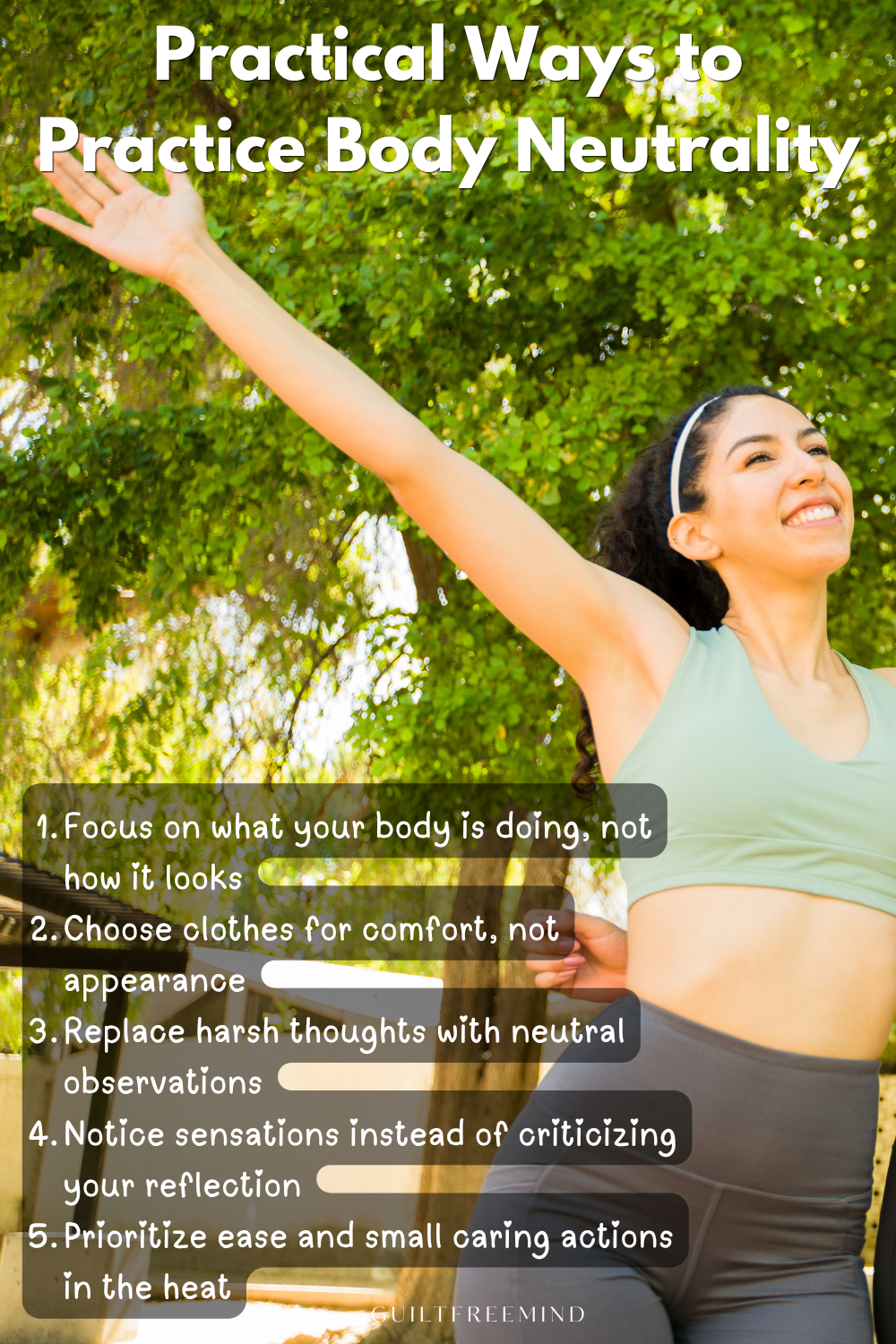
These practices don’t require you to love your body in the heat. They simply help you stop fighting it. Over time, many readers report that body neutrality makes hot days feel lighter — not because their body changed, but because the mental war around it quieted down.
Emergency Tools for High-Heat Moments
Even with the best intentions, there are moments when the heat makes body neutrality feel almost impossible. Sweat is pouring, clothes are clinging, your skin feels sticky, and the old critical voice suddenly gets very loud. In those exact moments, you don’t need a long practice — you need a quick, compassionate reset.
Here are three simple emergency tools that many readers use when body neutrality feels hardest during hot summer days:
1. The 30-Second Body Neutrality Reset
When shame or self-criticism spikes:
- Place one hand gently on your chest or upper arm (wherever it feels comforting).
- Take one slow, deep breath out.
- Say quietly to yourself: “My body is working hard in this heat right now. It doesn’t need to look perfect to deserve care and comfort.”
- Ask one gentle question: “What small thing would help my body feel even a little more comfortable in this moment?”
This short pause interrupts the shame spiral before it takes over. Many readers say it creates just enough space to choose a kinder response instead of spiraling into criticism.
2. The “Function First” Anchor
When you catch yourself thinking “I look awful right now,” immediately shift to function:
- Silently name three things your body is doing in the heat, while breathing deeply: “My body is cooling me down… moving me forward… letting me breathe.”
This simple re-focus reminds you that your body is not failing — it is working. It moves the attention from appearance to the incredible job your body is doing right now.
3. The Comfort Micro-Choice
Instead of fighting the discomfort, ask yourself one practical question: “What is one tiny thing I can do right now to help my body feel more comfortable?”
Examples readers often share:
- Loosen or change into lighter clothes
- Move into shade or turn on the fan
- Splash cold water on your wrists or neck
- Carry a small cloth or powder for chafing
- Sit down for five minutes and rest
These micro-choices turn the moment from self-judgment into gentle care. They reinforce body neutrality by showing that your body’s comfort matters more than its appearance.
Real Reader Moment One reader told me she used to freeze in front of the mirror every time sweat marks appeared on her shirt before leaving the house. After practicing the 30-second reset, she started saying, “My body is doing its job. I don’t need to look cool to be allowed to go outside.” That small sentence helped her walk out the door instead of changing outfits five times or canceling plans.
These emergency tools are not about fixing how you feel instantly. They are about giving yourself a compassionate pause so the shame doesn’t get the final word. The more you use them, the more natural body neutrality becomes — even on the stickiest, hottest days.
How to Practice Body Neutrality on Hot Summer Days (Step-by-Step)
Follow these steps whenever heat-triggered body anxiety appears:
- Pause
Pause and name the sensation neutrally.
- Ask
Ask what your body needs for comfort.
- Care
Choose one small caring action.
- Reflect
End with a neutral reflection.
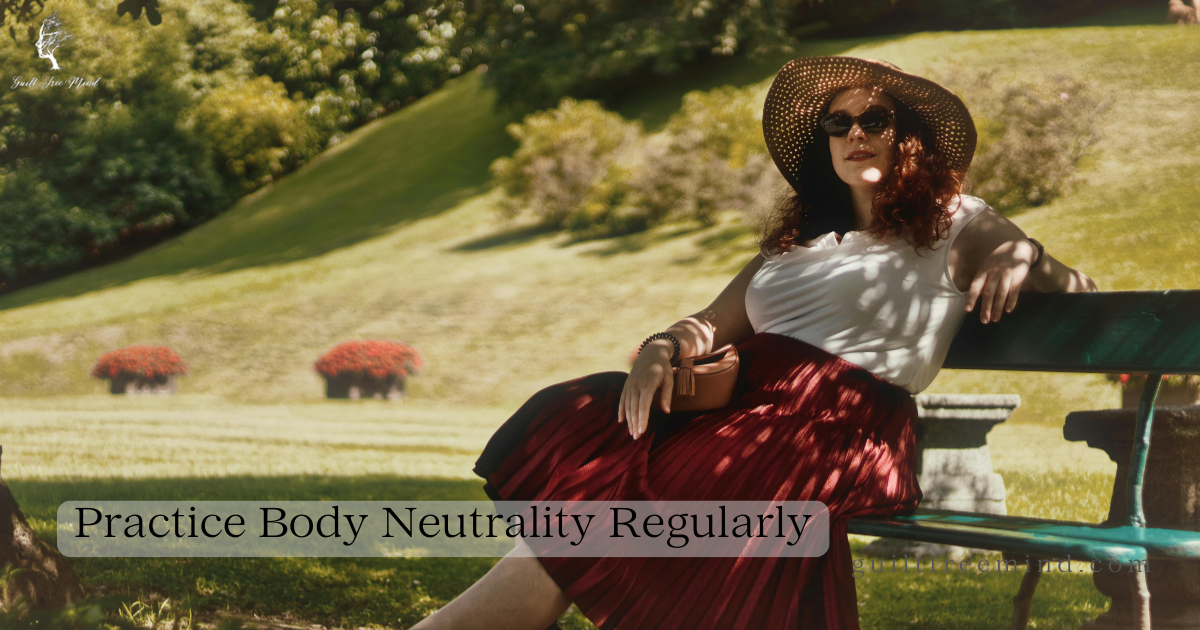
Free Printable: Hot Summer Body Neutrality Prompts
This one-page sheet helps you respond to heat-triggered thoughts with neutrality instead of criticism.
Prompts include:
- What is my body doing for me right now?
- What would feel more comfortable in this heat?
- One neutral observation about my body today.
Explore the Other Guilt Free Mind Categories
Whether you’re struggling with body neutrality, noticing how shame quietly steals joy from sunny days, or simply looking for kinder ways to exist in your body without pressure or self-judgment, these resources from Guilt Free Mind are here to support you — one gentle, guilt-free step at a time.
🧘♀️ Self-Care and Wellness
Discover daily practices that honor your body exactly as it is — movement that feels good rather than punitive, rest that restores without guilt, and small rituals that help you feel safe and present even when summer clothes or mirror moments trigger discomfort.
🧠 Understanding Personality Disorders
Explore how deep-rooted patterns of self-worth and inner criticism can sometimes amplify summer body anxiety. These articles offer compassionate insight into old emotional wiring without turning your experience into a diagnosis or something that needs to be “fixed.”
🎨 Creative Healing and Therapy
Use art, journaling, digital painting, or gentle somatic practices to externalize the shame and anxiety that arise around your body. Giving shape to these feelings — whether through color, words, or movement — creates distance and kindness instead of staying trapped in harsh self-talk.
💡 Mindful Productivity and Focus
Learn how to protect your peace on days when body neutrality makes it hard to focus or enjoy simple plans. Find micro-strategies that work with your nervous system rather than demanding you push through shame or comparison.
💪 Emotional Recovery and Resilience
Build quiet inner anchors that help you recover from shame spirals and body-related triggers. These pieces support you in rebuilding self-trust so that your worth no longer feels conditional on how your body looks in summer clothes.
😌 Stress, Anxiety, and Depression Toolkit
This is where today’s article lives. Here you’ll find more tools for working with body neutrality, body shame, and the emotional weight that often accompanies warmer months — always with science-backed insights and a deep commitment to guilt-free healing.
Expert Insight
“Body neutrality offers a middle path that may be more sustainable than striving for constant body positivity, particularly for individuals who find positive reframing difficult or exhausting. ”
— Alleva et al. (2023).
You Deserve Ease This Summer
Hot days don’t have to come with heavy mental weight. Body neutrality offers a compassionate way to exist in your body when the temperature rises — no forced love, no harsh criticism, just space to breathe and be.
Start with one small shift today: choose comfort over appearance, or try the neutral observation prompt.
If this resonated, explore more gentle practices on my YouTube channel Guilt Free Mind.
Subscribe for weekly tools that support a calmer, kinder relationship with yourself. Share this guide with anyone who dreads summer heat because of how their body feels.
You are already enough — even on the stickiest, sweatiest days.
Frequently Asked Questions
No. Body positivity encourages loving your body, while body neutrality allows you to simply exist in it without strong positive or negative feelings. Many find neutrality more sustainable, especially on hot summer days.
Yes. It reduces the mental energy spent on appearance and helps you focus on comfort and function when heat makes everything feel more noticeable.
No. Body neutrality isn’t about giving up on style or care. It’s about removing the idea that your worth or right to enjoy summer depends on how your body looks.
It can be especially helpful for people who find constant body love unrealistic or exhausting. It’s inclusive and works alongside professional support when needed.
Many readers notice relief within a few weeks of consistent gentle practice. It’s a skill that grows with patience and repetition.
Hard days are normal. Body neutrality gives you permission to feel discomfort without turning it into proof that something is wrong with you.
About the Author
Dr. Shruti Bhattacharya is the founder and heart of Guilt Free Mind. With a Ph.D. in Immunology and advanced training in psychology, she combines scientific understanding of the body’s stress and inflammatory responses with compassionate mental health tools. Her mission is to help readers build emotional freedom without guilt or shame.
Dr. Bhattacharya’s unique blend of expertise and empathy shapes every piece of content:
- Academic & Scientific Rigor — Holding a Ph.D. in Immunology and a Bachelor’s degree in Microbiology, she brings deep insight into how chronic shame and body-related stress trigger low-grade inflammation and disrupt the gut-brain axis. This biological understanding informs her strong advocacy for body neutrality — recognizing that reducing the mental fight with your body can lower unnecessary stress responses and support both mental and physical well-being.
- Dedicated Mental Health Advocacy — With over 15 years of experience supporting hundreds of individuals through online platforms and personal guidance, Dr. Bhattacharya helps readers navigate body image struggles, anxiety, and emotional challenges with practical, evidence-based strategies.
- Empathetic Connection to Readers — Known for her warm and relatable voice, she turns complex research into accessible advice. Her personal journey as a trauma survivor fuels her commitment to creating safe spaces where readers can drop the pressure to love or hate their bodies and simply exist with more peace.
- Lifelong Commitment to Wellness — Dr. Bhattacharya lives the principles she shares, integrating science-based habits like mindfulness, balanced nutrition, and body-neutral self-care into her daily life. Her work on Guilt Free Mind continues to inspire readers to find calm and confidence through gentle, guilt-free approaches.
🏆 Guilt Free Mind was named one of the Top 100 Mental Health Blogs on Feedspot in 2025.

Follow me on:
Disclaimer:
This article is for informational and educational purposes only. It is not a substitute for professional mental health advice, diagnosis, or treatment. Please consult a qualified mental health professional for personalized support.
References
- Alleva, J. M., et al. (2023). Body neutrality: A promising approach to body image. Body Image. https://pubmed.ncbi.nlm.nih.gov/37573765/
- Halliwell, E., & Tiggemann, M. (2023). Body positivity versus body neutrality: Which is more helpful? Body Image. https://pubmed.ncbi.nlm.nih.gov/37129116/
- Prnjak, K., et al. (2024). Body neutrality and its relationship with self-objectification and body image concerns. PMC. https://pmc.ncbi.nlm.nih.gov/articles/PMC11616157/
- Tylka, T. L., & Wood-Barcalow, N. L. (2023). Body neutrality: An alternative to body positivity. Body Image. https://pubmed.ncbi.nlm.nih.gov/38850714/
- WebMD. (n.d.). What is body neutrality? https://www.webmd.com/beauty/what-is-body-neutrality
- Butterfly Foundation. (n.d.). Body neutrality: What is it and why is it important? https://butterfly.org.au/body-neutrality-what-is-it-and-why-is-it-important/
- Time. (2023). Why body neutrality works better than body positivity. https://time.com/6279423/body-positivity-vs-neutrality/
- Healthline. (n.d.). How to shift from ‘body positivity’ to ‘body neutrality’. https://www.healthline.com/health/body-neutrality
