


Hey there, readers. As the calendar flips to a fresh start, many of us start thinking about new year resolutions. It’s that time when we pause, reflect on the past year, and dream up ways to make the next one even better. But let’s be real—new year resolutions often get a bad rap for fizzling out fast. Many of us set big goals only to feel overwhelmed a few weeks in. The key isn’t in grand promises but in practical, heartfelt steps that fit your everyday reality.
In this post, we’ll dive deep into new year resolutions, from what they really mean to how you can craft ones that stick. We’ll cover stats on what’s popular, why so many flop, and loads of ideas tailored to self-improvement, including some of the best new year resolutions to try. Whether you’re aiming for better habits or deeper emotional wellness, I’ve got you covered with tips drawn from real experiences and solid insights.

Table of Contents
What Are New Year Resolutions?
At their core, new year resolutions are personal commitments we make to ourselves as the year turns over. They’re like little contracts for growth—maybe vowing to read more books (this is a personal goal for me. I started on the #100bookschallenge. Currently, I am on book #2), hit the gym, or finally tackle that nagging habit. But unlike rigid rules, effective New Year resolutions come from a place of self-kindness, focusing on progress rather than perfection.
Illustrative example (a composite, not a real reader): Picture Sarah, burnt out from her job, who sets a vague goal to “be happier.” By February, it has vanished amid daily chaos. Reframed into specific actions, like daily walks and gratitude notes, it becomes something she can actually do. That’s the shift: new year resolutions work best when they’re tied to your why. They’re not just lists; they’re roadmaps to a version of you that feels more aligned and energized.
At a Glance: New Year Resolutions
| Category | Key Highlights | Quick Tips for Success |
|---|---|---|
| Top Stats | 31% of US adults planned a resolution for 2026 (YouGov poll, December 2025); under-45s at 43%. Exercise more (25%), be happier (23%), eat healthier (22%) lead the pack. Resolvers are far more likely to change than non-resolvers. | Track gently with our downloadable PDF—focus on small wins. |
| Why Resolutions Fail | Vague goals, present bias, all-or-nothing thinking, lack of enjoyment or support. | Embrace flexibility: Reset without guilt, bundle fun (e.g., podcasts with chores) to make habits more enjoyable. |
| Setting SMART Goals | Specific, Measurable, Achievable, Relevant, Time-bound—turns “exercise more” into “walk 30 min 3x/week.” | Start with reflection: What drained/joyed you last year? Visualize success for motivation. |
| Self-Improvement Ideas | Read a book/month, daily gratitude, learn a skill (e.g., language app 10 min/day), volunteer. | Tie to your style (from our quiz)—journal emotions weekly for resilience. |
| Personal Growth | Step outside comfort zones: Public speaking, solo travel, networking (e.g., one coffee chat/quarter). | Build support: Share with buddies, explore CBT guides for anxiety management. |
| Mindful Resolutions | Meditate 5 min/day, deep breathing on commutes, mindful eating for stress relief. | Avoid “always/never”—keep flexible; link to EMDR tools for deeper calm. |
| Wellness Focus | Eat omega-3s, daily sun, sleep routines for sharper focus and holistic health. | Prioritize self-care: Combat holiday blues with practical tips from our blog. |
| Alternative Approaches | Word of the year (e.g., “resilience”), funny twists like “pet every dog you see.” | Hybrid goals: AI-tracked fitness or mental-financial balances for sustainability. |
| Expert Wisdom | “A goal is a dream with a deadline.” – Napoleon Hill; focus on barriers like Katy Milkman advises. | Celebrate wins: Rewards release dopamine—treat yourself to a bath or book. |
The Stats Behind New Year Resolutions
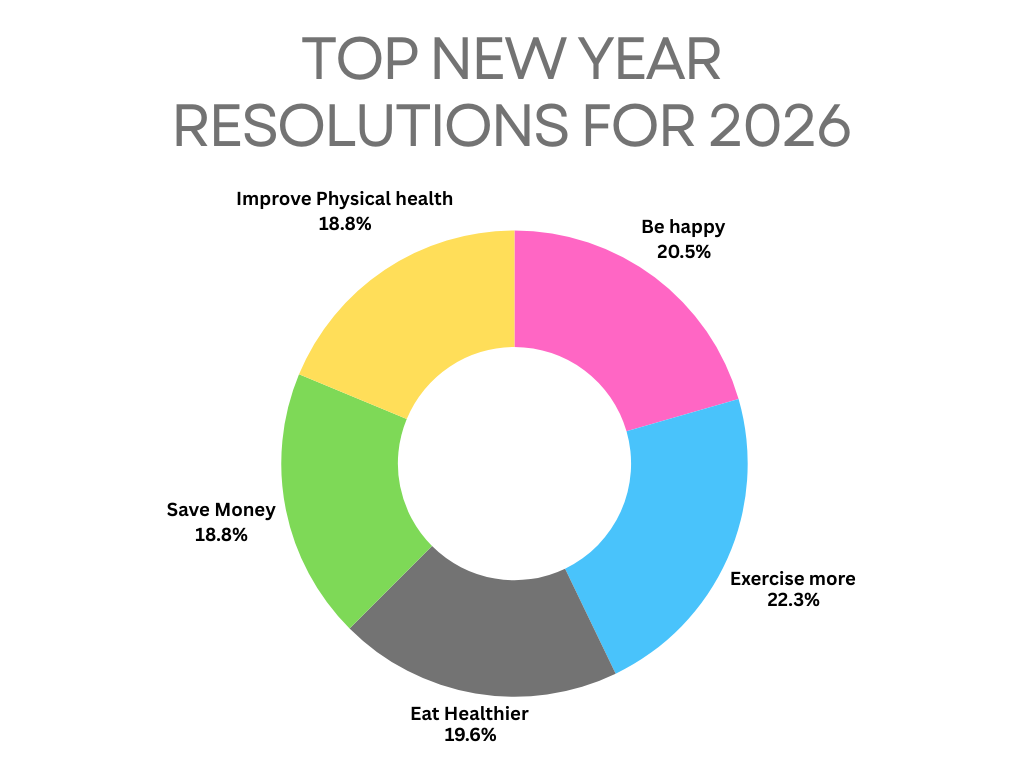
Let’s ground this in some numbers. In a December 2025 YouGov poll of US adults, 31% said they planned to make a resolution for 2026, with adults under 45 about twice as likely as those 45 and older (43% vs 21%) (YouGov, 2025). Topping the list? Exercising more (25%), being happier (23%), eating healthier (22%), saving more money (21%) and improving physical health (21%). These trends show a clear lean toward wellness and balance, especially after tough years.
Mental health is gaining priority
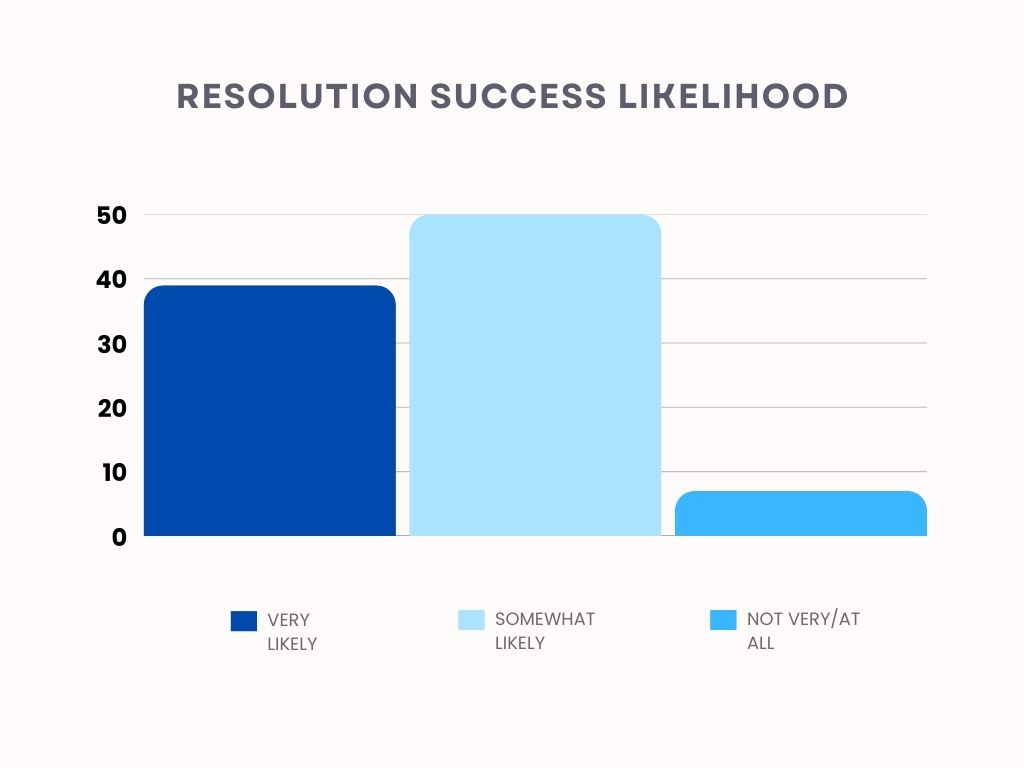
Mental health is climbing the ranks too—in the same poll, 24% of adults under 45 said they would resolve to improve their mental health, compared with 10% of those 45 and older (YouGov, 2025). And while improving physical health was picked by 21%, it’s often intertwined with emotional goals. Success rates? Among those who set them, 39% feel very likely to keep going, and 50% somewhat likely. And the long-term picture is better than the myths suggest: in a classic study, 46% of people who made resolutions were still succeeding six months later, compared with just 4% of people who wanted to change but didn’t make a resolution (Norcross et al., 2002).
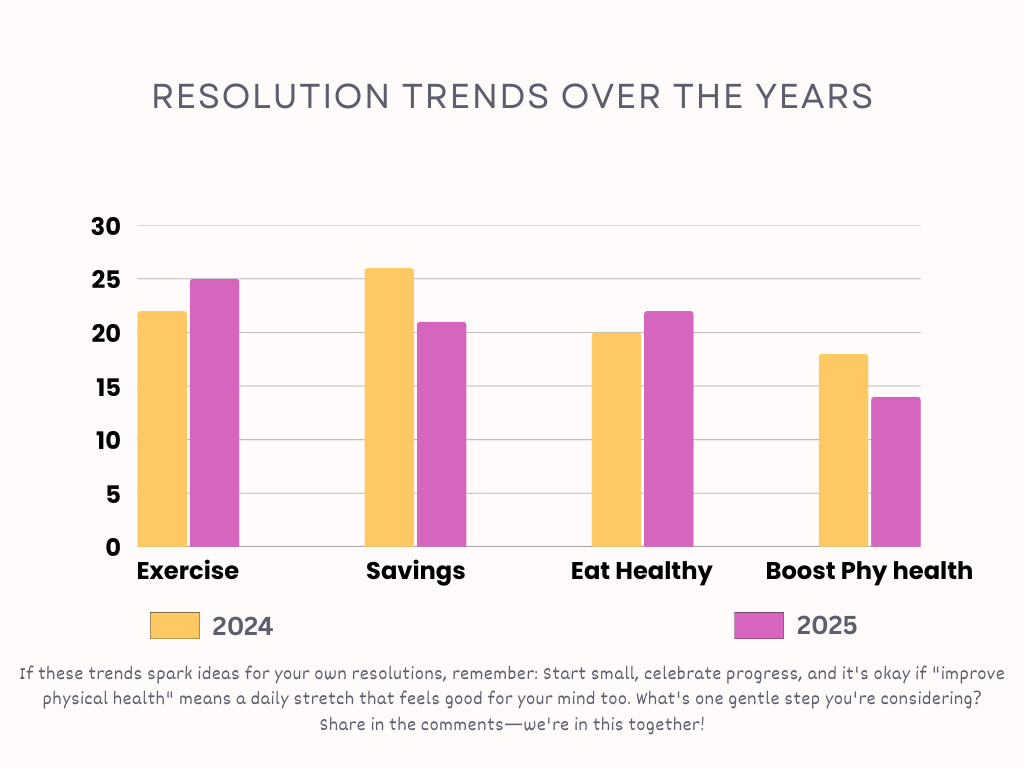
Comparing years shows shifting priorities: saving money and exercise trade places at the top of the list, and many people say they feel some pressure to make resolutions at all. Expect more app-tracked goals and combined mind–body wellness goals in the year ahead.
Globally, physical health tends to top resolution lists too. In India, new year resolutions often blend cultural traditions with modern self-care, like incorporating yoga or family time.
These stats remind us: new year resolutions aren’t rare, but sticking to them takes strategy. If you’ve struggled before, knowing you’re not alone can be the first step to motivation.
Why Do So Many New Year Resolutions Fail?
Maybe this sounds familiar: you start strong, and by March your resolutions are gone. How you phrase a goal matters — in a year-long experiment with over 1,000 people, “approach” goals (start doing something) succeeded more often than “avoidance” goals (stop doing something): 59% versus 47% (Oscarsson et al., 2020). Why do resolutions slip? Common pitfalls include vague goals, like “get fit” without a plan, or piling on too many at once (Reclaim.AI, 2025).
Present bias plays a big role—we favor quick wins over long-haul efforts (GQ, 2025). Then there’s the all-or-nothing trap: one slip-up, and the whole thing crumbles. Take Mike, who aimed to meditate daily as part of his new year resolutions. A busy week hit, he missed a few days, and guilt kicked in, leading him to drop it entirely. We reworked it by focusing on flexibility—three times a week to start.
Other culprits? Lack of enjoyment or social support. Studies show enjoyable activities boost adherence by making new year resolutions feel less like chores. And without accountability, like a buddy or tracker, motivation wanes. The good news? Recognizing these gaps is half the battle.
Pin this article for later:
How to Set Effective New Year Resolutions That Stick
Setting new year resolutions isn’t about overhauling your life overnight—that kind of drastic approach often leads to burnout and disappointment, as so many people discover a few weeks in. Instead, it’s about making smart, sustainable choices that honor your mental well-being and build gradually. The goal is to create habits that feel like natural extensions of your day, not burdensome tasks. Let’s break this down step by step, drawing on solid research.
Start with Honest Reflection
First, kick things off with honest reflection. Take a quiet moment—maybe with a cup of tea or during a walk—to ask yourself: What drained my energy last year (Forbes, 2025)? Was it endless scrolling, skipping meals, or saying yes to everything? On the flip side, what sparked genuine joy? Perhaps connecting with friends, reading a good book, or those rare moments of uninterrupted creativity. This isn’t just navel-gazing; it’s foundational. Journaling these thoughts can uncover patterns, like how overcommitting led to anxiety, which might prompt you to prioritize boundaries in your new year resolutions. Prompts like “What one change would make my days feel lighter?” or “What activities make me lose track of time?” can guide you here.

Apply the SMART Framework
Once you’ve reflected, apply the SMART framework to shape your new year resolutions. This isn’t some corporate buzzword—it’s a proven way to turn vague wishes into actionable plans that respect your limits and boost your chances of success (DesktTrack, 2025). Here’s a breakdown:
- Specific: Get detailed to avoid ambiguity. Instead of “get healthier,” specify “prepare a home-cooked meal with veggies three nights a week.” This clarity makes it easier to start and track.
- Measurable: How will you know you’re progressing? Add numbers or checkpoints, like “read 20 pages of a book daily” or “journal for 10 minutes before bed.” Measurability turns abstract goals into tangible wins, reducing the overwhelm that hits many by mid-January.
- Achievable: Be realistic about your life right now. If you’re juggling work and family, aiming for daily gym sessions might set you up for frustration. Scale it back to something doable, like “attend two yoga classes per week via an app.” Remember, small steps compound—overambitious new year resolutions are one of the most common reasons people give up early.
- Relevant: Align with your deeper values. If mental peace is your priority, a resolution like “practice mindfulness to reduce stress” fits better than something unrelated. Ask: Does this support my overall well-being? This ties into emotional recovery and resilience, which is all about reconnecting with what truly matters.
- Time-bound: Set deadlines to create gentle urgency. For example, “complete an online course on photography by March” gives you a timeline without the pressure of all-or-nothing.
For instance, instead of the classic “exercise more,” reframe it as “walk 30 minutes three times a week after dinner with my favorite playlist.” This SMART version builds momentum and weaves into achievable self-improvement tips, making it feel less like a chore and more like self-kindness.
Incorporate Visualization
Visualization is another powerful tool—with a twist. Picture how hitting your goal will feel (the energy boost from consistent walks, the calm from daily journaling), then picture the obstacle most likely to get in your way and make an if–then plan for it. This “mental contrasting with implementation intentions” (often taught as WOOP) improved goal attainment in a meta-analysis of experimental studies (Wang, Wang & Gai, 2021).
Use Temptation Bundling
Next, try temptation bundling to make tough habits enjoyable. Pair something you dread with a treat—like listening to podcasts only while meal prepping or watching your guilty-pleasure show during workouts. In a gym experiment led by behavioural scientist Katy Milkman, people who could only listen to gripping audiobooks at the gym made about 51% more visits at first, although the effect faded over the weeks (Milkman, Minson & Volpp, 2014). It’s a useful trick for sticking to new year resolutions without relying on sheer willpower alone.
Track Progress and Celebrate Wins
Tracking progress keeps you accountable and motivated. Use a simple app, notebook, or even a wall chart to log weekly check-ins. Note what worked and what didn’t—no judgment, just data. Celebrate small wins along the way: Treat yourself to a new book after a month of consistent habits or a relaxing bath after hitting a milestone. These rewards release dopamine, reinforcing the behavior and combating the all-or-nothing mindset that derails so many.
Embrace Flexibility and a Reset Mindset
Flexibility is absolutely key—life happens, and rigid new year resolutions can amplify guilt, which is counterproductive for mental health. Plan for slip-ups with a “reset” mindset: If you miss a day, gently restart without self-criticism. A common pitfall is assuming your first burst of motivation will last, so build in buffers like alternate activities for busy days. This fosters a growth mindset.
Build a Support System
Finally, surround yourself with supporters. Share your new year resolutions with a trusted friend or join an online community for check-ins—accountability boosts adherence dramatically. A “resolution buddy” group can turn potential isolation into shared encouragement.
Additional Neuroscience and Practical Tips
Incorporating neuroscience tips can supercharge this: Focus on the habit loop—cue (e.g., alarm for your walk), routine (the walk itself), and reward (post-walk coffee). Limit to 3-5 resolutions to avoid overload, get crystal clear on your “why” for motivation, and tweak your environment (e.g., prep gym clothes the night before) to make success effortless. By approaching new year resolutions this way, you’re not just setting goals—you’re nurturing a kinder, more resilient you for the year ahead.
Which type of resolution do you wish to introduce this year?
As a new year approaches, many of us ponder which type of resolution to introduce—one that sparks real, guilt-free change without overwhelming our mental space. From nurturing self-improvement through daily habits to embracing personal growth by stepping beyond comfort zones, these ideas draw on research and common themes to fit your unique journey. Dive in to find mindful, achievable paths that align with wellness, resilience, and even a touch of humor for lighter days ahead.
New Years Resolutions for Self Improvement: Building a Stronger You
Focusing on new years resolutions for self improvement? This is where real transformation happens. Self-improvement isn’t about fixing flaws; it’s nurturing growth. Start small: Read one personal development book a month or practice gratitude daily.
Journaling your emotions weekly is one self-improvement resolution that helps you spot patterns and build resilience. Ideas include learning a skill, like a language app for 10 minutes daily, or volunteering to foster empathy.
New Year Resolutions for Personal Growth: Expanding Horizons
New Year resolutions for personal growth often involve stepping outside comfort zones. Try uncomfortable things monthly, like public speaking or solo travel. Growth comes from these stretches.

Mindful New Year Resolutions: Cultivating Inner Peace
Mindful New Year resolutions center on presence and calm. Simple ones: Meditate five minutes daily or practice deep breathing during commutes (Santani, 2025).
Mindful New Year resolutions can ease work stress, too—mindful eating at lunch can turn rushed meals into recharging moments. Avoid words like “always” or “never” to keep it flexible (BBC, 2025).
Achievable Self-Improvement Tips: Practical Steps Forward
Need achievable self-improvement tips? Limit screen time by 10%, or deep clean one space monthly for mental clarity.
Personal Development New Year Resolutions: Forward-Focused Goals
For personal development new year resolutions, think career or skill-building. Set stretch goals, like mentorship for a promotion.
Wellness Focussed New Year Resolutions: Holistic Health
Wellness focussed new year resolutions blend body and mind. Eat high-omega-3 foods or get daily sun exposure (VitalChoice, 2024).
Prioritising regular sleep routines is a wellness-focused new year resolution that can lead to sharper focus.
Word of the Year for Self-Improvement: A Guiding Theme
Choosing a word of the year for self-improvement simplifies new year resolutions. Pick “balance” or “growth” as your anchor.
Choosing a word of the year, such as “resilience,” can guide decisions, from workouts to boundaries. It’s a gentle alternative to lists.
Best New Year Resolutions: Top Picks for Lasting Change
Looking for the best new year resolutions? Based on trends, prioritize hybrid goals like AI-tracked fitness (25% aiming for exercise) or mental-financial balances (21% saving money, 24% mental health for youth). These stand out for sustainability—visualize success daily and use apps for reminders (Saner.AI, 2025).
Funny New Year Resolutions: Lighten Up Your Goals
Sometimes, humor helps—consider funny new year resolutions like “Click a selfie with 100 cats” or “Treat houseplants as roommates and talk to them daily.” Or “Aim to pet every dog you see.” These silly twists, inspired by online ideas, make sticking to serious ones easier by reducing pressure.
Traditional vs. Alternative New Year Resolutions: A Comparison
To help choose, here’s a quick table comparing traditional and alternative approaches:
| Aspect | Traditional Resolutions | Alternative Resolutions |
|---|---|---|
| Examples | Exercise more, eat healthier, save money | Word of the year (e.g., “resilience”), habit stacking, forest-bathing walks |
| Pros | Clear, measurable, common support | Flexible, fun, less pressure; fosters creativity |
| Cons | Often vague; easy to drop when life gets busy | May lack structure; harder to track |
| Best For | Structured folks seeking quick wins | Creative types wanting sustainable mindset shifts |
| Success Tip | Use SMART goals | Tie to daily rituals for consistency |
This draws from insights like those in Nick Wignall’s alternatives, blending lists with themes.
Words to Keep in Mind
Behavioural scientist Katy Milkman, of the Wharton School, often makes the point that naming a goal is only the start: the real work is anticipating the obstacles inside us—impulsiveness, forgetfulness, procrastination—and planning around them (see Milkman et al., 2014).
“A goal is a dream with a deadline.” – Napoleon Hill, emphasizing time-bound plans for effective new year resolutions.
“Cheers to a new year and another chance for us to get it right.” – Oprah Winfrey, reminding us of self-compassion in setting new year resolutions.
“Approach the New Year with resolve to find the opportunities hidden in each new day.” – Michael Josephson, encouraging proactive mindset shifts.
Illustrative Scenarios (Composites)
Illustrative examples (composites, not real readers): Ray, a busy parent, makes family time his resolution and starts “device-free dinners,” turning meals into connection time. Prune, who lives with anxiety, makes a mindful resolution to start therapy.
Slips are normal, too. If a fitness goal stalls, resetting with a walking buddy can get you moving again — resolutions thrive on community.

Discover Your Resolution Style: A Guilt-Free Quiz
Hey there, readers—let’s make setting new year resolutions fun and insightful without any pressure. This quick quiz draws from common themes in self-improvement and mental health, drawn from what research says helps. Answer honestly (no right or wrong here!), tally your scores, and uncover a resolution style that fits your vibe. Answer each question by choosing A, B, C, or D. Each option has a point value—add them up at the end.

Download the New Year Resolutions Tracker
Ready to turn those new year resolutions into trackable wins without the guilt? Download and customize this Guilt-Free Tracker PDF below, then share your setup with #GuiltFreeMind on socials to inspire others and amplify your own motivation!
Explore More on Guilt Free Mind
Whether it’s building sustainable new year resolutions, overcoming resolution-related anxiety, finding productivity amid fresh starts, or fostering resilience for long-term growth, these resources emphasize self-care tips, mental health management, realistic expectations, and emotional recovery. They’re crafted to empower you through the year and beyond, drawing from empathetic insights and practical tools.
Discover routines that nurture your mind and body, ideal for sustaining new year resolutions with simple grounding practices. Dive into self-care tips like daily walks or balanced nutrition to combat fatigue and anxiety, fostering mental health management for a motivated start to the year.
🧠 Understanding Personality Disorders
Explore emotional patterns that can influence new year resolutions, such as those tied to past traumas or relational stress. Get clarity on how these affect goal-setting, with strategies for realistic expectations and coping during transitions or setbacks.
🎨 Creative Healing and Therapy
Unlock art, journaling, and expressive exercises to process new year resolutions in a healing way. These creative outlets provide stress relief, turning moments of doubt into paths for self-discovery and emotional recovery.
💡 Mindful Productivity and Focus
Learn to stay grounded and efficient when new year resolutions challenge your mind. This category offers hacks for managing overwhelm, blending mindfulness with practical tips to maintain focus and set realistic expectations amid the year’s demands.
💪 Emotional Recovery and Resilience
Strengthen your inner toolkit to handle dips or doubts sparked by new year resolutions. Perfect for emotional recovery, it includes resilience exercises to transform setbacks into opportunities for growth and lasting well-being.
😌 Stress, Anxiety, and Depression Toolkit
Your go-to for direct action against resolution-related stress and anxiety. Filled with coping strategies like boundary-setting and mood boosters, this hub supports comprehensive mental health management to energize your year ahead.
Ready to Make This Your Year? Let’s Do This!
You’ve got the tools—now turn those new year resolutions into reality. Start small, stay kind to yourself, and watch the changes unfold. For more inspiration, subscribe to Guilt Free Mind for weekly tips, or check out my YouTube channel, Guilt Free Mind, where I share videos on mental health hacks and resolution strategies. What’s your top resolution? Drop a comment or email me—let’s chat!
FAQs
The top 10 new year resolutions often include exercising more, eating healthier, saving money, improving mental health, learning new skills, spending more family time, reducing screen time, quitting bad habits, traveling, and practicing gratitude (Strong Viking, 2025). These cover physical, financial, and emotional areas for balanced growth (Shutterfly, 2025).
A good resolution for the new year is one that’s personal and achievable, like committing to daily walks for better health or weekly journaling for mental clarity. It should align with your values and include a plan to track progress.
New year resolutions are self-promises made at the year’s start to foster positive changes, such as building habits or achieving goals. They range from health-focused to career-oriented, aimed at self-improvement.
The 4 types of resolution include avoidance (quitting something, like smoking), approach (adding something, like exercise), maintenance (keeping good habits), and hybrid (combining elements, like replacing junk food with healthy snacks).
Unique resolution ideas might involve a word of the year for self-improvement, habit stacking like reading during commutes, or “forest-bathing” walks for mindfulness. Try volunteering monthly or learning a quirky skill, like sign language.
About the Author
Dr. Shruti Bhattacharya is the founder and heart of Guilt Free Mind, where she combines a Ph.D. in Immunology with additional psychology training to deliver science-backed mental health strategies. Her mission is to empower readers to overcome stress, anxiety, and emotional challenges with practical, evidence-based tools. Dr. Bhattacharya’s unique blend of expertise and empathy shapes her approach to wellness:
- Academic & Scientific Rigor – Holding a Ph.D. in Immunology and a Bachelor’s degree in Microbiology, Dr. Bhattacharya brings a deep understanding of the biological foundations of mental health, including the gut-brain connection. Her completion of psychology courses, such as The Psychology of Emotions: An Introduction to Embodied Cognition, from University of Cambridge enhances her ability to bridge science and emotional well-being.
- Dedicated Mental Health Advocacy – With over 15 years of experience, Dr. Bhattacharya has supported hundreds of individuals through online platforms and personal guidance, helping them navigate mental health challenges with actionable strategies. Her work has empowered readers to adopt holistic practices, from mindfulness to nutrition, for lasting resilience.
- Empathetic Connection to Readers – Known for her compassionate and relatable voice, Dr. Bhattacharya is a trusted guide in mental health, turning complex research into accessible advice. Her personal journey as a trauma survivor fuels her commitment to helping others find calm and confidence.
- Lifelong Commitment to Wellness – Dr. Bhattacharya lives the principles she shares, integrating science-based habits like balanced nutrition and stress management into her daily life. Her personal exploration of mental health strategies inspires Guilt Free Mind’s practical, reader-focused content.
🏆 Guilt Free Mind was named one of the Top 100 Mental Health Blogs on Feedspot in 2025.

Follow me on:
Disclaimer: This content is for informational purposes only and is not a substitute for professional medical advice.
References
- Stattmann, D. (2025). How to make New Year’s resolutions that you’ll actually stick to. GQ.
- Shutterfly. (2025). 101 best New Year’s resolutions for 2026. Shutterfly.
- Saner.AI. (2025). 100 achievable New Year’s resolutions for 2026. Saner.AI.
- Reclaim. (2025). New Year’s resolutions: Top 150 examples & tips for 2026. Reclaim.ai.
- Kraemer, H. (2025). How to set the most effective New Year’s resolutions. Forbes.
- Rufo, Y. (2025). Two words to avoid when making your New Year’s resolution. BBC.
- Santani Wellness Kandy. (2025). Why your New Year resolutions 2026 should begin in stillness. Santani.
- Lifebulb. (2025). Fifteen 2026 New Year’s resolutions for your mental health. Lifebulb.
- Strong Viking. (2025). 2026 New Year’s resolutions? Get stronger! Strong Viking.
- Ballard, J. (2025). What are Americans’ New Year’s resolutions for 2026? YouGov.
- DeskTrack. (2025). 10 inspiring New Year resolution ideas for the workplace in 2026. DeskTrack.
- Ehrenfeld, T. (2024). 8 New Year’s resolutions for 2026. Vital Choice.
- Norcross, J. C., Mrykalo, M. S., & Blagys, M. D. (2002). Auld lang syne: success predictors, change processes, and self-reported outcomes of New Year’s resolvers and nonresolvers. Journal of Clinical Psychology, 58(4), 397–405. https://doi.org/10.1002/jclp.1151
- Oscarsson, M., Carlbring, P., Andersson, G., & Rozental, A. (2020). A large-scale experiment on New Year’s resolutions: approach-oriented goals are more successful than avoidance-oriented goals. PLOS ONE, 15(12), e0234097. https://doi.org/10.1371/journal.pone.0234097
- Milkman, K. L., Minson, J. A., & Volpp, K. G. M. (2014). Holding the Hunger Games hostage at the gym: an evaluation of temptation bundling. Management Science, 60(2), 283–299. https://doi.org/10.1287/mnsc.2013.1784
- Wang, G., Wang, Y., & Gai, X. (2021). A meta-analysis of the effects of mental contrasting with implementation intentions on goal attainment. Frontiers in Psychology, 12, 565202. https://doi.org/10.3389/fpsyg.2021.565202
