


Last Updated On: December 27, 2025
Hey there, if you’re reading this, chances are the twinkling lights and cheerful carols aren’t hitting quite the same this year. I’ve been there myself—staring at a pile of wrapping paper while feeling a quiet wave of sadness creep in. As a mental health blogger who’s chatted with countless readers about their struggles, I know holiday blues can turn what should be a joyful time into something heavier. But here’s the good news: you can take steps to navigate it. In this post, we’ll dive into what holiday blues really mean, why they happen, and hands-on ways to push through. Drawing from solid insights like those in Well Roots Counseling’s guide on overcoming holiday blues, we’ll build a plan that’s practical and kind to yourself.

Holiday blues aren’t just a fleeting mood dip; they’re that temporary sadness or anxiety that spikes during festive times like around Christmas, New Year, and Thanksgiving (TrueCare, 2023). Think of it as the emotional equivalent of coming down from a sugar high—real, but manageable. Recent surveys reveal that 89% of adults face concerns such as not having enough money, missing loved ones, or anticipating family conflict during the holidays. Additionally, 41% anticipate more stress this year compared to last, up from previous years. For those already dealing with mental health challenges, about 64% notice their symptoms getting worse. Globally, places like India see similar patterns, with studies indicating around 43% experiencing depression in recent years, amplified by family expectations during festive seasons. But remember, having a bad time during the holidays aren’t the same as clinical depression; they’re often tied to the season and fade with intention.
Table of Contents
At a glance: Beating Holiday Blues
| Aspect | Key Insights & Stats | Quick Tips |
|---|---|---|
| What Are Holiday Blues? | Temporary sadness or anxiety during festive times, distinct from seasonal depression (SAD). Affects 64% with worsened mental health symptoms; 89% face concerns like money or family conflicts. Globally, similar in places like India (43% depression rates amplified by expectations). | Acknowledge feelings—it’s real but manageable; differentiate from clinical depression. |
| Common Causes | Financial strain (nearly half struggle with gifts), family tensions, social isolation, unrealistic expectations from social media, grief, and shorter days mimicking SAD. 41% anticipate more stress this year. | Set realistic expectations; avoid comparison traps on social media (Bruzda, N., 2019). |
| Signs & Symptoms | Emotional: Sadness, irritability, anxiety. Physical: Fatigue, sleep/appetite changes. More intense signs may signal SAD (e.g., concentration fog in 18-30 age group). 32% feel worse due to dynamics or weather. | Use checklists to spot early—e.g., withdrawing from joys? Address head-on. |
| Real-Life Impact | Solo celebrators feel lonely; parents get overwhelmed; grievers dread traditions. Only 5% face full SAD, but blues are common. | Adapt with new rituals, delegate tasks, or volunteer for connection. |
| Coping Strategies | Mindset shifts (self-compassion, gratitude journaling); self-care (7-9 hours sleep, 20-min walks, mindfulness); boundaries (say no, communicate needs). 10-15 min exercise daily improves mood. | Start small: Jot three gratitudes; limit alcohol; build support networks. |
| Mood Boosters | Creative activities (draw, bake); nature walks; acts of kindness. 64% skip large gatherings due to stress—opt for small ones. | Plan fun like comedies or spa days; focus outward with volunteering. |
| Post-Holiday Blues | Lingers as routines resume; temporary for most. | Set small goals (organize space); maintain habits for smooth transition. |
| When to Seek Help | If persists >2 weeks or includes harm thoughts. Resources: 988 hotline, text HOME to 741741, CBT therapy. | Don’t wait—early support turns things around; inclusive for all. |
Understanding Holiday Blues: More Than Just the Winter Chill
Let’s start by unpacking what holiday blues look like. Unlike seasonal depression, which is a deeper form tied to less daylight and can linger for months (affecting symptoms for about 40% of the year), holiday blues are more about the pressures of the moment. From Psychology Blossom’s breakdown, we see it’s often a mix of stress, isolation, and unmet hopes that hits hardest in late December.
Picture Sarah, a reader who emailed me last year. She loves the holidays but found herself overwhelmed after losing her job—suddenly, the family gatherings felt like spotlights on her struggles. That’s classic holiday blues: not a full-blown disorder, but a real emotional tug from life’s curveballs amplified by the season.
Holiday Blues vs. SAD vs. Depression: A Comparison
To help clarify these often-confused terms, here’s a quick comparison table based on common symptoms, duration, and when to seek help. Remember, holiday blues are temporary and tied to the season, while SAD and depression may require professional support (Individual Care of Texas).
| Aspect | Holiday Blues | Seasonal Affective Disorder (SAD) | Clinical Depression |
|---|---|---|---|
| Definition | Short-term sadness, anxiety, or stress triggered by holiday pressures like finances, family, or isolation. | A type of depression linked to seasonal changes, often starting in fall/winter due to reduced daylight. | Persistent low mood and loss of interest that affects daily life, not tied to seasons or events. |
| Common Symptoms | Irritability, fatigue, loneliness; worsens with social media comparisons or grief (e.g., 64% report worsened mental health). | Cravings for carbs, oversleeping, low energy, concentration issues; mimics holiday blues but lingers. | Hopelessness, appetite/weight changes, sleep disturbances, suicidal thoughts; can co-occur with SAD. |
| Duration | Temporary, usually fades post-holidays (1-2 weeks). | Lasts months (e.g., 40% of the year in severe cases), recurring annually. | Ongoing for at least 2 weeks, often chronic without treatment. |
| Triggers | Festive stress, unrealistic expectations, shorter days mimicking SAD. | Reduced sunlight, vitamin D drops; affects 5% in some regions. | Biological, environmental, or genetic factors; not season-specific. |
| When to Seek Help | If persists beyond holidays or impacts daily function—try self-care first. | If symptoms recur seasonally; light therapy or meds may help. | Immediate if severe; therapy like CBT or meds essential. |
Common Causes and Triggers
Why do holiday blues sneak up on so many? Financial strain tops the list—nearly half of people struggle to afford gifts amid inflation, leading to budget cuts. Then there’s family dynamics: tensions bubble up at dinners, or maybe you’re missing someone who’s passed, making the empty chair at the table sting more. Social isolation hits hard too, especially if you’re far from loved ones or dealing with relationship strains.
Add in unrealistic expectations from social media’s perfect feeds, and it’s no wonder anxiety spikes. As noted in Washington Health’s piece on beating these blues, these pressures create a trap of chasing an ideal that’s rarely real. For Mike, another reader, they kicked in from comparing his quiet evenings to friends’ glamorous posts—until he realized those snapshots hide the mess behind the scenes.
Shorter days don’t help either, mimicking symptoms of seasonal depression like low energy. And let’s not forget grief: if the season reminds you of losses, holiday blues can feel like an uninvited guest. Surveys show 32% report feeling worse mentally due to family dynamics or weather changes.
Spotting the Signs
Recognizing holiday blues early is key to turning things around. Emotional signs include persistent sadness, irritability, or anxiety that makes simple tasks feel huge. Physically, you might notice fatigue, sleep changes, or appetite shifts—maybe you’re skipping meals or reaching for comfort food more.
From Tiny Buddha’s 50 ways to beat holiday blues symptoms often include withdrawing from activities you once enjoyed. If it’s more intense, like hopelessness lasting weeks, it could edge toward seasonal depression—think appetite cravings or concentration fog, estimated to affect people between 18 and 30 more often.
Take Lisa’s situation: She shared how holiday blues showed as constant tiredness and snapping at her kids over small things. Once she spotted it, she could address it head-on.
Quick Self-Assessment: Do You Have the Holiday Blues?
Hey, take a moment for yourself—this isn’t a clinical diagnosis, just a gentle way to tune into your feelings. Answer honestly based on the past week or two.

Real-Life Scenarios
To make this relatable, let’s walk through a few scenarios my readers have faced. First, the solo celebrator: Imagine you’re like Tom, living alone after a move. Holiday blues hit with loneliness during family-focused ads. He countered by volunteering at a local shelter, turning isolation into connection.
Then there’s the overwhelmed parent, like Emily. Juggling kids’ excitement with work deadlines left her anxious and drained—classic holiday blues from overcommitment. She learned to delegate tasks, like letting her partner handle shopping, freeing up time for a quiet walk.
Or the griever: After losing her mom, holiday blues for Rachel meant dreading traditions that stirred memories. She adapted by creating a new ritual—lighting a candle in remembrance—easing the pain while honoring the past.
These stories show holiday blues aren’t one-size-fits-all, but coping strategies can adapt to your situation.
Holiday Blues for Specific Groups: Aging Adults, Teenagers, Young Adults
Holiday blues can hit differently depending on life stage. Here’s tailored advice for three groups, focusing on unique challenges and coping strategies to support mental health management.
For Aging Adults
Older adults may face amplified isolation or grief from lost loved ones, with physical limitations adding to fatigue (e.g., shorter days worsening symptoms) (Older adults may face amplified isolation or grief from lost loved ones, with physical limitations adding to fatigue (e.g., shorter days worsening symptoms) (Neighbor’s who care).
Self-care tips: Prioritize low-energy connections like phone calls; use Guilt Free Mind’s Emotional Recovery hub for resilience exercises. Coping strategy: Adapt traditions to simpler forms, like virtual family shares, to foster belonging without overwhelm.
For Teenagers
Teens often grapple with social media pressures and family changes, leading to irritability or withdrawal amid holiday expectations. Realistic expectations are key—64% with mental health issues see worsened symptoms. Self-care tips: Encourage journaling or creative outlets from our Creative Healing category to process emotions. Coping strategy: Set screen time limits; involve them in fun, low-stakes activities like baking to build positive associations.

Holiday Blues Triggers and Coping Strategies Table
Here’s a practical table outlining common triggers for holiday blues and matching coping strategies to address them directly. Use it as a quick reference to build resilience.
| Trigger | Impact | Coping Strategy |
|---|---|---|
| Financial Strain | Regret from overspending; 41% anticipate more stress this year. | Set a realistic budget early; focus on meaningful, low-cost gifts or experiences. |
| Family Tensions | Irritability from dynamics; 32% feel worse mentally due to conflicts. | Communicate boundaries upfront; plan short visits or virtual check-ins. |
| Social Isolation | Loneliness amid celebrations; amplified for solo dwellers. | Schedule calls with friends or volunteer; build small, quality connections. |
| Unrealistic Expectations | Anxiety from “perfect” social media portrayals. | Reframe thoughts (Howshar 2018): Journal positives and accept “good enough” holidays. |
| Grief or Loss | Dreading traditions that stir memories. | Create new rituals, like a remembrance activity, for emotional recovery. |
| Shorter Days/Weather | Fatigue mimicking seasonal depression. | Get midday sunlight or use light therapy; incorporate vitamin D-rich foods. |
Adapt these based on your situation—small actions lead to big shifts.
Shifting Your Mindset
From Overwhelm to Empowerment
Mindset is your secret weapon against holiday blues. Start with self-compassion—acknowledge it’s okay not to feel jolly 24/7. As Psychology Today’s article on conquering holiday blues highlights, reframing thoughts helps: Swap “I have to attend this party” for “I get to choose what brings me joy.”
Practice gratitude daily—jot down three things you’re thankful for, like a warm cup of tea or a kind text. This counters the negativity bias that fuels holiday blues. For mindset shifts, try journaling: Reflect on past seasons that went well and build on those.
Practical Self-Care Strategies to Beat Holiday Blues
Self-care isn’t a luxury; it’s essential for tackling holiday blues. From Mindful Health Solutions’ tips on managing holiday depression, prioritize basics: Aim for 7-9 hours of sleep, eat balanced meals to avoid sugar crashes, and move your body— even a 20-minute walk boosts endorphins (Brighter Minds, 2024).
Incorporate mindfulness: Apps for guided meditation can ease anxiety. Limit alcohol, as it worsens mood swings—stick to one drink or opt for mocktails. For vitamin D dips causing seasonal depression vibes, spend time outdoors midday.
One reader, Alex, beat his holiday blues by starting a morning routine: Yoga and herbal tea set a calm tone for the day. Remember, even 10-15 minutes of exercise daily can significantly improve mood.
Setting Boundaries and Building Connections
Boundaries protect your energy from holiday blues overload. Say no to events that drain you, and communicate openly: “I’d love to join, but I need to keep it short.” As Health in Aging’s tip sheet suggests, lean on support—call a friend or join a group chat.
Build connections thoughtfully: Host a low-key gathering or volunteer. This combats isolation, a big trigger for holiday blues. Remember, quality over quantity—nurture ties that uplift you. About 64% prefer skipping large gatherings due to stress or financial strain, so smaller, meaningful ones can help.
Save this pin for later:
Mood-Boosting Activities for a Brighter Outlook
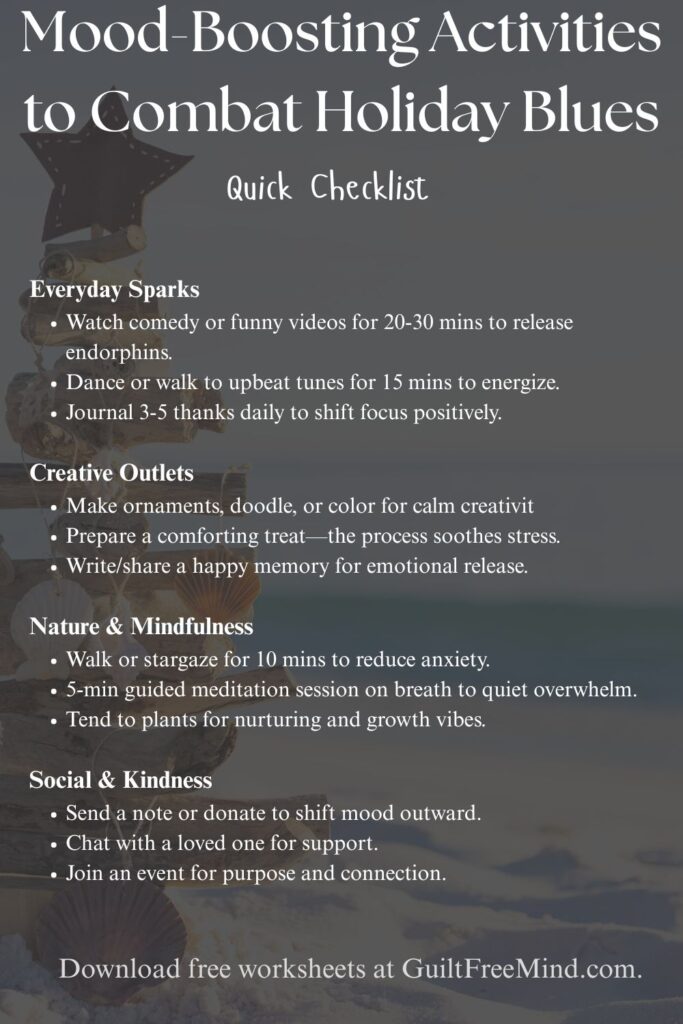
Shake off holiday blues with activities that spark joy. From Dr. Michelle Bengtson’s coping tips, plan fun ahead: Watch a comedy or craft homemade ornaments.
Get creative: Draw, bake, or listen to uplifting music. Nature walks work wonders—hug a tree if it feels right! Acts of kindness, like sending cards, shift focus outward.
For post-trying times, carry over perks: Schedule a spa day in January to ease the transition.
How to Conquer Holiday Blues: A Step-by-Step Guide
- Recognize and Acknowledge Your Feelings (5-10 Minutes Daily)
Begin by tuning in: Sit quietly and note symptoms like sadness, fatigue, or anxiety. Journal: “What triggered this today—family stress or shorter days?” Acknowledging without judgment normalizes it (64% report worsened symptoms during holidays). This builds self-compassion, a key to easing seasonal depression.
- Shift Your Mindset with Reframing (Daily Practice, 5 Minutes)
Challenge negative thoughts: Swap “Holidays must be perfect” with “I can choose what brings me peace.” Practice gratitude by listing three positives, like a cozy drink or kind word. This counters negativity bias, fostering realistic expectations and reducing isolation’s impact.
- Build a Self-Care Routine (Start with 15-20 Minutes/Day)
Prioritize basics: Aim for 7-9 hours of sleep, balanced meals, and a short walk for endorphins. Add mindfulness via apps or deep breathing to manage anxiety. Limit alcohol to avoid mood dips—small habits like these provide stress relief and combat physical signs of holiday blues.
- Set Boundaries and Nurture Connections (Weekly Check-In)
Communicate limits: “I’d love to join, but I’ll keep it short.” Say no to draining events (64% skip large gatherings due to stress). Build ties: Call a friend or volunteer for belonging. This fights social isolation, a common trigger, while supporting emotional recovery.
- Incorporate Mood-Boosting Activities (Try 1-2 Weekly, 10-30 Minutes)
Spark joy: Engage in creativity (draw or bake), nature walks, or acts of kindness. Plan post-holiday perks like a January hobby to ease transition. These activities shift focus outward, turning holiday blues into opportunities for resilience.
- Monitor and Seek Help if Needed (Ongoing)
Track progress: Use a journal or our printable checklist to note improvements. If blues last over two weeks or include harm thoughts, reach out—call 988 or text HOME to 741741. Therapy like CBT can help; early support turns temporary dips into growth.
Pin this article for later
Handling Post-Holiday Blues: Keeping the Momentum
Post-holiday blues often linger as routines resume. From True Care’s mental health management guide, ease back in: Set small goals, like organizing your space for a fresh start.
Maintain self-care—don’t drop healthy habits. If blues persist, it’s okay; they’re temporary for most, with only about 5% facing full seasonal depression.
More people suffer with depression during this time of year than any other.
Dr. Michelle Bengtson
When Holiday Blues Signal Something More: Seeking Help
If the blues drag on—say, sadness for over two weeks or thoughts of harm—reach out. From Christian Mental Health Initiative’s conquering sadness tips, therapy like CBT can help. Call the crisis line at 988 or text HOME to 741741.
Don’t wait; early support turns things around.
Exploring Guilt Free Mind: Resources for Your Journey
Whether it’s navigating seasonal depression, finding stress relief during festive chaos, or building coping strategies for a more joyful season, these resources emphasize self-care tips, mental health management, realistic expectations, and emotional recovery. They’re crafted to empower you through the holidays and beyond, drawing from empathetic insights and practical tools.
Discover routines that nurture your mind and body, ideal for easing holiday blues with simple grounding practices. Dive into self-care tips like daily walks or balanced nutrition to combat fatigue and anxiety, fostering mental health management for a calmer festive period.
Disorders Explore emotional patterns that can amplify holiday blues, such as those tied to past traumas or relational stress. Get clarity on how these influence seasonal depression, with strategies for realistic expectations and coping during family interactions or isolation.
🎨 Creative Healing and Therapy
Unlock art, journaling, and expressive exercises to process holiday blues in a healing way. These creative outlets provide stress relief, turning moments of seasonal depression into paths for self-discovery and emotional recovery.
💡 Mindful Productivity and Focus
Learn to stay grounded and efficient when holiday blues fog your mind. This category offers hacks for managing overwhelm, blending mindfulness with practical tips to maintain focus and set realistic expectations amid the season’s demands.
💪 Emotional Recovery and Resilience
Strengthen your inner toolkit to handle grief or anxiety sparked by the holidays. Perfect for emotional recovery, it includes resilience exercises to transform holiday blues into opportunities for growth and lasting well-being.
😌 Stress, Anxiety, and Depression Toolkit
Your go-to for direct action against stress relief and seasonal depression. Filled with coping strategies like boundary-setting and mood boosters, this hub supports comprehensive mental health management to brighten your holiday experience.
Ready to Turn Holiday Blues into a Glow?
You’ve got the tools now—practical coping strategies, self-care tips, and ways to manage those sneaky waves of seasonal depression. But conquering holiday blues isn’t a one-and-done; it’s about weaving these habits into your daily life for lasting mental health management. Start small today: Pick one tip, like setting a boundary or jotting down three gratitudes, and notice how it shifts your energy. Remember, you’re not alone in this—thousands of readers have shared how these steps turned their seasons around, and you can too. Grab this free PDF to print and track your daily wins.
If this resonated, why not dive deeper? Subscribe to Guilt Free Mind for weekly insights on stress relief, emotional recovery, and more, delivered straight to your inbox. And for visual, bite-sized boosts, check out my YouTube channel, Guilt Free Mind on quick mindfulness exercises and real-talk on realistic expectations await. Hit subscribe and join the community turning challenges into growth.
What’s your go-to strategy for beating the blues? Drop it in the comments below—I read every one and love hearing your stories. Share this post with someone who might need it, and let’s spread a little more light this season. Your brighter tomorrow starts here!
Frequently Asked Questions About Holiday Blues
Holiday blues are short-term feelings of sadness, stress, or loneliness tied to festive pressures like finances or family, usually easing post-season. Seasonal depression (SAD) is more persistent, linked to daylight changes, with symptoms like ongoing fatigue—both deserve attention, but SAD might need light therapy or meds.
Watch for persistent signs like appetite loss, sleep issues, or disinterest in activities lasting over two weeks. If it interferes with daily life or includes hopeless thoughts, chat with a professional—it’s inclusive for anyone, regardless of background.
Breathe deeply, step away for a moment, or focus on one positive interaction. Set boundaries upfront, like limiting time at events, and include self-care like a short walk—works for introverts, extroverts, parents, or singles alike.
Yes, children pick up on stress or feel overwhelmed by changes. Talk openly, keep routines, and involve them in fun traditions. For all ages, normalize emotions and model healthy coping.
Plan ahead with small joys in January, like a hobby class. Maintain connections and routines—suitable for everyone, from busy professionals to retirees.
About the Author
Dr. Shruti Bhattacharya is the founder and heart of Guilt Free Mind, where she combines a Ph.D. in Immunology with advanced psychology training to deliver science-backed mental health strategies. Her mission is to empower readers to overcome stress, anxiety, and emotional challenges with practical, evidence-based tools. Dr. Bhattacharya’s unique blend of expertise and empathy shapes her approach to wellness:
- Academic & Scientific Rigor – Holding a Ph.D. in Immunology and a Bachelor’s degree in Microbiology, Dr. Bhattacharya brings a deep understanding of the biological foundations of mental health, including the gut-brain connection. Her completion of psychology courses, such as The Psychology of Emotions: An Introduction to Embodied Cognition, from University of Cambridge enhances her ability to bridge science and emotional well-being.
- Dedicated Mental Health Advocacy – With over 15 years of experience, Dr. Bhattacharya has supported hundreds of individuals through online platforms and personal guidance, helping them navigate mental health challenges with actionable strategies. Her work has empowered readers to adopt holistic practices, from mindfulness to nutrition, for lasting resilience.
- Empathetic Connection to Readers – Known for her compassionate and relatable voice, Dr. Bhattacharya is a trusted guide in mental health, turning complex research into accessible advice. Her personal journey as a trauma survivor fuels her commitment to helping others find calm and confidence.
- Lifelong Commitment to Wellness – Dr. Bhattacharya lives the principles she shares, integrating science-based habits like balanced nutrition and stress management into her daily life. Her personal exploration of mental health strategies inspires Guilt Free Mind’s practical, reader-focused content.
🏆 Guilt Free Mind was named one of the Top 100 Mental Health Blogs on Feedspot in 2025.

Follow me on:
Disclaimer: This content is for informational purposes only and is not a substitute for professional medical advice.
References
- The Team at Well Roots Counseling. (2024). Overcoming Holiday Blues: Tips for a Happier Season. Well Roots Counseling.
- Oh, S. A. Understanding and Overcoming Holiday Blues: A Guide to Managing Post-Holiday and Christmas Depression. Psychology Blossom.
- Sehgal, S. (2022). Preparing to Beat the Holiday Blues. Washington Health.
- Munoz, B. (n.d.). 50+ Ways to Beat the Holiday Blues. Tiny Buddha.
- Vermani, M. (2022). Recognizing and Conquering Those Holiday Blues. Psychology Today.
- Mindful Health Solutions. (2025). Managing Holiday Depression: Identifying & Overcoming the Holiday Blues. Mindful Health Solutions.
- AGS Health in Aging Foundation. (2019). Tip Sheet: Beating the Holiday Blues. HealthInAging.org.
- Bengtson, M. (2019). 6 Tips for Coping with the Post-Holiday Blues. Dr. Michelle Bengtson.
- TrueCare. (2023). Holiday Blues: Managing Your Mental Health During the Holidays. TrueCare.
- Christian Mental Health Initiative. Holiday Blues Advice: Conquering Christmas-Time Sadness. Christian Mental Health Initiative.
- Brighter Minds. (2024). How to Beat the Post-Holiday Blues: A Therapist’s Strategies. Brighter Minds.
- Bruzda, N. (2019). Overcoming the Holiday Blues. UNLV.
- Neighbors Who Care. Merry & Bright: Overcoming the Holiday Blues for Aging Seniors. Neighbors Who Care.
- Howshar, M., (2018). Tips for overcoming the post-holiday blues. College of Health and Human Sciences | Colorado State University.
- Individual Care of Texas, (2024). Overcoming Holiday Blues: Tips for a Joyful Festive Season. Individual Care of Texas.
