


Last updated: 5 October 2026 · By Dr. Shruti Bhattacharya, PhD (Immunology)
Most often, when people talk about psychopaths, they mean a person who is devoid of any kind of emotion. Is it really true? Do psychopaths really feel nothing? If you are looking for answers to such questions, you have come to the right place. Subscribe to the Guilt Free Mind. This will help me notify you about the release of new blog posts. Guilt Free Mind also has a YouTube channel by the same name. Please subscribe to that as well if you like to watch videos. Remember to ring the notification bell. Then YouTube can send you notifications when there is a new video release.
Do psychopaths feel emotions? Yes—but not in the way most people do. Psychopaths feel “cold” emotions such as anger, frustration, boredom and the thrill of winning, and some feel attached to a few people or pets. What is weak or missing are the emotions that connect us to others: empathy, guilt, remorse and fear. Below I explain what they do feel, whether they feel lonely, why their brains work differently, and whether psychopathy can be treated.
Table of Contents
What Are Psychopaths? A Closer Look
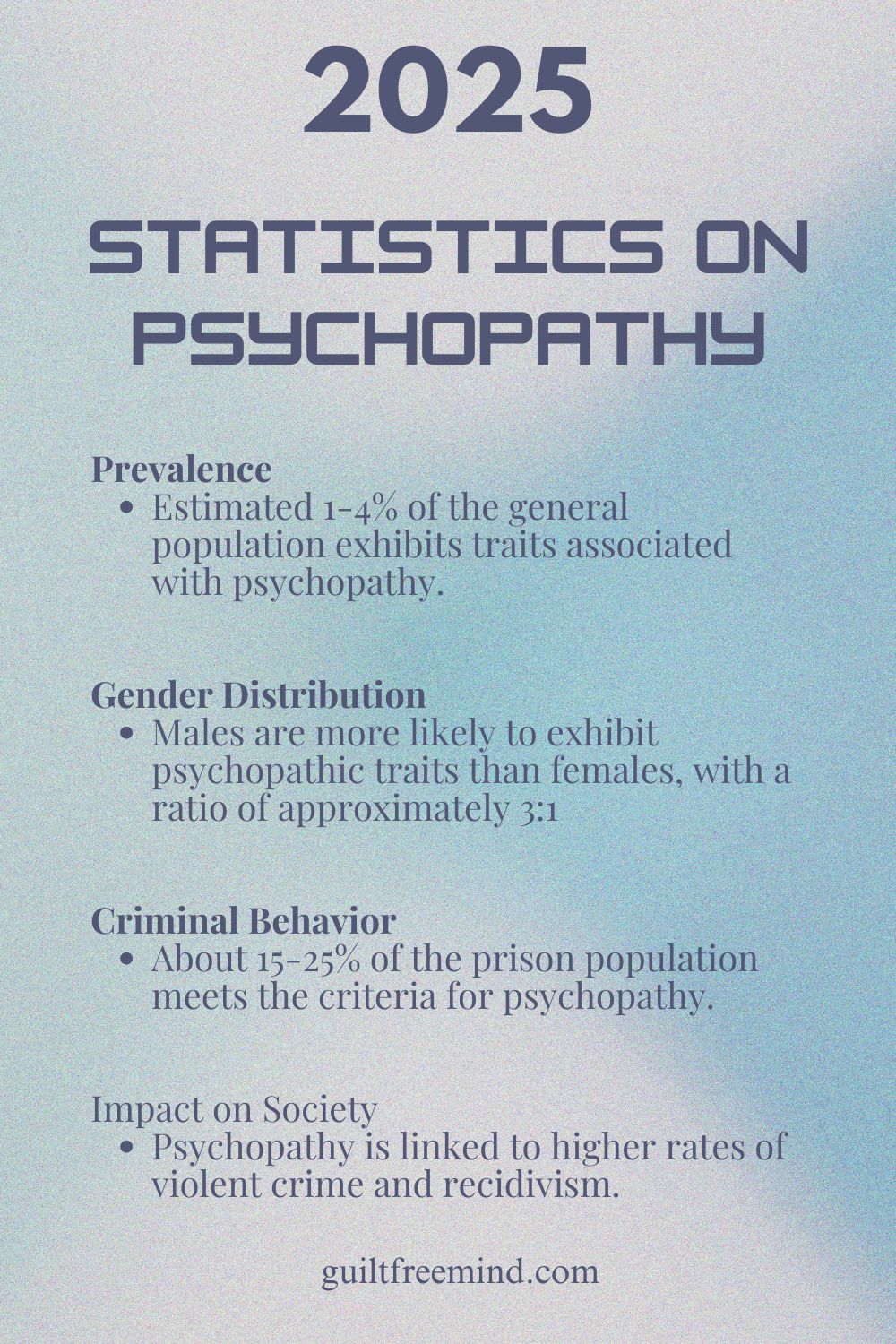
Psychopaths are individuals with a personality disorder characterized by traits like superficial charm, high intelligence, pathological lying, lack of remorse, and manipulative behavior. Psychopathy is not a separate diagnosis in the DSM-5; it overlaps with antisocial personality disorder (ASPD) and is usually assessed with the Hare Psychopathy Checklist. It is estimated to affect about 1% of the population, with higher prevalence in forensic settings [Frontiers in Psychology]. Unlike popular media portrayals, psychopaths are not always violent; many function in society, using charm to mask their emotional differences (Forbes, 2024).
People feel that psychopaths are cold, calculated and remorseless individuals who will do anything to achieve what they want. The classic description of psychopathy, first set out by psychiatrist Hervey Cleckley in The Mask of Sanity, includes:
- High intelligence
- Superficial charm
- Poor judgment
- Absence of experience learning
- Pathological lying
- Incapability of love
- Egocentricity
- Absence of shame or remorse
- Grandeurs of self-worth
- Impulsivity
- Manipulative behavior
- Promiscuous sexual behavior
- The absence of self-control
- Criminal behavior
- And a few others
Since these traits are common in psychopathy, the image of the psychopath has become that of a person who lacks any normal human emotions and empathy.
Psychopaths at a Glance
| Question | Short answer |
|---|---|
| Do psychopaths feel emotions? | Yes, but shallowly. Anger, frustration, boredom, pleasure and pride are there; empathy, guilt, fear and deep love are weak or missing. |
| Can they love? | Some form attachments to a few people or pets, but the bond is usually possessive and self-serving rather than mutual. |
| Do they feel lonely? | Some do, especially after relationships fall apart—though it may feel more like boredom or resentment than sadness. |
| Can they fake emotions? | Yes. Many learn to mimic feelings convincingly in order to charm and manipulate. |
| How common is psychopathy? | Roughly 1% of adults, rising to around 15–25% of prison inmates (Hare, 2003). |
| Why are they like this? | Differences in brain systems for fear and empathy—such as a smaller, less reactive amygdala—combined with genes and childhood environment. |
| Can it be treated? | There is no cure, but early intervention in childhood and structured therapy can reduce harmful behaviour. |
Do Psychopaths Feel Lonely? Do They Like Being Alone?
Do psychopaths feel lonely?
Some do. Psychopathy blunts the emotions that tie people together—empathy, guilt and deep attachment—but it does not remove the wish for company, admiration and excitement. Many people with strong psychopathic traits are surrounded by others yet feel disconnected, and a trail of broken relationships can leave them genuinely isolated. Research on loneliness in psychopathy is still limited, and for many psychopaths loneliness probably feels less like an ache for closeness and more like boredom, frustration or resentment that the world is “against” them.
Do psychopaths like to be alone?
Not usually in the way an introvert does. Most people with psychopathic traits seek stimulation and an audience—other people are a source of excitement, status and resources. But because they do not need emotional closeness, they can cut people off with little distress and may seem perfectly comfortable alone for a while. When a psychopath withdraws, it is more often boredom, or a retreat after a relationship or scheme has collapsed, than a love of solitude.
Loneliness matters for another reason too: as I explain further down, long periods of isolation and resentment are one of the warning signs that a psychopath may become more dangerous.
A Brief History of Psychopathy: From Moral Insanity to Modern Neuroscience
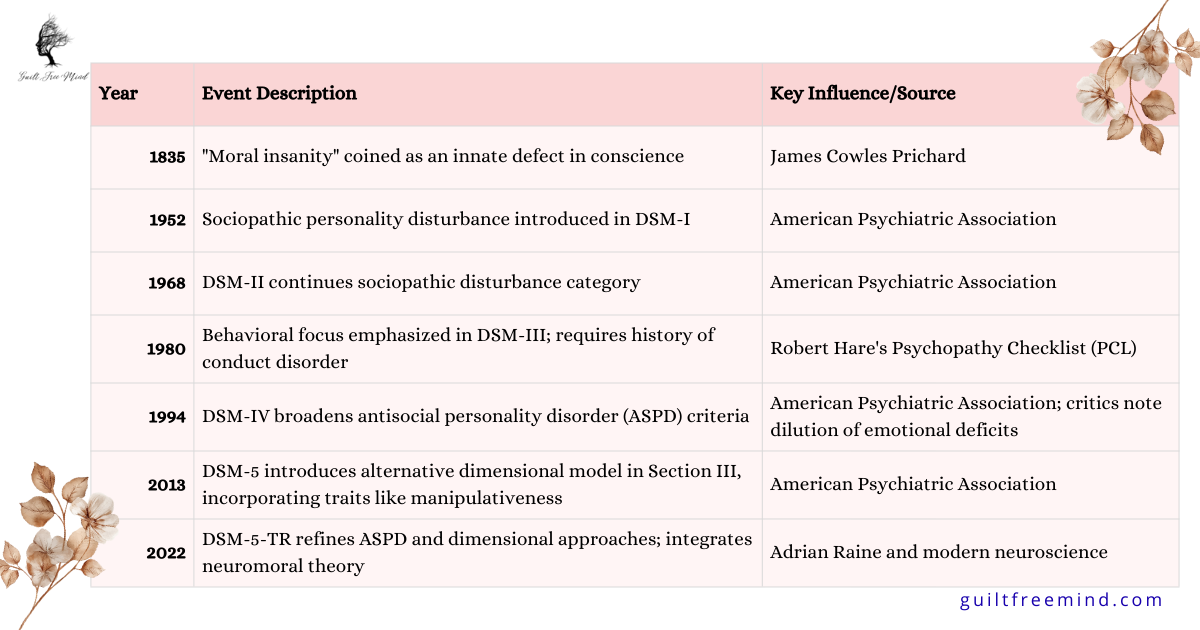
The concept of psychopathy has evolved dramatically since the 19th century, transitioning from vague notions of “moral insanity” to a well-defined personality construct rooted in biology and development. Coined by British physician James Cowles Prichard in 1835, early descriptions focused on individuals who committed immoral acts without apparent remorse or delusion, often labeling them as inherently “defective” in conscience. By the early 20th century, psychiatrist Emil Kraepelin distinguished “psychopathic personalities” as chronic conditions involving social deviance, influencing the first DSM in 1952, which categorized it under sociopathic personality disturbance.
Post WWII era
The post-WWII era marked a shift toward behavioral criteria. In DSM-III (1980), antisocial personality disorder (ASPD) emphasized observable conduct issues, requiring a history of conduct disorder (CD) before age 15, sidelining affective traits like callousness. DSM-IV (1994) broadened this, but critics like Robert Hare argued it diluted psychopathy’s core emotional deficits. DSM-5 (2013) and DSM-5-TR (2022) refined ASPD while introducing an alternative dimensional model in Section III, incorporating traits like manipulativeness and lack of remorse, bridging to psychopathy’s interpersonal-affective facets (Personal Ment Health. 2025).
Modern research, informed by Raine’s neuromoral theory (1990s onward), integrates developmental neuroscience, viewing psychopathy as heterogeneous: primary (biologically driven, low anxiety) vs. secondary (trauma-influenced, reactive aggression). From categorical diagnoses to dimensional spectra, this evolution underscores psychopathy’s interplay of genetics, environment, and brain function—setting the stage for today’s biological insights.
Key Milestones Table
| Era | Key Development | Influential Figure/Source |
|---|---|---|
| 1800s | “Moral insanity” as innate defect | James Cowles Prichard |
| 1950s-1970s | Sociopathic disturbance in DSM-I/II | American Psychiatric Assoc. |
| 1980s | Behavioral focus in DSM-III | Hare’s Psychopathy Checklist |
| 2010s-Present | Dimensional traits in DSM-5; neuromoral theory | Adrian Raine |
Childhood Precursors: Early Signs and Risk Factors for Psychopathy
Psychopathy doesn’t emerge in adulthood; its roots often trace to childhood behaviors and environmental influences, with conduct disorder (CD) serving as a primary gateway. Early-onset conduct disorder (before age 10) is one of the strongest predictors of adult ASPD or psychopathy, characterized by aggression, deceit, and rule-breaking, affecting 1.5-5.5% of youth. Precursors include genetic vulnerabilities (e.g., heritability up to 50% for callous-unemotional traits) interacting with adversity, like family dysfunction, abuse, or socioeconomic stress.
Key risk factors:
- Temperamental: Low fear/anxiety and high impulsivity, reducing responsiveness to punishment and protective parenting (Sci Rep. 2025)
- Environmental: Childhood maltreatment (physical/emotional) disrupts attachment, fostering empathy deficits; Adverse experiences amplify secondary psychopathy.
- Neurodevelopmental: Early prefrontal-limbic imbalances, seen in oppositional defiant disorder (ODD), heighten vulnerability during adolescence’s “age-crime curve”
Protective factors, such as a stable, warm relationship with at least one adult, can substantially lower the risk. Early screening via tools like the PCL-YV is crucial for intervention.
Psychopathy vs. Sociopathy: Key Trait Differences
While often conflated, psychopathy and sociopathy (typically ASPD) differ in origins and expression—psychopathy as innate/bold, sociopathy as learned/reactive. Overlap is high (most people with psychopathy also meet the criteria for ASPD, though most people with ASPD are not psychopaths), but distinctions matter for diagnosis (Journal of Forensic Psychiatry & Psychology., 2025).
Comparison Table:
| Trait Category | Psychopathy (Primary Focus) | Sociopathy (ASPD Focus) |
|---|---|---|
| Core Drivers | Genetic; low anxiety, proactive aggression | Environmental; high impulsivity, reactive |
| Emotional | Shallow affect, no remorse (F1 traits) | Irritability, guilt possible (F2 traits) |
| Behavior | Manipulative, charming, premeditated | Erratic, rule-breaking, poor planning |
| Prevalence | About 1% of adults; around 15–25% of prisoners | About 1–4% of adults; roughly half of male prisoners |
Psychopathy emphasizes affective deficits (e.g., via PCL-R Factor 1), while sociopathy stresses behavioral deviance. Recent research highlights potential differences in female psychopathy (BBC Science Focus Magazine, 2026). Understanding this aids self-assessment.
Pin this article for later:
Psychopaths feel too
Psychopaths do feel emotions towards their loved ones. However, their love is different from what can be categorized as normal love. In this article, I will be discussing the emotions that psychopaths feel and how is their emotional quotient is different from what has been deemed to be normal amongst others.
Yes, psychopaths do have feelings even though they are different from what a normal human might experience. If a psychopath is in a room full of people who are experiencing a specific emotion, chances are that the psychopath may not feel the same way. This psychopath will only feel concerned if it is a person that the psychopath truly cares about like their mother, children, spouse, father, pets etc. However, the ability to feel and respond empathetically towards others is absent in psychopaths.
A statistically significant correlation has been found between low MAO-A activity and antisocial tendencies in abused children.
Konstantinos A. Fanti
If there is a discussion of a tragedy in the room which has affected millions of people and taken hundreds of lives, everyone in the room may feel sadness towards the incident. However, the psychopath may not feel anything. Some psychopaths are skilled at mimicking human behavior. They may pretend to be sad when actually they do not feel anything.
Biological Correlates of Psychopathy
The behaviours of psychopaths are linked to neurobiological differences. Studies show reduced grey matter in parts of the prefrontal cortex and in the amygdala, areas involved in impulse control, fear and empathy [University of Wisconsin-Madison]. Hormones play a part too: many studies find a blunted cortisol response to stress and a high ratio of testosterone to cortisol, a pattern linked to fearlessness, reward-seeking and aggression (Glenn et al., 2011). These differences help explain why psychopaths struggle to learn from punishment or to feel fear the way others do.
Emotional Experiences of Psychopaths
Contrary to the stereotype of psychopaths as emotionless, they do experience emotions, but in ways distinct from neurotypical individuals. Their emotional range is shallow, often limited to self-focused feelings like anger or pride, with reduced empathy for others [Aeon]. Psychopaths may feel love or sadness for close relationships (e.g., family, pets), but their empathy is selective and often tied to personal gain [HealthyPlace]. Many are skilled at mimicking emotions to blend in, a trait that can make them appear charming or trustworthy [My Florida Law]. This section explores their emotional pain, inferiority complex, and need for stimulation.
Do psychopaths feel emotional pain?
Psychopaths can experience emotional pain, particularly from unfulfilled desires for love and connection. Their manipulative behaviors, commitment issues, and lack of empathy often lead to broken relationships, causing genuine sadness [ResearchGate]. Childhood traumas—such as parental neglect, substance abuse, or chaotic environments—may exacerbate this, creating a cycle of isolation. Psychopaths may recognize their impact on others but struggle to change due to impaired fear responses [Max Planck Institute].
An illustrative example: a woman with strong psychopathic traits may feel real sadness when a partner finally leaves—mostly for what she has lost—while still struggling to grasp how much she hurt him.
If you look into the childhood history of the psychopath, it may have various indicators of repressed childhood traumas like
- Constant fights between the parents
- Absence of parental attention
- Complete lack of parental guidance
- Chaos in the family
- Substance abuse by parents
- Antisocial behavior by parents
- Divorce amongst parents
- Exceptionally poor relationships
- Awful neighborhoods.
Such people may grow up being prisoners in their own minds. They may also have fewer opportunities compared to others to actually grow and evolve. Many people have dysfunctional family. However, when the dysfunction becomes too much for the child to handle, they may recede in themselves. This most often leads to a psychopathic behavior.
High Inferiority Complex
Despite outward arrogance, psychopaths often harbor a deep inferiority complex, aware their behaviors alienate others. They understand their traits—lying, manipulation, lack of remorse—are stigmatized, leading to internal conflict [ResearchGate]. Some psychopaths hide their true nature to maintain social connections, while others accept isolation, causing dejection. This awareness can drive feelings of inadequacy, especially when comparing themselves to those with stable relationships.
Need for Excessive Stimulation
Psychopaths seek high stimulation due to low arousal levels, driven by neurobiological deficits. Their thrill-seeking—through risky ventures or relationships—often fails due to unrealistic expectations [Max Planck Institute]. Charismatic initially, psychopaths lose connections as their true nature emerges, leading to frustration and depression. As they age, this lifestyle causes burnout, worsening emotional frustration.

When does a psychopath become violent?
There is a limit to everything. Eventually psychopaths feel that they have reached the end of the line. They feel that they cannot return from this point. The most common feeling at this point is that they have cut ties with the people in the normal world. At this edge, psychopaths start to feel that they have nothing left to lose. Thus, they start to show their true colors even if they have repressed it before.
Risk factors associated with violent behavior in psychopaths
There are certain risk factors that contribute to violent behavior in psychopaths. These are:
- Loneliness
- Hidden suffering
- Inferiority complex
- Absence of self-esteem
- Violence and emotional pain
Loneliness, social isolation, having no friends and the emotional pain that’s associated with being alone all the time may proceed the acts of violence in case of psychopathy. Psychopaths start to believe that the entire world is against them, no one will ever understand them and they will always be lonely. This convinces them that if they want something they will have to go get it themselves. They deserve the right to satisfy their needs and special privileges. Therefore, the violence starts when they feel that they have reached a point from where they cannot return any more and they start showing aggressive outbursts. Eventually, as the loneliness and sadness increase, their crimes may not even make sense anymore.
Self-destruction
There are two types of psychopaths. One category of psychopaths target others and the other category target themselves. Once the person starts to believe that life is worthless, they will never achieve anything, they will never have any friends, social connections, and living does not make any sense anymore, they have reached their breaking point. When psychopaths reached this point, they may either end their own life by engaging in drugs, alcohol abuse risky driving etc. Alternatively they may begin to hurt others for pleasure.
If you are struggling with thoughts of ending your own life, please reach out now: in India, call Tele-MANAS on 14416; in the US, call or text 988; in the UK, call Samaritans on 116 123.
Biological basis of psychopathy
Over the last few decades, research has linked psychopathy to measurable differences in the brain and body. These do not mean a person is “born bad”, but they help explain why psychopaths respond so differently to fear, punishment and other people’s pain:
- Stress hormones: a blunted cortisol response and a high testosterone-to-cortisol ratio, linked to fearlessness and sensation-seeking (Glenn et al., 2011).
- MAO-A: low activity of the enzyme monoamine oxidase A—especially combined with childhood abuse—has been linked to antisocial behaviour.
- Brain structure: reduced grey matter in parts of the prefrontal cortex, which helps with impulse control and decision-making, and a smaller amygdala (see below).

Together, these differences help explain the recklessness, sensation-seeking and difficulty learning from past mistakes that are typical of psychopathy—and why psychopaths can seem to live in a different emotional world from everyone else.
Amygdala Dysfunction: The Neural Root of Emotional Deficits in Psychopaths
At the heart of psychopathy’s emotional shallowness lies amygdala dysfunction—a key limbic structure for fear, empathy, and moral processing. In one well-known brain-imaging study, people with psychopathy had amygdalae about 17–19% smaller than a comparison group (Yang et al., 2009), and many studies find the amygdala responds weakly, impairing aversive conditioning and responses to sadness or threat. This “fearless” wiring, per Blair’s Integrated Emotion Systems model, disrupts empathy circuits, linking amygdala-prefrontal disconnects to callousness (PsyPost, 2026).
Evidence from fMRI:
- Hyporeactivity: Blunted activation to fearful faces, reducing guilt and social learning.
- Connectivity Issues: Weak amygdala-orbitofrontal ties foster impulsivity; oxytocin can normalize this in ASPD.
- Developmental Angle: Childhood trauma exacerbates hypoactivation, per neuromoral theory.
In other words, psychopaths may “feel” less because these brain systems respond less strongly.
Network Overlaps in Psychopathic Brain Activity
Recent meta-analyses of MRI data provide fascinating glimpses into how brain networks function differently in individuals with psychopathic traits, helping us understand the biological underpinnings without judgment. Figure 3 from a 2020 study in Translational Psychiatry illustrates key overlaps between large-scale brain networks and regions showing altered activity in psychopathy across various tasks.

In Panel A, the figure highlights hyperactivity (increased neural activity) in areas that overlap with the Default Mode Network (DMN), such as the dorsomedial prefrontal cortex (dmPFC) and posterior cingulate cortex (PCC)/precuneus. These regions are typically involved in self-referential thinking and internal focus. This suggests that in psychopathy, the DMN might not “quiet down” as effectively during tasks requiring external attention, potentially leading to challenges in shifting focus or processing social cues.
Panel B shows hypoactivity (reduced neural activity) in a region overlapping with the Salience Network (SN), specifically the dorsal anterior cingulate cortex (dorsal ACC). The SN helps detect important stimuli and switch between networks, so this underactivity could contribute to difficulties in emotional regulation or responding to context-appropriate strategies.
Interestingly, the study challenges the common notion of overall amygdala hypoactivity in psychopathy. Instead, it reveals increased amygdala activity across tasks, implying more nuanced dysfunction—perhaps varying by specific subregions or contexts. This could explain selective emotional experiences, like shallow empathy or fear responses, without implying a complete lack of feeling.
These findings underscore psychopathy as a complex interplay of brain networks, offering hope for targeted interventions like neuromodulation to support better emotional processing and decision-making. Always remember, understanding these differences fosters compassion and informed approaches to mental health.
Tracking Interactions with Psychopathic Traits
To understand interactions with psychopaths, I’ve created the Guilt Free Mind Psychopathy Self-Reflection Tracker, a downloadable PDF to monitor:
- Emotional Cues: Note observed emotions (e.g., charm, anger).
- Behavioral Patterns: Track manipulation or impulsivity.
- Personal Impact: Reflect on how interactions affect you.
Use this weekly tracker to gain insights and discuss with a therapist.
Is it possible to treat psychopathy?
Some traits of psychopaths, like aggression and impulsivity, can be managed with psychopharmacotherapy (e.g., lithium), neurofeedback, and psychotherapy, with effects seen in some cases within five years [Glenn & Raine]. These reduce symptom intensity but don’t eliminate psychopathy. Neurofeedback lowers arousal, aiding impulse control. Complete cures remain elusive due to entrenched neurobiological deficits. The Psychopathy Checklist-Revised (PCL-R) remains controversial in legal contexts due to potential misuse (Psychology Today, 2026).

Treatment Options for Psychopathy: What Helps
There is no cure for psychopathy, and adults with strong psychopathic traits are often hard to engage in therapy. But some approaches can reduce harmful behaviour:
- Early intervention: programmes that support warm, consistent parenting can reduce callous-unemotional traits in children (McDonald et al., 2011). This is where the evidence is most hopeful.
- Structured therapy: cognitive-behavioural and mentalization-based programmes, often in forensic settings, focus on managing impulsivity and aggression rather than “installing” empathy.
- Medication: some medicines, such as mood stabilisers, may reduce impulsive aggression in some people, but none treats psychopathy itself (Glenn & Raine, 2008).
- Experimental approaches: researchers are testing oxytocin and brain-stimulation techniques, but these are not established treatments (Garofalo et al. review).
If you are dealing with someone who has psychopathic traits, your own safety and wellbeing come first. A therapist can help you set boundaries and recover from manipulation, whether or not the other person ever changes.
🌿 Explore More on Guilt Free Mind: Related Resources
Guilt Free Mind is your trusted space for mental health support, offering six core categories filled with actionable strategies to help you heal and grow—especially if you’re navigating anxiety, depression, or emotional challenges. Whether you’re exploring Cognitive Behavioral Therapy (CBT) or seeking long-term recovery tools, these hubs are here to support you holistically:
Build routines that soothe your nervous system and strengthen emotional well-being. This hub is ideal for grounding practices that pair well with CBT techniques.
🧠 Understanding Personality Disorders
Gain clarity on complex emotional and behavioral patterns. Learn how evidence-based approaches like CBT intersect with conditions such as PTSD or borderline personality disorder.
🎨 Creative Healing and Therapy
Engage the mind-body connection through creative outlets like art, journaling, and somatic techniques that complement cognitive restructuring in CBT.
💡 Mindful Productivity and Focus
Harness mindful strategies to stay focused and present—even when anxiety tries to hijack your day. Great for building resilience between CBT sessions.
💪 Emotional Recovery and Resilience
This hub offers practical tools to help you rebuild emotional strength, challenge distorted thinking, and foster lasting calm—perfect alongside therapeutic modalities like CBT.
😌 Stress, Anxiety, and Depression Toolkit
Explore in-depth resources to understand and manage anxiety, panic attacks, and chronic stress. If CBT is part of your plan, this hub expands your toolkit for healing and relief.
Conclusion
Psychopaths have a very different world than the rest of us. They can mimic most human emotions if they want to. However, after a certain point of time, they grow tired and stop acting. This is when psychopaths can truly become dangerous. If they feel that things are never going to improve, they will never have friends or family, they can go off the edge and engage in violent crimes. Certain medications can reduce the traits of psychopathy in psychopaths. However, there is no medication that can completely eradicate psychopathy.
If you found this post insightful, please subscribe to the Guilt Free Mind. I can let you know about the release of the new blog post as and when they publish. If you like watching videos, subscribe to the YouTube channel of the Guilt Free mind. Remember to ring the notification bell. Ringing the notification bell helps YouTube inform you the moment new video releases.
Have you ever met a psychopath? What personality traits made you realize that the person in front of you is a psychopath? What are your thoughts and comments about the psychopathy spectrum? Please mention your opinions in the comments section. If you have any questions, feel free to reach out to me. You can either reach me on my social media channels, via email or mention your comments in the comment section. I will be happy to help.

See you in my next blog post
Dr. Shruti
Frequently Asked Questions:
Psychopaths experience shallow emotions like anger or pride but struggle with deep empathy or love, except for select relationships (e.g., family) [Aeon; HealthyPlace]. Their feelings are often self-focused, tied to personal gain.
Psychopaths show reduced gray matter in the prefrontal cortex and amygdala, impairing empathy and impulse control. Elevated cortisol, testosterone, and serotonin drive aggression and sensation-seeking.
Yes, psychopaths are skilled at mimicking emotions to manipulate, using charm to appear trustworthy [My Florida Law; Max Planck Institute]. This masking hides their emotional deficits.
Not necessarily. A meta-analysis of studies on intelligence and psychopathy found no sign that psychopaths are smarter than average; if anything, the link was very slightly negative. Their charm and confidence can make them seem cleverer than they are.
Psychopaths may feel upset by rejection, loneliness, or failure to achieve goals, threatening their self-image [ResearchGate]. Their lack of fear response amplifies frustration when desires are unmet.
About the Author
Dr. Shruti Bhattacharya is the founder and heart of Guilt Free Mind, where she combines a Ph.D. in Immunology with advanced psychology training to deliver science-backed mental health strategies. Her mission is to empower readers to overcome stress, anxiety, and emotional challenges with practical, evidence-based tools. Dr. Bhattacharya’s unique blend of expertise and empathy shapes her approach to wellness:
- Academic & Scientific Rigor – Holding a Ph.D. in Immunology and a Bachelor’s degree in Microbiology, Dr. Bhattacharya brings a deep understanding of the biological foundations of mental health, including the gut-brain connection. Her completion of psychology courses, such as The Psychology of Emotions: An Introduction to Embodied Cognition, enhances her ability to bridge science and emotional well-being.
- Dedicated Mental Health Advocacy – With over 15 years of experience, Dr. Bhattacharya has supported hundreds of individuals through online platforms and personal guidance, helping them navigate mental health challenges with actionable strategies. Her work has empowered readers to adopt holistic practices, from mindfulness to nutrition, for lasting resilience.
- Empathetic Connection to Readers – Known for her compassionate and relatable voice, Dr. Bhattacharya is a trusted guide in mental health, turning complex research into accessible advice. Her personal journey as a trauma survivor fuels her commitment to helping others find calm and confidence.
- Lifelong Commitment to Wellness – Dr. Bhattacharya lives the principles she shares, integrating science-based habits like balanced nutrition and stress management into her daily life. Her personal exploration of mental health strategies inspires Guilt Free Mind’s practical, reader-focused content.
🏆 Guilt Free Mind was named one of the Top 100 Mental Health Blogs on Feedspot in 2025.

Disclaimer: This content is for informational purposes only and is not a substitute for professional medical advice.
References
- Cleckley, H. (1941). The mask of sanity. Mosby.
- de Ribera, O. S., Kavish, N., Katz, I. M., & Boutwell, B. B. Untangling intelligence, psychopathy, antisocial behavior, and criminal justice involvement (meta-analysis). Preprint
- Deming, P., & Koenigs, M. (2020). Functional neural correlates of psychopathy: A meta-analysis of MRI data. Translational Psychiatry, 10, 133. Read
- Garofalo, C., et al. Psychophysiology of facial emotion recognition in psychopathy dimensions and oxytocin’s role: A scoping review. Read on PMC
- Glenn, A. L., & Raine, A. (2008). Psychopathy and neurobiological treatment. PDF
- Glenn, A. L., Raine, A., Schug, R. A., Gao, Y., & Granger, D. A. (2011). Increased testosterone-to-cortisol ratio in psychopathy. Journal of Abnormal Psychology, 120(2), 389–399. Read on PMC
- Hare, R. D. (2003). Manual for the Hare Psychopathy Checklist–Revised (2nd ed.). Multi-Health Systems.
- McDonald, R., Dodson, M. C., Rosenfield, D., & Jouriles, E. N. (2011). Effects of a parenting intervention on features of psychopathy in children. Journal of Abnormal Child Psychology, 39(7), 1013–1023. PubMed
- Vieira, J. B., & Almeida, P. R. (2020). Frontiers in Psychology, 11, 695. Read
- Yang, Y., Raine, A., Narr, K. L., Colletti, P., & Toga, A. W. (2009). Localization of deformations within the amygdala in individuals with psychopathy. Archives of General Psychiatry, 66(9), 986–994. Read on PMC
- Further reading: Baskin-Sommers (ResearchGate), Max Planck Institute, Aeon, HealthyPlace and Psychology Today articles linked in the text.

2 Comments
I have to thank you for the efforts youve put in penning this site. Im hoping to view the same high-grade blog posts by you later on as well. In fact, your creative writing abilities has encouraged me to get my very own website now 😉
Reading your article helped me a lot and I agree with you. But I still have some doubts, can you clarify for me? I’ll keep an eye out for your answers.