


Quick answer: Yes. Talk therapy can be very helpful for overthinking, especially structured therapies that teach you to notice and step out of repetitive thought loops. Cognitive behavioural therapy (CBT) has the strongest evidence, and versions designed specifically for rumination and worry, such as rumination-focused CBT, metacognitive therapy and mindfulness-based cognitive therapy, appear to work best. Therapy is not a quick fix: it takes regular sessions, practice between sessions and a good fit with your therapist. But for many people it brings lasting change.
You have read the articles, tried the breathing exercises and promised yourself you will stop replaying everything. Yet your mind keeps circling. At some point, many overthinkers wonder: would talking to a professional actually help, or would it just give me one more hour a week to overthink?
It is a fair question. This guide explains what talk therapy is, how it helps with overthinking, which types have the best research behind them, what to expect, the possible drawbacks, and how to get the most out of it.
Table of Contents
At a Glance: Talk Therapy for Overthinking
| Question | Short answer |
|---|---|
| Does it work? | Yes. Trials show that CBT reduces repetitive negative thinking, rumination and worry. |
| Which therapy is best? | CBT has the most evidence; therapies built for rumination and worry (RFCBT, MCT, MBCT) look especially promising. |
| How does it help? | You learn to spot thought loops, test unhelpful beliefs, change how you relate to thoughts and build new habits. |
| How long does it take? | Structured therapies often run for around 8 to 20 weekly sessions, but it varies. |
| Does it last? | For many people, yes, because therapy teaches skills you keep using. |
| Possible drawbacks | Time, cost, finding the right therapist, and feeling uncomfortable before you feel better. |
What Is Talk Therapy?
Talk therapy, or psychotherapy, means working with a trained professional, such as a clinical psychologist, counselling psychologist, psychiatrist or licensed counsellor, to understand and change patterns of thinking, feeling and behaving. It can happen one-to-one, as a couple, in a group, in person or online.
Talk therapy is not just “venting”. A good therapist listens carefully, but also helps you notice patterns, try new ways of responding and practise skills between sessions.

What Is Overthinking?
Overthinking is an everyday word for what psychologists call repetitive negative thinking: going over the past (rumination) or worrying about the future, in a way that feels hard to control (Ehring & Watkins, 2008). It is linked with anxiety, depression and poor sleep, and it tends to make problem-solving worse, not better. Our main guide to overthinking explains the causes and self-help strategies in detail.
How Does Talk Therapy Help with Overthinking?
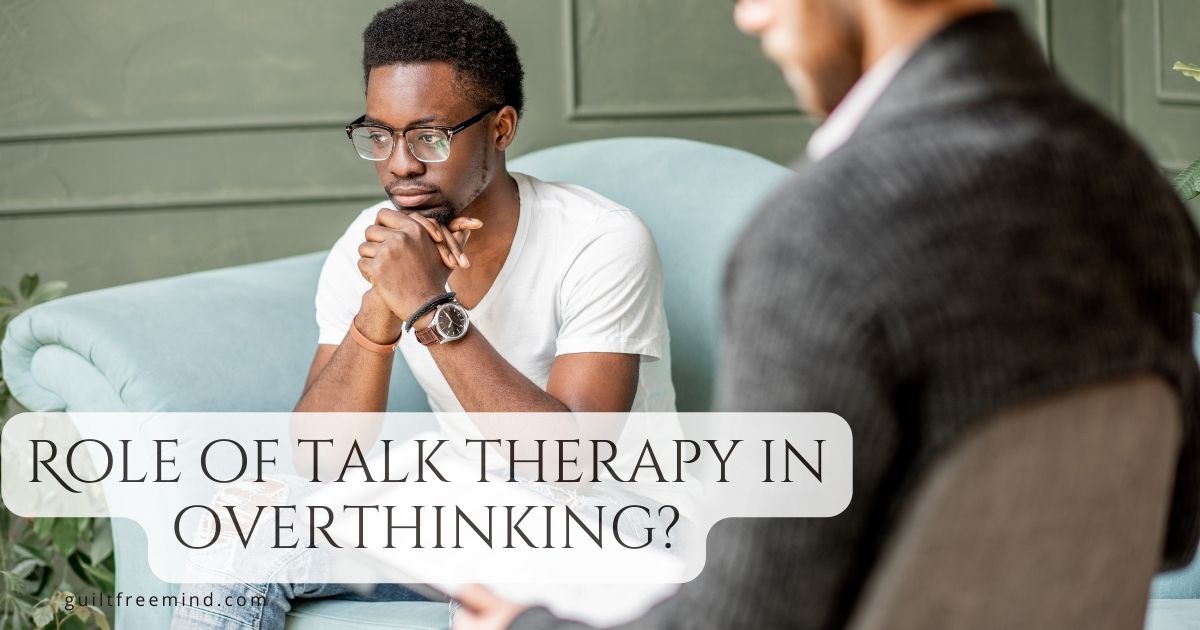
A safe, confidential space
Many overthinkers have never said their loops out loud. Doing so with someone trained and non-judgemental can be a relief in itself, and it makes the patterns easier to see.
A strong working relationship
Across hundreds of studies, the quality of the relationship between client and therapist (often called the “therapeutic alliance”) is one of the most consistent predictors of how much people benefit (Flückiger et al., 2018). Feeling understood and working towards shared goals really matters.
Spotting the patterns
Therapy helps you notice what sets off your overthinking, what the loops sound like, and what keeps them going, such as checking, reassurance-seeking or avoiding decisions.

Testing unhelpful beliefs
Many overthinkers hold beliefs like “If I worry enough, I’ll be prepared” or “If I stop thinking about it, something bad will happen”. Therapy helps you examine these beliefs and test whether they are true.

Changing your relationship with thoughts
Rather than arguing with every thought, some therapies teach you to see thoughts as passing events in the mind, which you do not have to follow.
Building new habits
You practise concrete skills, such as worry postponement, problem-solving and shifting attention, until they become second nature.
Which Types of Talk Therapy Help Overthinking?

| Therapy | What it focuses on | Evidence for overthinking |
|---|---|---|
| Cognitive behavioural therapy (CBT) | Changing unhelpful thoughts and behaviours | Strongest overall evidence |
| Rumination-focused CBT (RFCBT) | Shifting from abstract “why” thinking to concrete, helpful thinking | Designed for rumination; good trial results |
| Metacognitive therapy (MCT) | Changing beliefs about worrying and thinking | Promising, growing evidence |
| Mindfulness-based cognitive therapy (MBCT) | Noticing thoughts without getting caught up in them | Good evidence, especially for preventing depressive relapse |
| Acceptance and commitment therapy (ACT) | Accepting difficult thoughts while acting on your values | Good evidence for a range of problems |
| Interpersonal therapy (IPT) | Relationships, conflicts and life transitions | Effective for depression; useful when overthinking centres on relationships |
| Psychodynamic therapy | Understanding deeper patterns from the past | Effective for depression and anxiety; less focused on rumination itself |
Cognitive behavioural therapy (CBT)
CBT helps you notice the link between thoughts, feelings and behaviour, and gives you practical tools to test and change unhelpful patterns. A large review of meta-analyses found strong support for CBT across many problems, especially anxiety disorders (Hofmann et al., 2012). For generalised anxiety, where worry is the main symptom, psychological treatments (mostly CBT) have large effects compared with no treatment (Covin et al., 2008; Cuijpers et al., 2014). Our guide to cognitive behavioural therapy explains how it works.
Rumination-focused CBT
Developed by psychologist Edward Watkins, rumination-focused CBT teaches people to notice when they slip into abstract, evaluative thinking (“Why am I like this?”) and to switch to concrete, practical thinking (“What exactly happened, and what can I do next?”). In a randomised trial with people whose depression had not fully lifted, adding rumination-focused CBT to usual care reduced both rumination and depressive symptoms more than usual care alone (Watkins et al., 2011).
Metacognitive therapy (MCT)
Metacognitive therapy, developed by Adrian Wells, focuses less on what you think and more on how you think: your beliefs about worry and your habit of dwelling on thoughts (Wells, 2009). A meta-analysis found that MCT was effective for anxiety and depression, with promising results compared with other therapies, although more research is still needed (Normann & Morina, 2018).
Mindfulness-based cognitive therapy (MBCT)
MBCT combines mindfulness practice with ideas from CBT. A review of studies on how mindfulness programmes work found that reductions in rumination and worry were among the key reasons people improved (Gu et al., 2015). In a large analysis of individual patient data, MBCT reduced the risk of depressive relapse compared with people who did not receive it (Kuyken et al., 2016).
Acceptance and commitment therapy (ACT)
ACT helps you make room for difficult thoughts and feelings without letting them run your life, while acting on what matters to you. A meta-analysis found ACT more effective than waiting-list and placebo conditions, and comparable to established treatments (A-Tjak et al., 2015).
Interpersonal therapy (IPT)
IPT focuses on relationships, roles and life changes. It is an effective treatment for depression (Cuijpers et al., 2011) and can be a good fit when your overthinking centres on conflicts, grief or relationship changes. If your worries are mainly about a partner, see our guide to overthinking in a relationship.
Psychodynamic therapy
Psychodynamic therapy explores how past experiences and hidden patterns shape the present. Research shows it can be effective for depression and anxiety, and that its benefits often last after therapy ends (Shedler, 2010). It is less directly focused on stopping thought loops, but can help if your overthinking is rooted in early experiences.
What about DBT and person-centred therapy?
Dialectical behaviour therapy (DBT) was developed mainly for intense emotions and self-harm, especially in borderline personality disorder. Its mindfulness and emotion-regulation skills can help overthinkers, but it is not a first-line treatment for overthinking alone. Person-centred (humanistic) therapy offers a warm, accepting space, which many people value, though there is less research on it for rumination specifically.
What Does the Research Say?

- A 2025 analysis of 55 randomised trials found that CBT reduced repetitive negative thinking, rumination and worry, and that therapies designed specifically to target these thinking habits worked best (Stenzel et al., 2025).
- A meta-analysis of CBT for depression found that it reduced repetitive negative thinking, not just low mood (Spinhoven et al., 2018).
- A systematic review of treatments for rumination and worry found that CBT and mindfulness-based approaches both helped (Querstret & Cropley, 2013).
In short: talk therapy works for overthinking, and therapies that target the thinking habit itself seem to work best.
Does the Effect of Talk Therapy Last?
One of the strengths of talk therapy is that it teaches skills you keep. For depression, the benefits of CBT tend to last after treatment ends, and people who received CBT were less likely to relapse than people who stopped taking medication (Cuijpers et al., 2013). Mindfulness-based cognitive therapy also lowers the risk of future depressive episodes (Kuyken et al., 2016), and the benefits of psychodynamic therapy often continue to grow after therapy finishes (Shedler, 2010).
That does not mean overthinking will never return. Most people find it comes back during stressful times, but they now know what to do about it.
Does Online Therapy Work?
Yes, for many people. Internet-delivered CBT, especially when guided by a therapist, has good evidence for anxiety and depression and can be more accessible and affordable (Andersson et al., 2019). Video sessions with a qualified therapist can work just as well as meeting in person for many people.
Possible Drawbacks of Talk Therapy for Overthinking
Talk therapy is helpful, but it is not perfect. It is worth knowing the challenges in advance.
Finding the right fit
You may not click with the first therapist you meet. Because the relationship matters so much (Flückiger et al., 2018), it is okay to try someone else.
Time and commitment
Therapy usually means weekly sessions for several months, plus practice in between.
Cost
Private therapy can be expensive. Look for sliding-scale fees, hospital or university clinics, workplace programmes, government services and free helplines.
It can feel harder before it feels better
Talking about painful patterns can stir things up at first. This is common and usually temporary. Tell your therapist if you are struggling.
Some people stop early
On average, about one in five people drop out of therapy before finishing (Swift & Greenberg, 2012). If something is not working, saying so is better than quietly stopping.

How to Get the Most Out of Talk Therapy
- Be honest, including about things that feel embarrassing, and about how therapy is going.
- Set clear goals: for example, “spend less than 30 minutes a day replaying conversations”.
- Do the practice between sessions. Most of the change happens in daily life, not just in the room.
- Try not to skip sessions. Regularity builds momentum.
- Keep realistic expectations. Progress is rarely a straight line.
- Lean on your support system and look after sleep, movement and rest.
- Ask about medication if you also have significant depression or anxiety; sometimes a combination works best.

How to Find a Therapist
- In India: look for a clinical psychologist registered with the Rehabilitation Council of India (RCI), a counselling psychologist with recognised training, or a psychiatrist. Government hospitals and medical colleges often have psychology and psychiatry departments, and Tele-MANAS (14416) offers free support and can guide you to services.
- In England: NHS Talking Therapies services offer free CBT-based therapy, and you can often refer yourself.
- Elsewhere: ask your doctor, check your national psychological association’s directory, or look for university training clinics with lower fees.
When you first meet a therapist, it is fine to ask about their training, the approach they use, how many sessions they expect and what the fees are.
Things You Can Do Alongside Therapy
Therapy works best when it is combined with everyday habits that calm the mind:
- set a daily “worry time” and postpone worries until then;
- move your body, ideally outdoors;
- write thoughts down instead of turning them over in your head;
- practise slow deep breathing or progressive muscle relaxation;
- protect your sleep with a wind-down routine.
Our guide on how to stop overthinking has twelve science-backed strategies to try.

When to Seek Help Urgently
Please contact a professional promptly if overthinking comes with feeling hopeless, being unable to function at work or home, using alcohol or drugs to switch your mind off, or thoughts of harming yourself.
If you are struggling right now, you can reach out today: India: Tele-MANAS 14416 or 1-800-891-4416 (free, 24/7) · US: call or text 988 · UK: Samaritans 116 123 · In an emergency, call your local emergency number (112 in India).
Conclusion
So, is talk therapy good for overthinking? The research says yes, especially therapies that target the thinking habit itself, such as CBT, rumination-focused CBT, metacognitive therapy and mindfulness-based cognitive therapy. Therapy will not switch your thoughts off, and it asks for time and effort. What it can give you is a new relationship with your mind: the ability to notice a loop, step out of it, and get on with your life.
If you would like gentle weekly ideas on calming an anxious mind, join the Guilt Free Mind newsletter.
See you in my next blog post,
Dr. Shruti
Frequently Asked Questions
Cognitive behavioural therapy (CBT) has the strongest overall evidence. Therapies designed specifically for repetitive thinking, such as rumination-focused CBT, metacognitive therapy and mindfulness-based cognitive therapy, appear to work especially well. The best choice also depends on you and on finding a therapist you trust.
Yes. A therapist can help you understand what triggers your overthinking, test the beliefs that keep it going, and practise skills to step out of thought loops. Most people do not stop overthinking completely, but it becomes much shorter, less frequent and easier to manage.
It varies. Structured therapies such as CBT often run for around 8 to 20 weekly sessions, and many people notice changes within the first couple of months. Longer-standing patterns or other conditions may need more time.
For many people, yes. Internet-delivered CBT, especially when guided by a therapist, has good evidence for anxiety and depression, and video sessions with a qualified therapist can work well.
Yes. You do not need a diagnosis to seek help. If overthinking affects your sleep, work, relationships or mood, or takes up a lot of your day, talking to a professional is a sensible step.
Talking about painful patterns can feel uncomfortable at first, and simply going over problems without learning new skills is unlikely to help. Good therapy is structured and skills-based. If you feel worse over several sessions, tell your therapist or consider a different approach.
About the Author
Dr. Shruti Bhattacharya is the founder and heart of Guilt Free Mind, where she combines a Ph.D. in Immunology with training in psychology to deliver science-backed mental health strategies. Her mission is to empower readers to overcome stress, anxiety, and emotional challenges with practical, evidence-based tools. Dr. Bhattacharya’s unique blend of expertise and empathy shapes her approach to wellness:
- Academic & Scientific Rigor – Holding a Ph.D. in Immunology and a Bachelor’s degree in Microbiology, Dr. Bhattacharya brings a deep understanding of the biological foundations of mental health, including the gut-brain connection. Her completion of psychology courses, such as The Psychology of Emotions: An Introduction to Embodied Cognition, from University of Cambridge enhances her ability to bridge science and emotional well-being.
- Dedicated Mental Health Advocacy – With over 15 years of experience, Dr. Bhattacharya has supported hundreds of individuals through online platforms and personal guidance, helping them navigate mental health challenges with actionable strategies. Her work has empowered readers to adopt holistic practices, from mindfulness to nutrition, for lasting resilience.
- Empathetic Connection to Readers – Known for her compassionate and relatable voice, Dr. Bhattacharya is a trusted guide in mental health, turning complex research into accessible advice. Her personal journey as a trauma survivor fuels her commitment to helping others find calm and confidence.
- Lifelong Commitment to Wellness – Dr. Bhattacharya lives the principles she shares, integrating science-based habits like balanced nutrition and stress management into her daily life. Her personal exploration of mental health strategies inspires Guilt Free Mind’s practical, reader-focused content.

Disclaimer: This content is for informational purposes only and is not a substitute for professional medical advice.
References
- A-Tjak, J. G. L., Davis, M. L., Morina, N., Powers, M. B., Smits, J. A. J., & Emmelkamp, P. M. G. (2015). A meta-analysis of the efficacy of acceptance and commitment therapy for clinically relevant mental and physical health problems. Psychotherapy and Psychosomatics, 84(1), 30–36. https://doi.org/10.1159/000365764
- Andersson, G., Titov, N., Dear, B. F., Rozental, A., & Carlbring, P. (2019). Internet-delivered psychological treatments: From innovation to implementation. World Psychiatry, 18(1), 20–28. https://doi.org/10.1002/wps.20610
- Covin, R., Ouimet, A. J., Seeds, P. M., & Dozois, D. J. A. (2008). A meta-analysis of CBT for pathological worry among clients with GAD. Journal of Anxiety Disorders, 22(1), 108–116. https://doi.org/10.1016/j.janxdis.2007.01.002
- Cuijpers, P., Geraedts, A. S., van Oppen, P., Andersson, G., Markowitz, J. C., & van Straten, A. (2011). Interpersonal psychotherapy for depression: A meta-analysis. American Journal of Psychiatry, 168(6), 581–592. https://doi.org/10.1176/appi.ajp.2010.10101411
- Cuijpers, P., Hollon, S. D., van Straten, A., Bockting, C., Berking, M., & Andersson, G. (2013). Does cognitive behaviour therapy have an enduring effect that is superior to keeping patients on continuation pharmacotherapy? A meta-analysis. BMJ Open, 3(4), e002542. https://doi.org/10.1136/bmjopen-2012-002542
- Cuijpers, P., Sijbrandij, M., Koole, S., Huibers, M., Berking, M., & Andersson, G. (2014). Psychological treatment of generalized anxiety disorder: A meta-analysis. Clinical Psychology Review, 34(2), 130–140. https://doi.org/10.1016/j.cpr.2014.01.002
- Ehring, T., & Watkins, E. R. (2008). Repetitive negative thinking as a transdiagnostic process. International Journal of Cognitive Therapy, 1(3), 192–205. https://doi.org/10.1521/ijct.2008.1.3.192
- Flückiger, C., Del Re, A. C., Wampold, B. E., & Horvath, A. O. (2018). The alliance in adult psychotherapy: A meta-analytic synthesis. Psychotherapy, 55(4), 316–340. https://doi.org/10.1037/pst0000172
- Gu, J., Strauss, C., Bond, R., & Cavanagh, K. (2015). How do mindfulness-based cognitive therapy and mindfulness-based stress reduction improve mental health and wellbeing? A systematic review and meta-analysis of mediation studies. Clinical Psychology Review, 37, 1–12. https://doi.org/10.1016/j.cpr.2015.01.006
- Hofmann, S. G., Asnaani, A., Vonk, I. J. J., Sawyer, A. T., & Fang, A. (2012). The efficacy of cognitive behavioral therapy: A review of meta-analyses. Cognitive Therapy and Research, 36(5), 427–440. https://doi.org/10.1007/s10608-012-9476-1
- Kuyken, W., Warren, F. C., Taylor, R. S., Whalley, B., Crane, C., Bondolfi, G., et al. (2016). Efficacy of mindfulness-based cognitive therapy in prevention of depressive relapse: An individual patient data meta-analysis from randomized trials. JAMA Psychiatry, 73(6), 565–574. https://doi.org/10.1001/jamapsychiatry.2016.0076
- Normann, N., & Morina, N. (2018). The efficacy of metacognitive therapy: A systematic review and meta-analysis. Frontiers in Psychology, 9, 2211. https://doi.org/10.3389/fpsyg.2018.02211
- Querstret, D., & Cropley, M. (2013). Assessing treatments used to reduce rumination and/or worry: A systematic review. Clinical Psychology Review, 33(8), 996–1009. https://doi.org/10.1016/j.cpr.2013.08.004
- Shedler, J. (2010). The efficacy of psychodynamic psychotherapy. American Psychologist, 65(2), 98–109. https://doi.org/10.1037/a0018378
- Spinhoven, P., Klein, N., Kennis, M., Cramer, A. O. J., Siegle, G., Cuijpers, P., Ormel, J., Hollon, S. D., & Bockting, C. L. (2018). The effects of cognitive-behavior therapy for depression on repetitive negative thinking: A meta-analysis. Behaviour Research and Therapy, 106, 71–85. https://doi.org/10.1016/j.brat.2018.04.002
- Stenzel, K. L., Keller, J., Kirchner, L., Rief, W., & Berg, M. (2025). Efficacy of cognitive behavioral therapy in treating repetitive negative thinking, rumination, and worry: A transdiagnostic meta-analysis. Psychological Medicine. https://doi.org/10.1017/S0033291725000017
- Swift, J. K., & Greenberg, R. P. (2012). Premature discontinuation in adult psychotherapy: A meta-analysis. Journal of Consulting and Clinical Psychology, 80(4), 547–559. https://doi.org/10.1037/a0028226
- Watkins, E. R., Mullan, E., Wingrove, J., Rimes, K., Steiner, H., Bathurst, N., Eastman, R., & Scott, J. (2011). Rumination-focused cognitive-behavioural therapy for residual depression: Phase II randomised controlled trial. British Journal of Psychiatry, 199(4), 317–322. https://doi.org/10.1192/bjp.bp.110.090282
- Wells, A. (2009). Metacognitive Therapy for Anxiety and Depression. Guilford Press.
