

Last Updated On: December 13th, 2025
If you’re looking for solid ways to tackle persistent worries or low moods, cognitive behavioral therapy (CBT) is one of the best-researched places to start. As a mental health blogger, I draw from reliable sources to explain how CBT can help reframe those tricky thought patterns into something more manageable. Cognitive behavioral therapy connects thoughts, feelings, and behaviors, giving you actionable ways to make changes.
This guide dives deep into cognitive behavioral therapy, from its background to real-world uses, supported by studies and stories. We’ll touch on how does CBT work for anxiety, CBT techniques for depression at home, and other specifics. With examples, data, and tips, it’s designed to help you apply it right away.
Table of Contents
At a Glance: Cognitive Behavioral Therapy (CBT)
| Key Aspect | Details |
|---|---|
| What is CBT? | A structured, goal-oriented therapy focusing on changing negative thought patterns and behaviors to improve mental health (Gautam et al., 2020). |
| Best For | Anxiety disorders (e.g., GAD, social anxiety, panic), depression, OCD, PTSD; effective as standalone or add-on to meds. |
| Core Techniques | Cognitive restructuring, exposure therapy, behavioral activation, thought records, relaxation training. |
| Duration & Sessions | Typically 5-20 sessions, 45-60 minutes each; short-term with homework for self-practice. |
| Benefits | Noticeable symptom reduction for many people, lasting relief, lower relapse than meds alone, builds lifelong skills. |
| Evidence | Backed by many meta-analyses, with moderate-to-large effects for anxiety disorders and PTSD; recommended in major treatment guidelines; a small 2025 trial of CBT adapted for people at high risk of psychosis showed early promise for depression and anxiety symptoms (Newman-Taylor et al., 2025). |
| Potential Drawbacks | Temporary discomfort from exposures; requires commitment to homework; not ideal for severe crises alone. |
| Cost & Access | Often covered by US insurance; find via ABCT.org; online options available for self-help. |
What is Cognitive Behavioral Therapy?
Cognitive behavioral therapy is a structured psychotherapy that targets the links between thoughts, emotions, and behaviors to ease mental health issues (Mayo Clinic, 2023). It helps spot negative thought patterns and swap them with balanced ones using methods like cognitive restructuring. Different from therapies that explore the past extensively, CBT is present-focused and short-term, usually 5-20 sessions, ideal for anxiety, depression, and beyond.
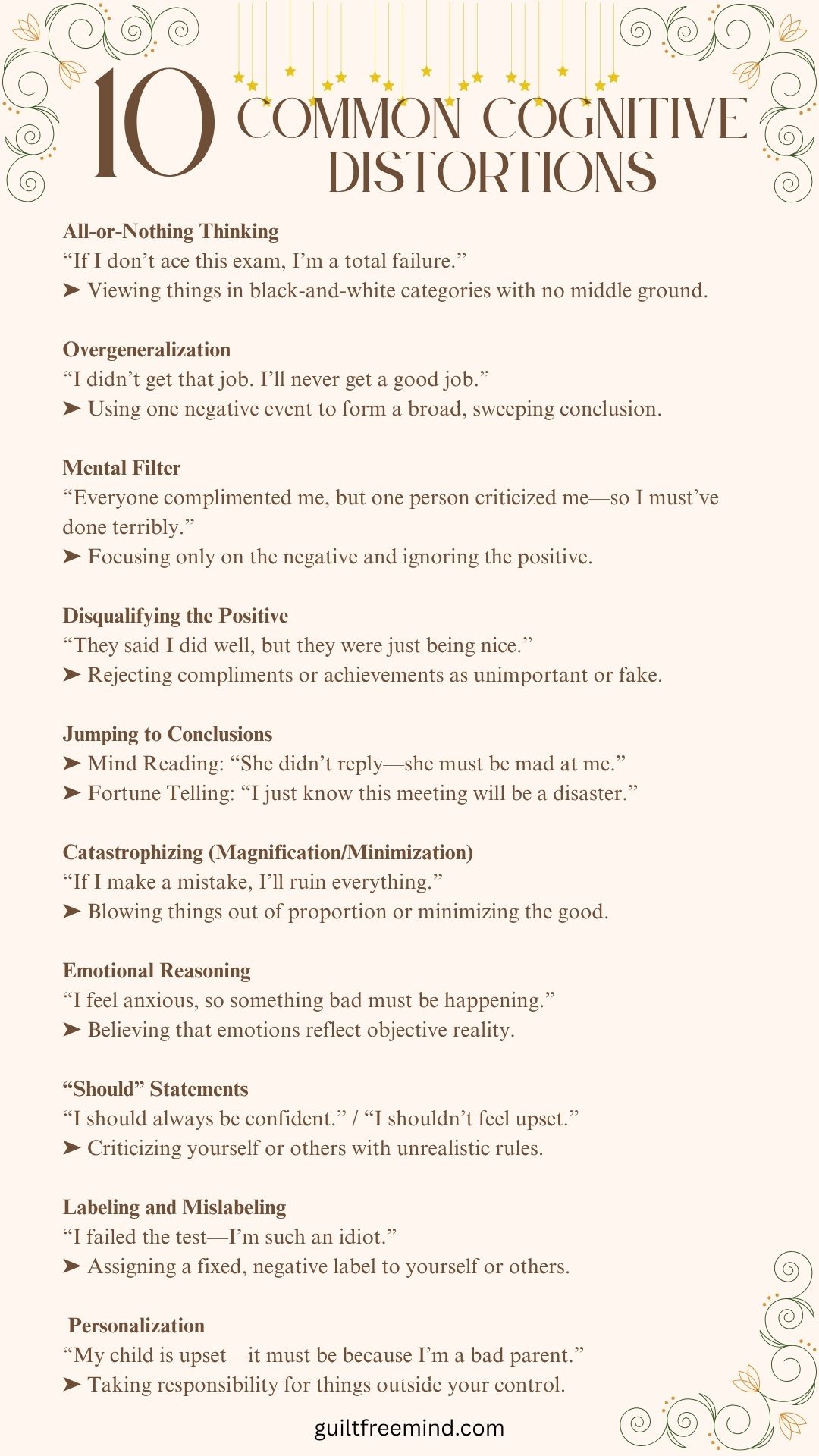
Central to it are automatic thoughts—those fast ideas that pop up and affect how we feel—and cognitive distortions, like jumping to conclusions. In therapist-guided sessions, you might use thought records for journaling to log and question these. As evidence-based therapy, it’s widely backed for mental health treatment.
The American Psychological Association’s guide for patients gives a plain-language overview of what CBT involves (APA). For DIY approaches, use CBT worksheets to support home practice.
Illustrative Example: Overcoming Catastrophizing with CBT
Illustrative example (a composite, not a real reader): Meet Sarah, who struggles with ongoing worry and generalized anxiety. She often fell into catastrophizing patterns, where minor setbacks spiraled into overwhelming fears—for instance, thinking, “This one mistake at work ruins my entire career and everything I’ve built.” Through applying Cognitive Behavioral Therapy (CBT) techniques, Sarah began identifying these distorted thoughts by journaling her triggers and evidence. She reframed them with balanced, fact-based perspectives, such as, “This is just a single error; I’ve had many successes before, and I can learn from it to improve.” Over a few weeks of consistent practice, including challenging her assumptions during daily routines, Sarah noticed a significant boost in her confidence and daily life—reducing rumination, improving sleep, and allowing her to handle challenges more resiliently. This example shows how CBT’s structured approach can transform anxiety into actionable growth.
Cleveland Clinic’s patient guide (updated July 2026) describes CBT as a structured, goal-focused talk therapy that helps you notice and change unhelpful thoughts, emotions and behaviors. It usually runs over a limited number of sessions, can be used on its own or alongside medication, and works best when you practice the skills between sessions — progress takes time, and it is one option among many rather than the right fit for everyone.
History of Cognitive Behavioral Therapy
The history of cognitive behavioral therapy traces to the mid-20th century, blending behaviorism and cognitive insights, with key origins in the works of Albert Ellis and Aaron Beck. Ellis developed Rational Emotive Behavior Therapy (REBT) in the 1950s, first announced in 1956. REBT stressed how irrational beliefs cause emotional distress, challenging them through rational analysis. Ellis’s 1962 book “Reason and Emotion in Psychotherapy” marked a milestone, outlining REBT’s focus on disputing unhelpful thoughts.
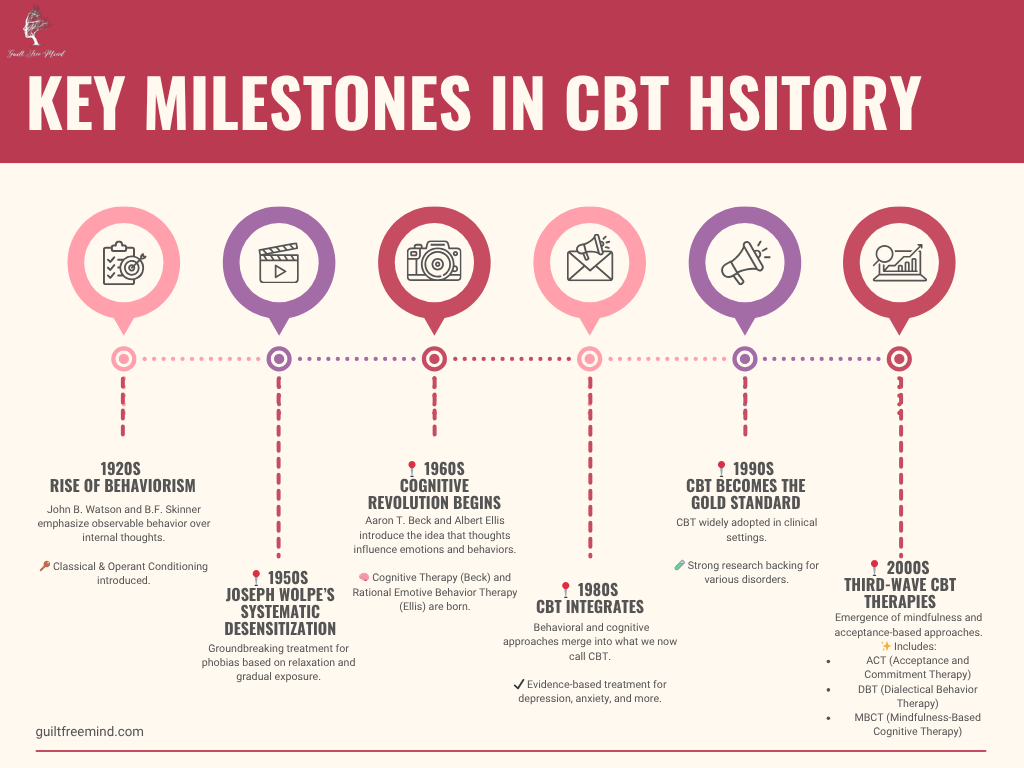
Aaron Beck, shifting from psychoanalysis in the late 1950s, noticed patients’ thoughts weren’t as unconscious as Freud claimed. This led to cognitive therapy, detailed in his 1967 publication, with the first treatment manual for depression in 1979. Often called the father of cognitive behavioral therapy, Beck and his colleagues traced its philosophical roots back to the Stoic philosophers (Beck et al., 1979). His cognitive model emphasized the triad of negative views on self, world, and future.
Roots in Behaviourism/ First Wave
Roots in behaviorism include early 20th-century work by John B. Watson and Rosalie Rayner on conditioning (1920), Mary Cover Jones on unlearning fears (1924), and Joseph Wolpe’s systematic desensitization (1950s), based on Pavlov. B.F. Skinner’s operant conditioning and Bandura’s social learning theory (1969) added layers. This “first wave” focused on behaviors.
Second Wave
The “second wave” in the 1960s-1970s integrated cognition as behaviorism waned during the cognitive revolution, with Ellis and Beck leading. By the 1980s-1990s, mergers formed modern cognitive behavioral therapy, like treatments for panic by Clark and Barlow. The “third wave” brought mindfulness, including Dialectical Behavior Therapy (DBT) and Acceptance and Commitment Therapy (ACT), which Hayes and Hofmann describe as paying more attention to the context and function of thoughts and feelings, adding acceptance, mindfulness and other experiential strategies to traditional techniques (Hayes & Hofmann, 2017)
Philosophical ties include Stoicism (Epictetus) and Buddhism, influencing DBT and mindfulness-based cognitive therapy. Milestones: in 1977, the first major trial comparing cognitive therapy with antidepressant medication for depression found cognitive therapy more effective, and CBT has since been tested in more than 2,000 clinical trials (Beck & Fleming, 2021). Cognitive behavioral therapy evolved into a versatile, evidence-based powerhouse.
CBT for Beginners: Your First Steps
CBT is like a mental workout: It trains you to spot unhelpful thoughts and replace them with balanced ones. Start with basics: Identify a “hot thought” (e.g., “I’m a failure because I messed up once”) and question it with evidence (e.g., “What successes have I had?”). Use free tools like our Thought Record Worksheet to log daily.
How Does Cognitive Behavioral Therapy Work for Anxiety?
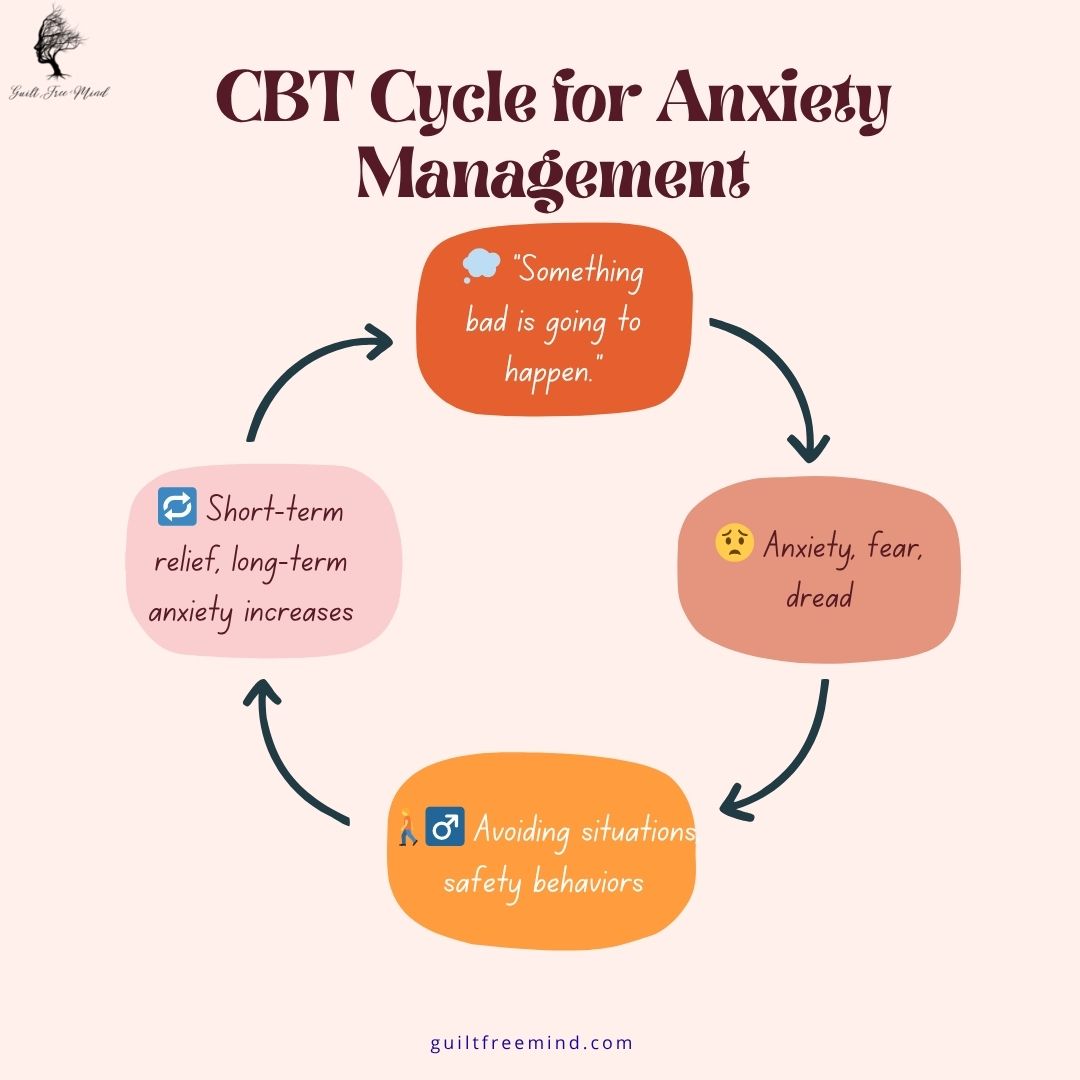
Cognitive behavioral therapy addresses anxiety by disrupting the thought-anxiety loop. It involves spotting automatic thoughts, then cognitive restructuring to test their truth (OCD UK 2023). Exposure therapy builds resilience by facing fears step-by-step.
How well does it work? Across 87 studies of CBT for anxiety disorders, about half of people (49.5%) had responded by the end of treatment, rising to 53.6% at follow-up (Loerinc et al., 2015), and a meta-analysis of 100 studies found an average remission rate of 51% (Springer et al., 2018). In a small controlled trial in UK primary care, CBT adapted for people at high risk of psychosis kept more people in therapy and showed early signs of better depression and anxiety outcomes (Newman-Taylor et al., 2025). CBT can also work through a phone: in a randomized trial of 256 adults with generalized anxiety disorder, a smartphone CBT program (Daylight) reduced anxiety and worry more than a waitlist did (Carl et al., 2020; the trial was funded by the app’s maker).
Research Spotlight: Long-Term Benefits of Imaginal Exposure in GAD Treatment
For Generalized Anxiety Disorder (GAD), treatment can include imaginal exposure: vividly imagining the worst-case version of a worry and staying with the anxiety instead of avoiding it. A review by Kaczkurkin and Foa notes that in one trial, CBT that included imaginal exposure led to better functioning 12 months later than applied relaxation or non-directive therapy (Borkovec & Costello, 1993), but a later study comparing cognitive therapy, applied relaxation with a form of imaginal exposure, and their combination found no differences between them, so more research on exposure for GAD is still needed (Kaczkurkin & Foa, 2015).
Cognitive Behavioral Therapy Techniques for Depression: Practical Self-Help Strategies
For depression, CBT is a well-established, evidence-based treatment built on structured techniques such as behavioral activation and cognitive restructuring (Chand et al., StatPearls). In a small 2025 trial with college students, group CBT adapted with familiar idioms led to lower depression scores three months after treatment than standard group CBT, with the clearest difference in sleep problems (Lin et al., 2025). Home-based cognitive behavioral therapy techniques help combat depression’s inertia. Behavioral activation means planning activities, like short walks, to spark momentum. Thought records involve noting situations, thoughts, and counter-evidence.
Reviews of hundreds of studies agree that CBT has one of the strongest evidence bases of any psychological therapy, with especially good support for anxiety disorders, depression and insomnia (Hofmann et al., 2012).
Published Case Study: Integrating ACT into CBT for GAD During a Pandemic
Published case study (Garner & Stuart, 2023): an adult man with long-standing excessive worry and generalized anxiety disorder received a manualized CBT program with Acceptance and Commitment Therapy (ACT) elements added: cognitive restructuring to challenge anxious thoughts, plus mindfulness and acceptance skills such as cognitive defusion (noticing “I’m having the thought that…”). Partway through, the COVID-19 pandemic moved his sessions from in-person to telehealth.
From the start to the end of treatment, his anxiety, worry, low mood and difficulty managing emotions all fell significantly. His symptoms rose briefly when sessions moved to telehealth, then quickly resumed their downward trend, and his relationship with the therapist did not suffer (Garner & Stuart, 2023). One case cannot prove a treatment works, but it shows how CBT and ACT skills can be combined in practice.
Quick-Start Checklist for Home CBT:
- Spot one negative thought each day.
- Write evidence for and against it.
- Craft a balanced alternative.
- Do one mood-boosting activity.
- Track progress in a journal.

Benefits of Cognitive Behavioral Therapy for Social Anxiety Disorder: Lasting Relief and Skill-Building
Social Anxiety Disorder (SAD) often leads to intense fear of social situations, resulting in avoidance that can severely impact daily life, relationships, and opportunities. Cognitive Behavioral Therapy (CBT) addresses this by focusing on exposure techniques and cognitive restructuring, helping individuals confront fears head-on while reframing negative thoughts (Curtiss et al., 2021). This structured approach boosts social confidence by gradually reducing avoidance behaviors, leading to lasting improvements in how people interact with the world.
Key Benefits of CBT for Social Anxiety
Rapid Symptom Reduction
CBT often delivers noticeable relief in 12-16 sessions, with reductions in anxiety symptoms, physical reactions like blushing or palpitations, and avoidance tendencies. Meta-analyses show CBT’s superiority over wait-list controls or relaxation therapies, with effect sizes indicating strong outcomes for both exposure and cognitive components.
Lasting Relief and Improved Functioning
Long-term follow-ups at 12 months reveal sustained benefits, including fewer relapses and enhanced social resilience, outperforming nondirective therapies. Patients report better overall functioning in social settings, such as improved performance at work or school.
Stronger Relationships and Quality of Life
By challenging catastrophic beliefs (e.g., “Everyone will reject me if I make a mistake”), and working on perfectionism, CBT fosters more authentic connections and a fuller life, reducing isolation and building interpersonal skills.
Skill-Building for Independence
Tools like thought records and hierarchical exposure empower self-management. For instance, initial exercises might involve recording conversations to check for perceived errors, progressing to “social cost” tasks like intentional public embarrassment to prove tolerability.
In the United States, about 7.1% of adults have social anxiety disorder in a given year, and it is most common among younger adults (9.1% of 18–29-year-olds), according to National Institute of Mental Health survey data from 2001–2003 (NIMH). CBT’s skill-building can help prevent long-term isolation.
Exposure therapy is grounded in learning theory: by facing a feared situation without avoidance or subtle safety behaviours, you gather new experiences of safety that gradually weaken the fear. For social anxiety disorder, individual CBT with exposure is among the most effective treatments studied (Mayo-Wilson et al., 2014).
Cognitive Behavioral Therapy vs Medication for Panic Attacks: Weighing Options for Effective Management
When dealing with panic attacks, choosing between Cognitive Behavioral Therapy (CBT), medication, or other approaches involves considering factors like speed of relief, long-term sustainability, and potential risks. CBT emphasizes skill-building through exposure and cognitive tools to manage symptoms, while medication offers quick chemical intervention but may not address root causes. Psychoanalysis, on the other hand, delves into unconscious patterns for deeper insights. Understanding these options helps tailor treatment to individual needs, often combining methods for optimal results.
CBT vs. Medication vs. Psychoanalysis
| Therapy/Treatment | Duration | Focus | Effectiveness | Side Effects |
|---|---|---|---|---|
| CBT | Short (8-12 weeks) | Thoughts and behaviors, with exposure to build skills | Well supported for anxiety and panic; gains tend to last after treatment ends, so relapse is lower; especially strong for panic (through interoceptive exposure). | Minimal, though temporary discomfort from facing fears. |
| Medication (e.g., SSRIs or Benzodiazepines) | Ongoing | Symptom relief via brain chemistry | Quick onset but high relapse upon discontinuation; effective short-term but less for root causes. | Drowsiness, dependency, withdrawal risks. |
| Psychoanalysis | Long (years) | Unconscious conflicts and past experiences | Deeper insights for some, longer-lasting in complex cases; less empirical data for panic. | Emotional intensity, potential for prolonged distress without quick relief. |
Illustrative example (a composite, not a real reader): John has frequent panic attacks. He combines CBT’s exposure techniques (for example, deliberately bringing on sensations like dizziness so they lose their power) with short-term medication for initial relief, and over time learns to manage panic without long-term dependence on medication.
In the US, about 2.7% of adults have panic disorder in a given year, and anxiety disorders overall are more common in women (23.4%) than in men (14.3%), according to the National Institute of Mental Health (survey data from 2001–2003: panic disorder; any anxiety disorder). CBT is a first-line treatment for panic disorder, and its benefits tend to last after treatment ends.
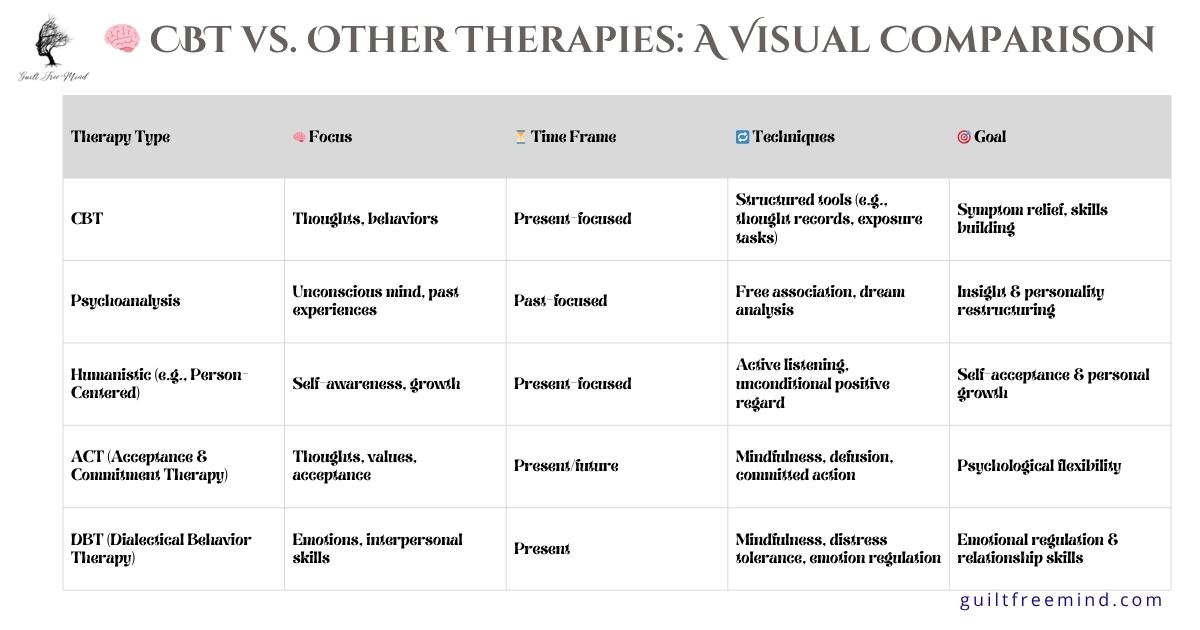
Cognitive Behavioral Therapy vs. Other Therapies
Cognitive Behavioral Therapy (CBT) is renowned for its structured, evidence-based approach to mental health challenges, but comparing it to alternatives like mindfulness-based therapies (e.g., MBSR) and Dialectical Behavior Therapy (DBT) reveals unique strengths. While CBT targets specific thought-behavior links for quick results, mindfulness emphasizes present-moment acceptance, and DBT focuses on emotion regulation.
CBT vs. Mindfulness-Based Therapies
| Aspect | CBT | Mindfulness-Based Therapies | DBT |
|---|---|---|---|
| Focus | Challenge thoughts and behaviors for targeted change. | Present-moment awareness and acceptance to reduce stress. | Emotional regulation, interpersonal skills, group therapy |
| Duration | 5-20 sessions, short-term and goal-oriented. | 8 weeks (group) or ongoing practice. | 1 year+ with modules and group support. |
| Techniques | Restructuring, exposure, homework assignments; culturally adapted group formats improve long-term depression outcomes, including sleep | Meditation, body scans, mindful movement. | Distress tolerance, crisis skills, group therapy. |
| Best For | Anxiety, depression with specific triggers. | Stress reduction, chronic pain, general well-being (Better Health, 2023). | Borderline personality, self-harm, strong for instability. |
| Evidence | Strong for anxiety disorders and depression. | Good for relapse prevention, comparable in some outcomes. | Comparable to CBT in outcomes but superior for emotions. |
| Pros | Action-oriented, empirical, quick results. | Builds long-term calm, no confrontational elements. | Group support, comprehensive crisis tools. |
| Cons | Can feel intensive or homework-heavy. | Less targeted for severe, acute symptoms. | Intensive and time-consuming. |
These tables underscore CBT’s efficiency for anxiety-related issues, while mindfulness and DBT add complementary elements like acceptance and group dynamics. If you are supporting someone through low mood, our guide on helping someone with depression may also help.
Reviews of many meta-analyses find that CBT has some of its strongest support for anxiety disorders (Hofmann et al., 2012). That matters because anxiety disorders are common: about 31.1% of US adults experience one at some point in their lives (NIMH).
Core Principles and Techniques in Cognitive Behavioral Therapy
At its foundation, Cognitive Behavioral Therapy (CBT) operates on the idea that psychological issues arise from faulty thinking patterns, learned unhelpful behaviors, and problematic core beliefs about oneself and the world. By addressing these through structured strategies, individuals can learn healthier coping mechanisms, relieving symptoms and improving emotional health. This evidence-based approach is time-limited and goal-focused, making it accessible for various conditions.
Summarizing the Different CBT Techniques
Before diving into specific techniques, note that CBT typically involves 5-20 sessions, starting with issue identification and progressing to skill-building for independence.
| Technique | Condition | Example |
|---|---|---|
| Cognitive Restructuring | Anxiety/Depression | Reframe “I always fail” with evidence-based alternatives, using thought records to challenge distortions like all-or-nothing thinking. |
| Exposure Therapy | OCD/PTSD | Face triggers gradually, such as social situations for anxiety or trauma reminders for PTSD, to reduce fear through extinction learning. CBT-N applies this to nightmares for veterans, improving functioning |
| Behavioral Activation | Depression | Plan enjoyable or meaningful tasks to combat inactivity, breaking cycles of low mood. |
| Thought Records | General | Log thoughts, emotions, and evidence to identify and adjust unhelpful patterns. |
| Relaxation Training | Anxiety | Use deep breathing or progressive muscle relaxation during stress to manage physical symptoms. |
Illustrative scenario: a person with PTSD works through prolonged exposure, revisiting trauma memories step by step in a safe setting until they lose much of their power. Prolonged exposure is one of the best-supported treatments for PTSD (Powers et al., 2010).
Cognitive Behavioral Therapy for OCD and PTSD: Evidence-Based Approaches and Outcomes
Cognitive Behavioral Therapy (CBT) is a cornerstone for treating Obsessive-Compulsive Disorder (OCD) and Post-Traumatic Stress Disorder (PTSD), using targeted techniques to disrupt cycles of fear and avoidance (Kar, 2011, APA, 2023). For OCD, it focuses on embracing uncertainty; for PTSD, on reprocessing trauma. In one naturalistic study of 40 people with OCD, 33 showed reliable improvement after nine months of CBT, and for 23 of them the change was clinically significant (Gragnani et al., 2022).
For OCD, Exposure and Response Prevention (ERP) curbs rituals by exposing patients to fears without compulsions. For PTSD, prolonged exposure helps people revisit trauma memories and avoided situations safely, step by step; in a meta-analysis of 13 trials with 675 participants, it had a large effect compared with control conditions at the end of treatment (Hedges’ g = 1.08) and a medium-to-large effect at follow-up (g = 0.68) (Powers et al., 2010). Specialized variants exist too, such as CBT for nightmares (CBT-N): in a survey of US Veterans Affairs clinicians trained in it, 95% were still using it at least six months later, and most felt it reduced veterans’ nightmares and improved their sleep and trauma symptoms (Miller et al., 2026).
A key idea in OCD treatment: intrusive thoughts themselves are not the problem. It is the compulsions and avoidance used to neutralise them that keep the cycle going, and ERP helps break that link.
Illustrative scenarios: An OCD patient avoided compulsions through ERP, freeing up time and reducing anxiety; a veteran processed memories via prolonged exposure, cutting flashbacks.
Illustrative Scenarios: How Cognitive Behavioral Therapy Changes Lives
CBT’s impact shines through real-life applications, where individuals apply techniques to overcome challenges. Below are expanded scenarios and case studies, consolidated from various sources to provide relatable examples of everyday wins in managing anxiety, depression, and related issues.
CBT for Social Anxiety Disorder and Specific Phobia
Published case report (Tsitsas & Paschali, 2014): George, a 23-year-old student in Athens, faced escalating social anxiety and acrophobia, avoiding gatherings and heights, which derailed his plans. Over 20 CBT sessions using Clark and Wells’ model, he learned self-monitoring, cognitive restructuring (e.g., challenging “dangerous” thoughts), relaxation, assertiveness via role-playing, and hierarchical exposure (e.g., crossing bridges). His SPAI score dropped from 126 to 77 at follow-up, eliminating diagnoses and enabling confident travel and socializing.

Cognitive Behavioral Case Formulation for Adolescent Social Anxiety
Published case report (Xu & Zhang, 2025): Patient A, a middle-school boy, developed social anxiety after a conflict over a dormitory inspection, leading to avoidance, physical symptoms and disrupted studies. Over eight weekly sessions built on a cognitive-behavioral case formulation, treatment combined exposure, cognitive restructuring and dropping safety behaviors. His SCL-90 total score fell from 190 to 140, his SAS anxiety score from 65 to 49 and his social avoidance and distress (SAD) score from 20 to 14, and at three months his social adjustment had clearly improved.
Group CBT for Youth with Multiple Anxiety Disorders
Published case report (Lundkvist-Houndoumadi & Thastum, 2013): Erik, a 12-year-old with cognitive difficulties and multiple anxieties (GAD, phobias, social/separation), relied on his overprotective mother. In the “Cool Kids” program (10 group sessions), he used adapted cognitive restructuring, gradual exposure, assertiveness, and family training to reduce parental overprotectiveness. Symptoms decreased per ADIS-IV and SCAS, maintained at 3- and 15-month follow-ups.
Other Illustrative Examples (Composites)
- Lisa countered “unlovable” beliefs with journal evidence, reframing negative thoughts to build self-worth and reduce depression (Gautam et al., 2020).
- Tom built tolerance to crowds through exposure, challenging anxiety distortions for better social functioning.
- Catherine, a mom tested OCD fears via ERP, learning rituals weren’t necessary, freeing her from compulsions.
These examples show how CBT can be adapted across ages and conditions.
Self-Help CBT Exercises and Online Options: Accessible Tools for Daily Practice
Self-help CBT empowers individuals to apply techniques independently, complementing professional therapy or serving as a starting point. Exercises like journaling and mindfulness build awareness of thoughts and behaviors, while online platforms make CBT accessible, often matching in-person efficacy for conditions like anxiety or insomnia.
Key Exercises:
- Daily Journaling: Track thoughts, emotions, and evidence to challenge distortions (e.g., “all-or-nothing” thinking).
- App-Guided Mindfulness: Use apps for breathing or progressive muscle relaxation to manage stress.
- Stimulus Control for Insomnia: Limit bed to sleep/sex, get up if awake >10 minutes.
- Cognitive Restructuring: Reframe unhelpful thoughts about sleep or anxiety.
For sleep, CBT for insomnia (CBT-I) is the recommended first-line treatment. In a meta-analysis of 20 trials with 1,162 adults, it helped people fall asleep about 19 minutes faster and cut time awake during the night by about 26 minutes, with gains that seemed to last (Trauer et al., 2015). For trauma-related nightmares, clinicians who use CBT for nightmares (CBT-N) report that it reduces nightmares and improves sleep (Miller et al., 2026). Free apps such as the VA’s CBT-i Coach offer a digital starting point.
CBT and Technology: Apps, AI and Telehealth
CBT is evolving with technology, making it more accessible and personalized. From AI apps to telehealth, these integrations bridge gaps in mental health care, especially for busy folks or those in remote areas. Let’s explore how tech is transforming CBT without losing its human touch.
AI-Powered Apps: On-Demand CBT Support
AI-CBT apps use chatbots to deliver therapy-like exercises. Typically you describe a worry, and the app walks you through CBT steps such as spotting the thinking trap and trying a more balanced reframe. They can be handy between sessions, but they are not a substitute for a trained therapist.
Veterans benefit too
The first randomized trial of a generative-AI therapy chatbot (Dartmouth’s Therabot) found that adults with depression reported an average 51% drop in depressive symptoms, a significantly larger improvement than a waitlist group (Heinz et al., 2025). It was a small, closely monitored trial, so treat apps like this as a supplement to human care — not a replacement, especially if you are in crisis.
Telehealth: Virtual Sessions for Broader Reach
Telehealth is reshaping CBT delivery, with many therapists now offering online or hybrid (in-person plus video) sessions. That makes CBT easier to reach for people who live far from a specialist or have busy schedules, and Internet-based CBT has been used effectively for PTSD (Kar, 2011).
Ethical considerations: check how an app stores and shares your data before you sign up, and remember that not everyone has a smartphone or reliable internet. Technology should widen access to CBT, not replace care.
Getting Started with Tech-Integrated CBT
Try free trials: Calm for mindfulness-CBT blends, or Teladoc for insured telehealth. Costs vary: many apps have free versions or low monthly fees, and telehealth sessions are often covered by insurance.
In summary, today’s tech makes CBT guilt-free and convenient—empowering you to reframe thoughts anytime. Blend with professional guidance for best results.
AI-CBT Apps: What Studies Show
Research on these apps is growing but still early. A 2025 systematic review of 10 studies on three CBT chatbots (Woebot, Wysa and Youper) found improvements in depression and anxiety symptoms with all three, along with high user satisfaction (Farzan et al., 2025).
Start small:
Download Wysa for free mood journaling or Youper for AI-guided breathing. Remember, these complement—not replace—professional therapy. If you’re at risk for conditions like psychosis, adapted apps show promise in primary care settings. Always consult a pro for tailored advice.
Latest Research on CBT Effectiveness
Cognitive Behavioral Therapy continues to be one of the best-supported treatments for anxiety, depression and overthinking, and new studies keep refining how to deliver it. In eating disorders, a 2026 network meta-analysis of 36 trials found that CBT worked about equally well whether delivered individually, in groups or as guided self-help, though few trials were at low risk of bias (Cuijpers et al., 2026). In a preliminary study of 41 socially anxious adolescents, group CBT increased how often they looked at their audience during a public-speaking task, although their speech disruptions did not change (Velthuizen et al., 2026). And in binge-eating disorder, a 2026 study of 203 people found that traits such as self-esteem, shape concerns and emotional eating predicted who did better with CBT and who did better with DBT (Lammers et al., 2026). The free CBT thought record worksheet on this page is a good way to put these ideas into practice at home.
How to Find a Certified Cognitive Behavioral Therapist Near Me: Step-by-Step Guide
Finding a qualified CBT therapist involves research and verification to ensure a good fit for your needs. Start by seeking referrals from healthcare providers, insurance plans, or trusted sources. Online directories can expand your options, especially in remote areas.

Time needed: 30 minutes
Estimated time required: 30-60 minutes, depending on your location and research depth.
- Get referrals
Get referrals from doctors, friends, or EAPs.
- Search Associations
Search associations like ABCT.org or state directories.
- Verify Credentials
Verify credentials (master’s/doctoral degree, licensing).
- Check Expertise
Check expertise in your issue (e.g., anxiety specialty).
- Discuss Costs and Insurance
Discuss costs and insurance and your options.
- Prepare Concerns
Prepare a list of concerns for the first session.
- Assess Fit
Assess fit; switch if needed.
Use virtual platforms for accessibility if local options are limited (Mayo Clinic, 2023)
In the US, with anxiety affecting 31.1% lifetime, use directories like the Association for Behavioral and Cognitive Therapies (ABCT.org) or NIMH resources for certified therapists.
Cost Breakdown
For practical queries, here’s a rough guide to US costs (prices vary widely and change often, so always check with your insurer or therapist):
- With Insurance: Sessions often cost $0-$50 out-of-pocket after copays (Medicaid, Medicare, or private plans like Aetna). Many plans cover therapy under US mental health parity rules, but check your deductible first.
- Self-Pay: Rates vary widely by city and by the therapist’s training, so ask for the fee up front and whether a sliding scale is available.
Sliding-scale options via ABCT.org or apps reduce barriers. Remember, CBT teaches skills you can keep using long after therapy ends.
Cost Comparison Table (US Insurance vs. Self-Pay)
Content:
| Aspect | With Insurance | Self-Pay |
|---|---|---|
| Per Session Cost | $0-$50 (after copay/deductible) | Varies widely by location and therapist |
| Total for 12 Sessions | $0-$600 (depending on plan; e.g., Medicare covers most) | Varies with the per-session fee |
| Factors Affecting Cost | Plan type (e.g., HMO vs. PPO), in-network providers, annual limits | Therapist credentials (PhD vs. LCSW), session length (45-60 min), urban vs. rural |
| Savings Tips | Use EAPs or directories like Psychology Today for covered options | Sliding-scale fees and group sessions |
| Trends | Parity laws ensure equal coverage; telehealth often lowers copays | Rising due to demand, but apps offer free/low-cost alternatives ($0-$20/month) |
Figures are rough guides only: costs vary by location, plan and therapist, and change often.
Potential Side Effects and When to Stop Cognitive Behavioral Therapy
While CBT is generally safe and low-risk, it can involve confronting uncomfortable emotions or situations, leading to temporary side effects. These are part of the process but should be monitored; stopped or adjusted if issues persist.
Side Effects:
- Emotional discomfort: Crying, anger, or upset during sessions.
- Physical drain: Fatigue from homework or exposures.
- Temporary anxiety spike: From facing fears, like in exposure therapy.
- Rare risks: If mismatched, no progress; for severe cases, may need adjuncts.
Mayo Clinic notes that CBT can be emotionally uncomfortable at times: you may cry, feel upset or angry while exploring painful experiences, and feel drained afterwards. Cleveland Clinic similarly cautions that some people feel more anxious at first, before things improve.
When to Stop: If symptoms worsen persistently, discomfort lingers beyond sessions, or no improvement after 8-10 sessions—switch therapists or approaches. If you have thoughts of suicide or self-harm, seek help immediately (see the helplines below).
🌿 Explore More on Guilt Free Mind: Related Resources
Guilt Free Mind is your trusted space for mental health support, offering six core categories filled with actionable strategies to help you heal and grow—especially if you’re navigating anxiety, depression, or emotional challenges. Whether you’re exploring Cognitive Behavioral Therapy (CBT) or seeking long-term recovery tools, these hubs are here to support you holistically:
🧘♀️ Self-Care and Wellness
Build routines that soothe your nervous system and strengthen emotional well-being. This hub is ideal for grounding practices that pair well with CBT techniques.
🧠 Understanding Personality Disorders
Gain clarity on complex emotional and behavioral patterns. Learn how evidence-based approaches like CBT intersect with conditions such as PTSD or borderline personality disorder.
🎨 Creative Healing and Therapy
Engage the mind-body connection through creative outlets like art, journaling, and somatic techniques that complement cognitive restructuring in CBT.
💡 Mindful Productivity and Focus
Harness mindful strategies to stay focused and present—even when anxiety tries to hijack your day. Great for building resilience between CBT sessions.
💪 Emotional Recovery and Resilience
This hub offers practical tools to help you rebuild emotional strength, challenge distorted thinking, and foster lasting calm—perfect alongside therapeutic modalities like CBT.
😌 Stress, Anxiety, and Depression Toolkit
Explore in-depth resources to understand and manage anxiety, panic attacks, and chronic stress. If CBT is part of your plan, this hub expands your toolkit for healing and relief.
Take the Next Step: Your Path to a Guilt-Free Mind Starts Here
Cognitive Behavioral Therapy (CBT) stands as a powerful, evidence-based tool for transforming how we navigate mental health challenges, from anxiety and depression to OCD and PTSD. By focusing on the interplay between thoughts, behaviors, and emotions, CBT equips individuals with practical skills to challenge distortions, build resilience, and foster lasting well-being—often in just a few months of structured sessions. As we’ve explored, its advantages shine in rapid symptom relief, gains that tend to last after treatment ends, and adaptability across ages and conditions, backed by a large body of research.
Whether through professional guidance, self-help exercises like journaling or exposure practices, or group formats, CBT empowers you to take an active role in your healing journey. Remember, while side effects like temporary discomfort are possible, the potential for improved relationships, productivity, and quality of life far outweighs them for most. If you’re dealing with persistent worries or avoidance patterns, starting with a certified therapist—perhaps via directories like ABCT.org—could be your first step toward freedom.
Mental health is a universal pursuit, and CBT’s principles apply broadly, though tailored to US contexts in this guide (e.g., NIMH-backed stats on 19.1% annual anxiety prevalence). Consult local experts for personalized advice, and explore our related resources on Guilt Free Mind for ongoing support. Ready to reframe your story? Reach out today—change begins with one thought at a time. Sign up for my newsletter for exclusive worksheets and updates. Head to my YouTube channel, Guilt Free Mind, for CBT walkthroughs.
How to Use a CBT Thought Record – Step-by-Step
Example
1. Situation: “I have a presentation tomorrow.”
2. Automatic Thought: “I will mess up and everyone will think I’m incompetent.”
3. Emotion & Intensity: Anxiety 85/100.
4. Evidence For: I stumbled in last meeting.
5. Evidence Against: I prepared well and have given good talks before.
6. Balanced Thought: “I’m well prepared. Even if it’s not perfect, it won’t ruin my reputation.”
7. New Emotion: Anxiety 45/100.
Use the free CBT thought record worksheet above to fill your own example today.
If You Need Support Right Now
If you are in crisis or having thoughts of harming yourself, please reach out now. India: Tele-MANAS 14416 (free, 24/7) or 112 in an emergency. US: call or text 988 (Suicide & Crisis Lifeline). UK: Samaritans 116 123. Anywhere else, call your local emergency number or go to the nearest emergency department.
Frequently Asked Questions
Yes, CBT is effective as an add-on to medication for bipolar disorder, helping reduce relapse rates, depressive symptoms, mania severity, and overall distress while improving psychosocial functioning and mood awareness. Studies support its role in strengthening coping skills and preventing episodes (Healthline, 2023).
CBT employs several core techniques to address unhelpful patterns:
Cognitive Restructuring: Challenges and reframes negative beliefs through alternative thinking and behavioral tests.
Exposure: Involves confronting anxiety triggers without avoidance to gather evidence against fears.
Behavioral Activation: Encourages participation in activities to break avoidance cycles.
Thought Records: Tracks and analyzes specific thoughts or urges to identify and adjust reactions.
Relaxation: Uses methods to manage distress from intrusive thoughts.
Exposure and Response Prevention (ERP): For OCD, exposes to stimuli while preventing compulsions to weaken beliefs.
CBT, often combined with interpersonal or other psychotherapies, is highly effective alongside medication as the core treatment. It focuses on managing thoughts and behaviors, but consult a professional to tailor the plan, as meds remain essential for stability.
Cognitive behavioral group therapy involves peer sessions led by a therapist, emphasizing problem identification, thought examination, and skill-building for emotional regulation and balanced responses. It promotes self-awareness, treatment adherence, and coping in a supportive, short-term format.
About the Author
Dr. Shruti Bhattacharya is the founder and heart of Guilt Free Mind, where she combines a Ph.D. in Immunology with advanced psychology training to deliver science-backed mental health strategies. Her mission is to empower readers to overcome stress, anxiety, and emotional challenges with practical, evidence-based tools. Dr. Bhattacharya’s unique blend of expertise and empathy shapes her approach to wellness:
- Academic & Scientific Rigor – Holding a Ph.D. in Immunology and a Bachelor’s degree in Microbiology, Dr. Bhattacharya brings a deep understanding of the biological foundations of mental health, including the gut-brain connection. Her completion of psychology courses, such as The Psychology of Emotions: An Introduction to Embodied Cognition, from University of Cambridge enhances her ability to bridge science and emotional well-being.
- Dedicated Mental Health Advocacy – With over 15 years of experience, Dr. Bhattacharya has supported hundreds of individuals through online platforms and personal guidance, helping them navigate mental health challenges with actionable strategies. Her work has empowered readers to adopt holistic practices, from mindfulness to nutrition, for lasting resilience.
- Empathetic Connection to Readers – Known for her compassionate and relatable voice, Dr. Bhattacharya is a trusted guide in mental health, turning complex research into accessible advice. Her personal journey as a trauma survivor fuels her commitment to helping others find calm and confidence.
- Lifelong Commitment to Wellness – Dr. Bhattacharya lives the principles she shares, integrating science-based habits like balanced nutrition and stress management into her daily life. Her personal exploration of mental health strategies inspires Guilt Free Mind’s practical, reader-focused content.
🏆 Guilt Free Mind was named one of the Top 100 Mental Health Blogs on Feedspot in 2025.

Follow me on:
Disclaimer: This content is for informational purposes only and is not a substitute for professional medical advice.
References
- Beck, A. T., Rush, A. J., Shaw, B. F., & Emery, G. (1979). Cognitive therapy of depression. Guilford Press.
- Beck, J. S., & Fleming, S. (2021). A brief history of Aaron T. Beck, MD, and cognitive behavior therapy. Clinical Psychology in Europe, 3(2), e6701. doi:10.32872/cpe.6701
- Carl, J. R., Miller, C. B., Henry, A. L., Davis, M. L., Stott, R., Smits, J. A. J., … Espie, C. A. (2020). Efficacy of digital cognitive behavioral therapy for moderate-to-severe symptoms of generalized anxiety disorder: A randomized controlled trial. Depression and Anxiety, 37(12), 1168–1178. doi:10.1002/da.23079
- Chand, S. P., Kuckel, D. P., & Huecker, M. R. (2023). Cognitive behavior therapy. In StatPearls. StatPearls Publishing. NBK470241
- Cuijpers, P., Harrer, M., Miguel, C., Donker, T., Keshen, A., Karyotaki, E., & Linardon, J. (2026). Delivery formats of cognitive behavior therapy in adults with eating disorders: A network meta-analysis. Cognitive Behaviour Therapy, 55(2), 292–304. doi:10.1080/16506073.2025.2495950
- Curtiss, J. E., Levine, D. S., Ander, I., & Baker, A. W. (2021). Cognitive-behavioral treatments for anxiety and stress-related disorders. Focus, 19(2), 184–189. doi:10.1176/appi.focus.20200045
- Farzan, M., Ebrahimi, H., Pourali, M., & Sabeti, F. (2025). Artificial intelligence-powered cognitive behavioral therapy chatbots, a systematic review. Iranian Journal of Psychiatry, 20(1), 102–110. doi:10.18502/ijps.v20i1.17395
- Garner, A. R., & Stuart, G. L. (2023). Integrating mindfulness and acceptance into traditional cognitive behavioral therapy during the COVID-19 pandemic: A case study of an adult man with generalized anxiety disorder. Clinical Case Studies, 22(2), 120–137. doi:10.1177/15346501221123568
- Gautam, M., Tripathi, A., Deshmukh, D., & Gaur, M. (2020). Cognitive behavioral therapy for depression. Indian Journal of Psychiatry, 62(Suppl 2), S223–S229. doi:10.4103/psychiatry.IndianJPsychiatry_772_19
- Gragnani, A., Zaccari, V., Femia, G., Pellegrini, V., Tenore, K., Fadda, S., … Mancini, F. (2022). Cognitive-behavioral treatment of obsessive-compulsive disorder: The results of a naturalistic outcomes study. Journal of Clinical Medicine, 11(10), 2762. doi:10.3390/jcm11102762
- Hayes, S. C., & Hofmann, S. G. (2017). The third wave of cognitive behavioral therapy and the rise of process-based care. World Psychiatry, 16(3), 245–246. doi:10.1002/wps.20442
- Heinz, M. V., Mackin, D. M., Trudeau, B. M., et al. (2025). Randomized trial of a generative AI chatbot for mental health treatment. NEJM AI, 2(4). doi:10.1056/AIoa2400802
- Hofmann, S. G., Asnaani, A., Vonk, I. J. J., Sawyer, A. T., & Fang, A. (2012). The efficacy of cognitive behavioral therapy: A review of meta-analyses. Cognitive Therapy and Research, 36(5), 427–440. doi:10.1007/s10608-012-9476-1
- Kaczkurkin, A. N., & Foa, E. B. (2015). Cognitive-behavioral therapy for anxiety disorders: An update on the empirical evidence. Dialogues in Clinical Neuroscience, 17(3), 337–346. doi:10.31887/DCNS.2015.17.3/akaczkurkin
- Kar, N. (2011). Cognitive behavioral therapy for the treatment of post-traumatic stress disorder: A review. Neuropsychiatric Disease and Treatment, 7, 167–181. doi:10.2147/NDT.S10389
- Lammers, M. W., Vroling, M. S., Crosby, R. D., Mares, S. H. W., Hutschemaekers, G. J. M., & van Strien, T. (2026). Dialectical behavior therapy and cognitive behavior therapy in individuals with binge-eating disorder: What works for whom? International Journal of Eating Disorders, 59(3), 534–545. doi:10.1111/eat.70000
- Lin, C., Hu, M., Xu, J., Yang, R., Yu, H., Yang, H., & Zhang, N. (2025). The role of idioms in reducing depression in university students: A study on group cognitive behavioral therapy. BMC Psychology, 13, 618. doi:10.1186/s40359-025-02924-5
- Loerinc, A. G., Meuret, A. E., Twohig, M. P., Rosenfield, D., Bluett, E. J., & Craske, M. G. (2015). Response rates for CBT for anxiety disorders: Need for standardized criteria. Clinical Psychology Review, 42, 72–82. doi:10.1016/j.cpr.2015.08.004
- Lundkvist-Houndoumadi, I., & Thastum, M. (2013). A “Cool Kids” cognitive-behavioral therapy group for youth with anxiety disorders: Part 1, the case of Erik. Pragmatic Case Studies in Psychotherapy, 9(2), 122–178. doi:10.14713/pcsp.v9i2.1817
- Mayo-Wilson, E., Dias, S., Mavranezouli, I., et al. (2014). Psychological and pharmacological interventions for social anxiety disorder in adults: A systematic review and network meta-analysis. The Lancet Psychiatry, 1(5), 368–376. doi:10.1016/S2215-0366(14)70329-3
- Miller, K. E., Bolstad, C. J., Carlile, J. A., Balliett, N. E., Trivedi, S., Davis, J. L., … Shah, M. (2026). Providers’ use and perceived benefits and barriers of delivering cognitive behavioral therapy for nightmares (CBT-N) to veterans. Psychological Services, 23(3), 403–410. doi:10.1037/ser0000994
- Newman-Taylor, K., Maguire, T., Smart, T., et al. (2025). CBT for depression and anxiety adapted for psychosis risk in primary care: Controlled trial to assess feasibility, acceptability and signals of efficacy. BJPsych Open, 11(3), e101. doi:10.1192/bjo.2025.27
- Powers, M. B., Halpern, J. M., Ferenschak, M. P., Gillihan, S. J., & Foa, E. B. (2010). A meta-analytic review of prolonged exposure for posttraumatic stress disorder. Clinical Psychology Review, 30(6), 635–641. doi:10.1016/j.cpr.2010.04.007
- Springer, K. S., Levy, H. C., & Tolin, D. F. (2018). Remission in CBT for adult anxiety disorders: A meta-analysis. Clinical Psychology Review, 61, 1–8. doi:10.1016/j.cpr.2018.03.002
- Trauer, J. M., Qian, M. Y., Doyle, J. S., Rajaratnam, S. M. W., & Cunnington, D. (2015). Cognitive behavioral therapy for chronic insomnia: A systematic review and meta-analysis. Annals of Internal Medicine, 163(3), 191–204. doi:10.7326/M14-2841
- Tsitsas, G. D., & Paschali, A. A. (2014). A cognitive-behavior therapy applied to a social anxiety disorder and a specific phobia, case study. Health Psychology Research, 2(3), 1603. doi:10.4081/hpr.2014.1603
- Velthuizen, S. L. M., van den Bos, E., Miers, A. C., Chen, J., & Westenberg, P. M. (2026). Does cognitive behavior therapy change socially anxious adolescents’ behavior during a public speaking task? Research on Child and Adolescent Psychopathology, 54(1), 14. doi:10.1007/s10802-025-01420-z
- Xu, F., & Zhang, H. (2025). A case report of cognitive behavioral therapy for social anxiety. Frontiers in Psychology, 16, 1520581. doi:10.3389/fpsyg.2025.1520581
- Patient information and statistics: American Psychological Association, What is cognitive behavioral therapy? and Cognitive behavioral therapy (CBT) for PTSD · Better Health Channel, Cognitive behaviour therapy · Cleveland Clinic (updated July 2026), Cognitive Behavioral Therapy (CBT) · Healthline, Cognitive behavioral therapy for depression · Mayo Clinic, Cognitive behavioral therapy · National Institute of Mental Health, statistics on any anxiety disorder, panic disorder and social anxiety disorder · OCD-UK, Cognitive behavioural therapy
